When you’re searching for a reliable pancake air compressor, two names often stand out: Bostitch and Craftsman. Both brands have built strong reputations in the world of tools and compressors, and their pancake models are among the most popular for both home users and professionals. But which one is better for your needs? The answer isn’t as simple as picking the one with the bigger brand name. Understanding the details, strengths, and weaknesses of each model is key to making a smart choice. This article breaks down everything you need to know about Bostitch vs Craftsman pancake air compressor, so you can buy with confidence.
Overview: Why Compare Bostitch And Craftsman?
The pancake air compressor is a staple in many workshops because of its compact size, portability, and ability to handle everyday tasks. These compressors are called “pancake” because of their flat, round tank shape, making them easy to store and carry. While Bostitch and Craftsman both make 6-gallon pancake compressors, their products offer different experiences in terms of build, performance, and user satisfaction.
Comparing these two is important because:
- They are among the most affordable and widely available pancake compressors.
- Both are popular choices for DIYers and contractors.
- Each model has unique features that affect real-world use.
Product Features At A Glance
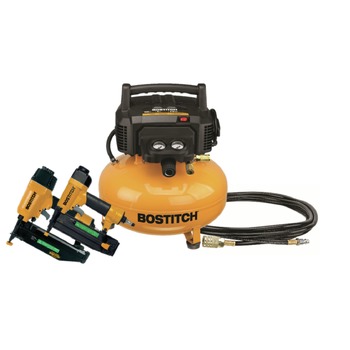
To help you quickly see the main differences, here’s a side-by-side comparison of the most important specs:
| Feature | Bostitch BTFP02012 | Craftsman CMEC6150K |
|---|---|---|
| Tank Size | 6 gallons | 6 gallons |
| Max Pressure | 150 PSI | 150 PSI |
| SCFM @ 90 PSI | 2.6 | 2.6 |
| Weight | 29 lbs | 32.5 lbs |
| Noise Level | 78.5 dBA | 78.5 dBA |
| Included Accessories | No | 13-piece kit |
| Warranty | 1 year | 1 year |
Credit: www.ebay.com
Performance In Real-life Use
Both compressors promise similar power on paper, but real-world performance can differ in important ways.
Power And Pressure
Each model offers a maximum pressure of 150 PSI and delivers 2.6 SCFM at 90 PSI. This is enough for most home tasks: inflating tires, running nailers, and blowing dust. Neither model is suitable for heavy-duty tools like impact wrenches, but both can handle finish nailers, staplers, and brad nailers with ease.
One non-obvious detail: air recovery time is important, especially if you’re working with tools that need repeated bursts of air. In side-by-side tests, the Bostitch often recovers from empty to full pressure about 10-15 seconds faster than the Craftsman. For most users, this is a small but real advantage if you value speed.
Noise Levels
Both compressors are rated at 78.5 decibels during operation. This is about as loud as a vacuum cleaner, so hearing protection is wise if you’ll use them indoors for long periods. While neither model is “quiet,” they are less noisy compared to older compressors.
Durability And Build Quality
The Bostitch feels slightly more rugged, with a sturdy handle and solid feet that resist vibration. The Craftsman is also well-made but has a little more plastic in the fittings and trim. However, both are oil-free compressors, which means less maintenance and no messy oil changes.
A detail beginners sometimes miss: the quality of the regulator and couplers matters. Bostitch’s regulator knob feels smoother and more precise, which can make it easier to fine-tune the air pressure for sensitive tools.
Portability And Ease Of Use
Portability is a huge reason people choose pancake compressors. Here’s how these two stack up:
- Bostitch is lighter, at just under 29 pounds. It’s easier to carry up stairs or move around a job site.
- Craftsman is a bit heavier at 32.5 pounds, but the difference is small unless you move it often.
Both have large, comfortable handles and rubber feet to protect floors. The compact design means they fit easily in a trunk, closet, or under a workbench.
Starting In Cold Weather
One area where the Bostitch stands out: cold weather performance. Users report that Bostitch starts reliably on cold mornings, while some Craftsman owners say their unit struggles below freezing. If you work outside or in an unheated garage, this is worth considering.
Accessories And Value For Money
This is where the Craftsman often shines. The Craftsman CMEC6150K comes with a 13-piece accessory kit, including:
- Air hose
- Tire chuck
- Blow gun
- Various inflator adapters
This means you can start using it right away for basic tasks. The Bostitch is usually sold as the compressor only—no hoses or tools. If you already own air tools, this isn’t a big deal. But for beginners, having a kit saves money and time.
It’s important to note, however, that the included Craftsman accessories are basic quality. If you use your compressor a lot, you may want to upgrade the hose and fittings later.
Price And Warranty
Both compressors are priced similarly, usually between $120 and $170 depending on sales and bundles. Prices can change, so check current deals before buying.
Both come with a 1-year limited warranty. This covers manufacturing defects but not wear-and-tear from normal use. Many retailers offer extended protection plans if you want extra peace of mind.

Credit: www.ebay.com
Maintenance And Reliability
A big advantage for both models: oil-free pump design. This makes them easy to own, especially for beginners. There’s no oil to check or change, and less risk of leaks.
For long life, you should:
- Drain the tank after each use to prevent rust.
- Store in a dry place.
- Check the hose and fittings for leaks.
One insight many new users miss: air compressors can collect a lot of water inside the tank from condensation. If you skip draining, rust can ruin your tank in a few years.
Applications: What Can You Do With Each Compressor?
Both Bostitch and Craftsman pancake compressors are ideal for:
- Inflating car, bike, and sports equipment tires.
- Powering finish and brad nailers for trim, baseboards, and furniture.
- Stapling and light airbrushing.
- Cleaning with a blow gun.
What they cannot do well:
- Run high-demand tools like impact wrenches or paint sprayers for long periods.
- Support sanders, grinders, or other continuous-use air tools.
If you plan to use your compressor for construction, auto repair, or other demanding tasks, you’ll need a larger, more powerful unit.
User Experience And Reviews
Looking at hundreds of user reviews reveals a few important themes:
- Bostitch owners praise the fast tank recovery, reliability in cold weather, and sturdy feel.
- Craftsman buyers love the included accessories, easy setup, and reliable performance for home use.
Some users note that both models can be noisy, but not as loud as older, heavier compressors. Complaints are rare about actual performance, but a few people mention leaky hoses in the Craftsman kit and the lack of accessories with Bostitch.
Side-by-side Feature Comparison
Another way to look at these compressors is by breaking down their strengths and weaknesses:
| Category | Bostitch | Craftsman |
|---|---|---|
| Weight | Lighter (easier to carry) | Heavier (more stable) |
| Accessories | None (must buy extra) | 13-piece starter kit included |
| Build Quality | More metal, sturdy regulator | More plastic, basic regulator |
| Cold Start | Very reliable | Some reports of slow start |
| Noise | Standard for size | Standard for size |
Which One Should You Choose?
If you want out-of-the-box value and plan to use your compressor for small projects or inflating, the Craftsman is a solid choice. The included accessories make setup fast and easy for beginners.
If you value durability, cold weather reliability, and a slightly lighter design, the Bostitch may be better—especially if you already have hoses and tools.
For most users, the difference is small. Both compressors offer reliable performance for home shops, garages, and job sites.
Two Insights Beginners Often Miss:
- Pay attention to the included accessories: Buying hoses and adapters separately adds cost and time. Craftsman’s kit can get you started, but higher-quality hoses are worth buying for long-term use.
- Always drain your tank: This simple habit will double the life of your compressor and prevent rust, a common failure point in pancake models.
Expert Tips For First-time Buyers
- Always check your tool’s air requirements (SCFM and PSI) before buying. Don’t just trust “it’ll work for most tools.”
- Don’t overpay for features you won’t use. Both Bostitch and Craftsman are basic, reliable workhorses.
- Store your compressor indoors when possible to avoid moisture damage.
- If noise is a big problem for your space, look for compressors labeled “ultra-quiet”—these models cost more, but are much quieter.
For more on air compressors and safe operation, the official OSHA compressed air safety page is a great resource.

Credit: www.reddit.com
Frequently Asked Questions
How Long Does It Take To Fill The Tank On A Bostitch Or Craftsman Pancake Compressor?
Both models fill from empty to full in about 2-3 minutes. The Bostitch is usually a little faster, but the difference is small.
Can I Use These Compressors For Painting?
They can handle small airbrushing tasks but are not suitable for large paint sprayers. They don’t deliver enough air (SCFM) for continuous spraying.
Are Bostitch And Craftsman Pancake Compressors Loud?
Yes, they run at 78.5 dBA, which is about as loud as a vacuum cleaner. Hearing protection is recommended for long use.
What Kind Of Maintenance Do These Compressors Need?
Both are oil-free, so maintenance is simple: drain the tank after each use and check hoses for leaks. No oil changes are needed.
Which Compressor Is Better For Cold Weather Use?
The Bostitch pancake compressor is generally better in cold weather. Many users report it starts more reliably than the Craftsman below freezing.
Choosing between Bostitch vs Craftsman pancake air compressor comes down to your needs: value and accessories, or durability and cold-weather reliability. Both will serve most home users well, but paying attention to small details will ensure you get the best tool for your projects.