When you need compressed air for tools, painting, or industry, the type of air compressor you choose makes a big difference. Many people get confused between 2 stage and 3 stage air compressors. Both types increase air pressure, but they do it in different ways and suit different needs. Understanding how they work, their benefits, and their best uses can save you money, energy, and frustration.
If you want to buy an air compressor, upgrade your workshop, or just understand which technology fits your job, this guide breaks everything down in simple terms. You’ll see how each compressor works, why the number of stages matters, and what to watch out for before you decide.
What Is A 2 Stage Air Compressor?
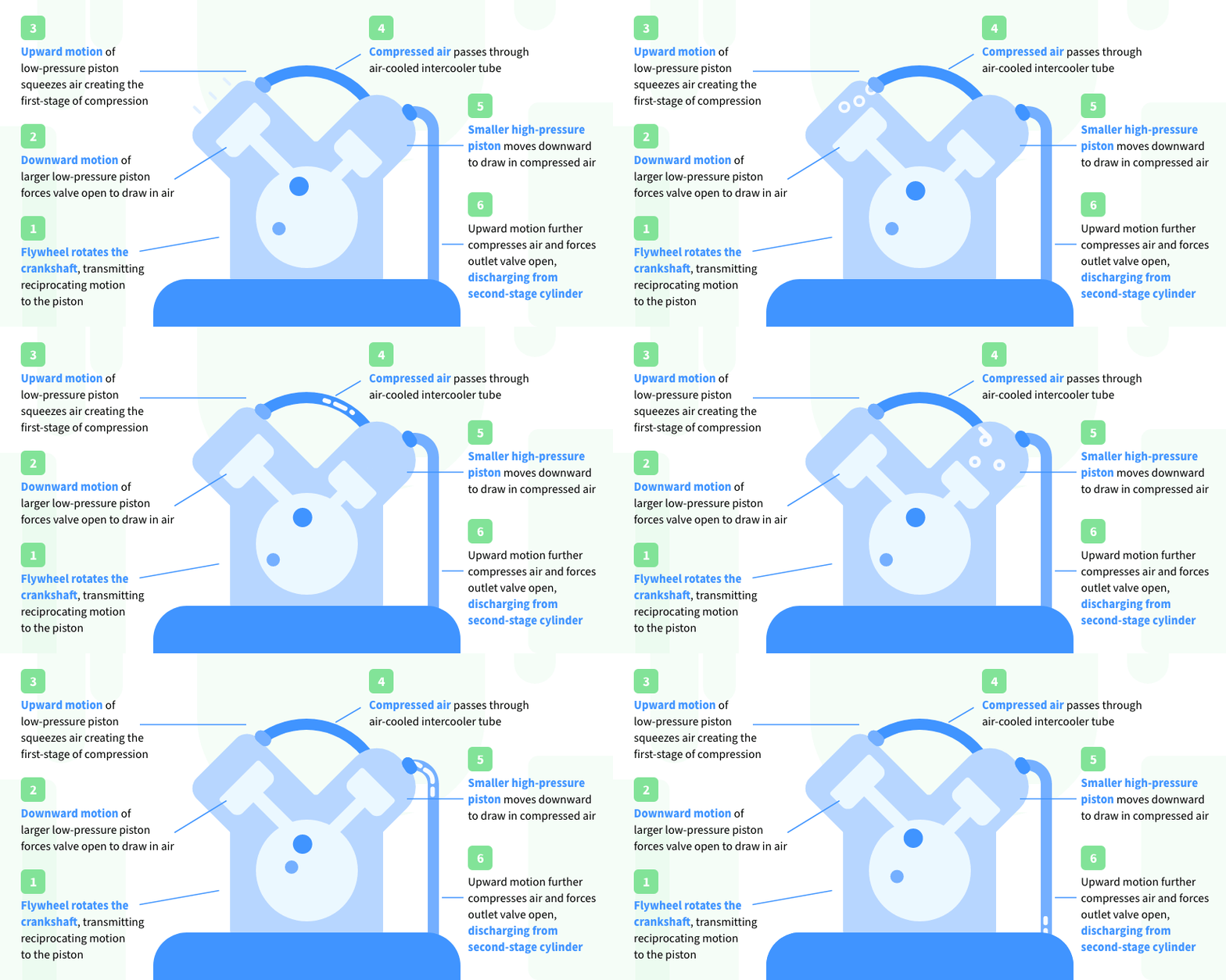
A 2 stage air compressor compresses air in two steps. Here’s how it works:
- First Stage: Air is drawn from outside and compressed to a medium pressure.
- Cooling: The compressed air passes through an intercooler, which cools it down. This step is important because cooler air is easier to compress.
- Second Stage: The cooled air is then compressed again to a higher pressure.
This double compression means the air coming out is at a much higher pressure than a single stage compressor can provide. Most 2 stage compressors can reach pressures around 175 psi (pounds per square inch) or higher.
Key features of 2 stage compressors:
- Usually used in workshops, factories, or places needing high-pressure air.
- More efficient for heavy-duty tasks.
- Larger and more expensive than single stage types.
What Is A 3 Stage Air Compressor?
A 3 stage air compressor takes the process one step further:
- First Stage: Air is compressed to a low pressure.
- Intercooler: Air is cooled.
- Second Stage: Air is compressed to a medium pressure.
- Intercooler: Cooled again.
- Third Stage: Air is compressed to its final, very high pressure.
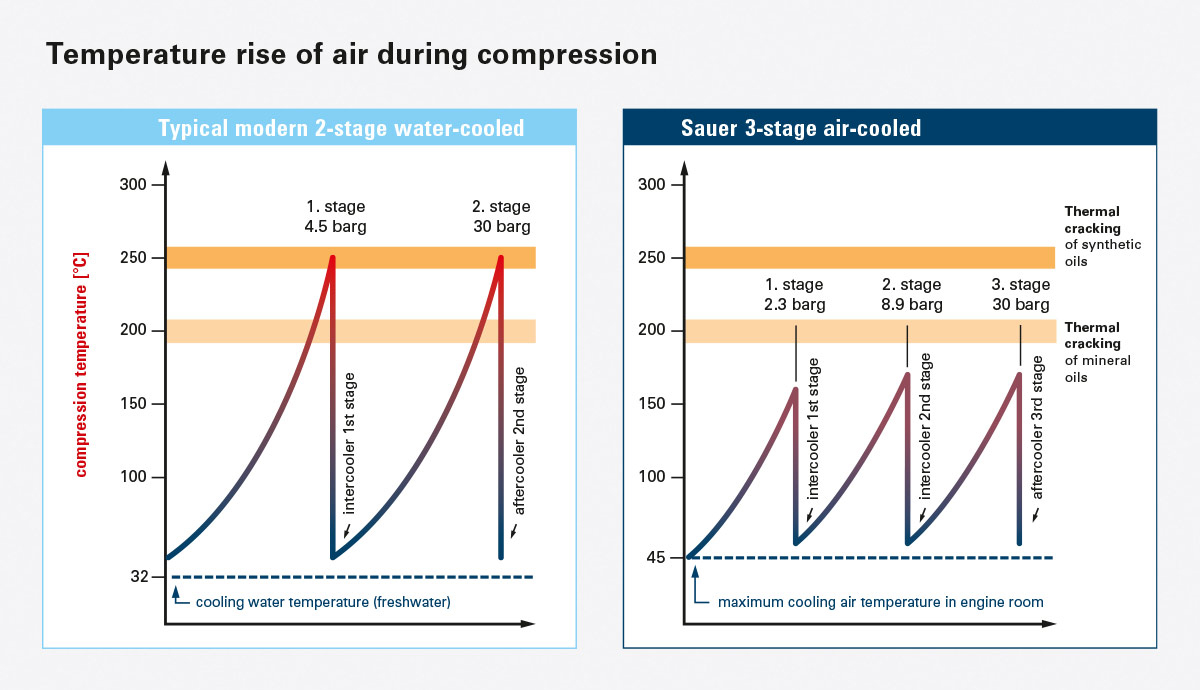
Each compression stage is followed by cooling, which keeps the air temperature lower and makes the process more efficient. 3 stage compressors can reach pressures of 300 psi or more. They are used when very high pressure is needed, such as in industrial manufacturing, labs, or some medical equipment.
Key features of 3 stage compressors:
- Can produce much higher air pressure.
- More complex and expensive.
- Used in specialized, high-pressure applications.

Credit: compressor-source.com
How Do 2 Stage And 3 Stage Compressors Work?
Understanding the working principle helps you see why extra stages matter.
| Compressor Type | Number of Compression Steps | Maximum Pressure | Cooling Steps |
|---|---|---|---|
| 2 Stage | 2 | 175 psi | 1 (after first compression) |
| 3 Stage | 3 | 300+ psi | 2 (after each compression) |
In both types, air is compressed in steps rather than all at once. Each time, the air is cooled before being compressed again. This keeps the compressor from overheating and makes it more efficient.
Non-obvious insight: The cooling steps (intercoolers) are almost as important as the compression stages themselves. Without cooling, the compressor would waste energy and wear out faster.
Main Differences Between 2 Stage And 3 Stage Air Compressors
Choosing between these two types isn’t just about pressure. Several factors set them apart:
| Feature | 2 Stage | 3 Stage |
|---|---|---|
| Pressure Output | Up to 175 psi | Up to 300+ psi |
| Cost | Lower | Higher |
| Complexity | Medium | High |
| Maintenance | Less demanding | More demanding |
| Size | Usually smaller | Larger |
| Energy Efficiency | Good | Better for high pressures |
| Noise | Moderate | Louder (at high power) |
| Best Use | Workshops, garages, small factories | Heavy industry, labs, medical |
Non-obvious insight: A 2 stage compressor can handle almost all tasks that don’t need extremely high pressure. Many buyers overestimate their needs and spend extra money on 3 stage compressors when a 2 stage model is enough.
Advantages Of 2 Stage Air Compressors
2 stage compressors are popular because they balance cost, performance, and size. Here’s what makes them a smart choice for many users:
- Affordable for Most Businesses: Compared to 3 stage, 2 stage models cost less to buy and maintain.
- Good Enough Pressure: 175 psi is enough for auto shops, paint booths, carpentry, and most manufacturing.
- Lower Maintenance: Fewer parts mean less that can go wrong.
- Less Energy Waste: The double compression with cooling uses energy more efficiently than single stage compressors.
- Longer Life: Because air is cooled between stages, parts stay cooler and last longer.
Example: A small auto repair shop can run impact wrenches, sanders, and sprayers all day on a 2 stage compressor.
Advantages Of 3 Stage Air Compressors
When your work needs very high pressure, a 3 stage compressor offers unique benefits:
- Much Higher Pressure: Can reach 300 psi or more, needed for some industrial or scientific uses.
- Better for Continuous Use: Designed for heavy-duty, nonstop tasks.
- Cooler Operation: More cooling steps reduce heat, which protects the machine and improves safety.
- Cleaner Air: Additional stages can help remove more moisture and contaminants, which is important for medical or lab uses.
- Stable Output: More stages give smoother, more stable airflow at high pressures.
Example: A factory producing PET plastic bottles needs high-pressure air to shape the bottles—a 3 stage compressor is the right choice here.
When To Choose A 2 Stage Air Compressor
A 2 stage compressor fits well if:
- You need air pressure up to 175 psi.
- Your tools are for automotive repair, carpentry, spray painting, or general manufacturing.
- You want a good balance of price, size, and performance.
- You don’t run the compressor nonstop for long periods.
Common mistake: Some buyers choose a 3 stage unit “just in case.” This wastes money and energy if they never need more than 175 psi.
Tip: Always check the required pressure for your main tools or processes before buying.
When To Choose A 3 Stage Air Compressor
A 3 stage compressor is best if:
- Your work needs over 175 psi—such as plastic molding, special medical devices, or high-pressure testing.
- You run the compressor all day, every day, at high loads.
- You need the cleanest, driest air possible.
- You have the budget for higher purchase and maintenance costs.
Example: A hospital may use 3 stage compressors for breathing air or special tools that cannot risk contamination.
Practical advice: Only invest in a 3 stage compressor if your process absolutely requires it. Otherwise, the extra complexity and cost will not pay off.
Credit: www.quincycompressor.com
Energy Efficiency: Which Is Better?
Both 2 stage and 3 stage compressors are more efficient than single stage types at their intended pressures, but 3 stage compressors become more efficient as the pressure requirements go up. This is because compressing air in several steps with cooling uses less energy than doing it all in one or two jumps.
However: For most users (workshops, small factories), the gains are small. Only at very high pressures (over 175 psi) does the 3 stage design save significant energy.
Data point: According to the U.S. Department of Energy, using multi-stage compressors with intercooling can save up to 15% energy compared to single-stage systems at high pressures (Department of Energy).
Maintenance And Reliability
2 stage compressors are simpler and easier to maintain. Fewer moving parts and fewer coolers mean less that can go wrong. Most technicians can handle repairs or service with basic training.
3 stage compressors need more attention:
- More pistons, valves, and intercoolers to check.
- More chances for leaks or cooling problems.
- Parts may be harder to find and more expensive.
Pro tip: For both types, regular maintenance (oil changes, filter cleaning, leak checks) is key. Skipping service leads to high energy bills and shorter compressor life.
Cost Comparison
The price difference between 2 stage and 3 stage compressors is often big.
- 2 stage models (5-15 HP) can cost $2,000–$6,000 USD for industrial brands.
- 3 stage models (same size) often start at $7,000 USD and can go above $20,000 USD for large systems.
Operating costs are also higher for 3 stage compressors because they use more parts, more energy (unless running at very high pressure), and need more skilled service.
Budget advice: If you do not need 3 stage performance, spend the difference on a bigger air tank or better tools instead.
Common Mistakes When Choosing
- Ignoring Pressure Needs: Buyers often overestimate how much pressure they need. Check your main tool’s requirements.
- Thinking Bigger Is Always Better: A larger, more complex compressor does not always mean better results.
- Forgetting Maintenance: Higher stage compressors need more regular and expert care.
- Not Planning for Space: 3 stage compressors are bigger and heavier—make sure you have enough room.
Real-world Examples
- Auto Body Shop: Uses a 2 stage compressor for spray painting, sanding, and impact wrenches. Rarely needs more than 150 psi.
- Beverage Factory: Uses a 3 stage compressor to bottle soft drinks. Bottling lines require over 250 psi continuously.
- Dental Clinic: Needs ultra-clean, dry air for tools and patient safety, so chooses a 3 stage unit with advanced filters.
How To Decide: 2 Stage Or 3 Stage?
Follow these steps:
- List your main uses: What tools or machines will use the air?
- Find the highest required pressure: Check manuals or product specs.
- Estimate daily use: How many hours per day? Continuous or short bursts?
- Check your budget: Factor in both purchase and maintenance costs.
- Ask an expert: If you’re unsure, a professional can help match your needs.
Confidence tip: For most users, a high-quality 2 stage compressor will deliver all the performance and reliability needed—without the extra cost and complexity of 3 stages.
Credit: www.sauercompressors.com
Frequently Asked Questions
What Does “stage” Mean In An Air Compressor?
A stage is a step in the air compression process. Each stage compresses the air to a higher pressure. More stages usually mean higher final pressure and better cooling.
Can I Use A 2 Stage Compressor Instead Of A 3 Stage One?
Yes, if your tools or machines do not require more than 175 psi. For higher pressures, you need a 3 stage compressor.
Are 3 Stage Compressors Always More Energy Efficient?
Only at very high pressures (over 175 psi). For lower pressure needs, a 2 stage compressor is usually more efficient and cost-effective.
Is Maintenance Harder On 3 Stage Compressors?
Yes. 3 stage compressors have more parts and cooling systems, so they need more regular and expert maintenance.
How Can I Tell Which Compressor I Need?
Check the required air pressure for your main tools or machines. If it’s 175 psi or less, a 2 stage compressor is enough. For higher, choose a 3 stage model.
Choosing the right air compressor is about matching your real needs—not just buying the biggest or most expensive model. By understanding the differences between 2 stage and 3 stage compressors, you can make a smart choice that saves money, energy, and trouble for years to come.