A two stage air compressor is a powerful tool found in workshops, factories, and garages around the world. If you have ever seen an air-powered tool in action or watched a mechanic change a tire, you have probably seen an air compressor at work.
But what makes the two stage air compressor different from the more common single stage models? And why do professionals and industries often choose these machines for demanding tasks? Understanding how a two stage air compressor works, its main benefits, and where it fits best can help you make smarter decisions—whether you need compressed air for painting, manufacturing, or even heavy-duty home use.
What Is A Two Stage Air Compressor?
A two stage air compressor is a machine that compresses air in two steps, using two cylinders of different sizes. The main goal is to make the air pressure much higher and more stable than with a single stage compressor.
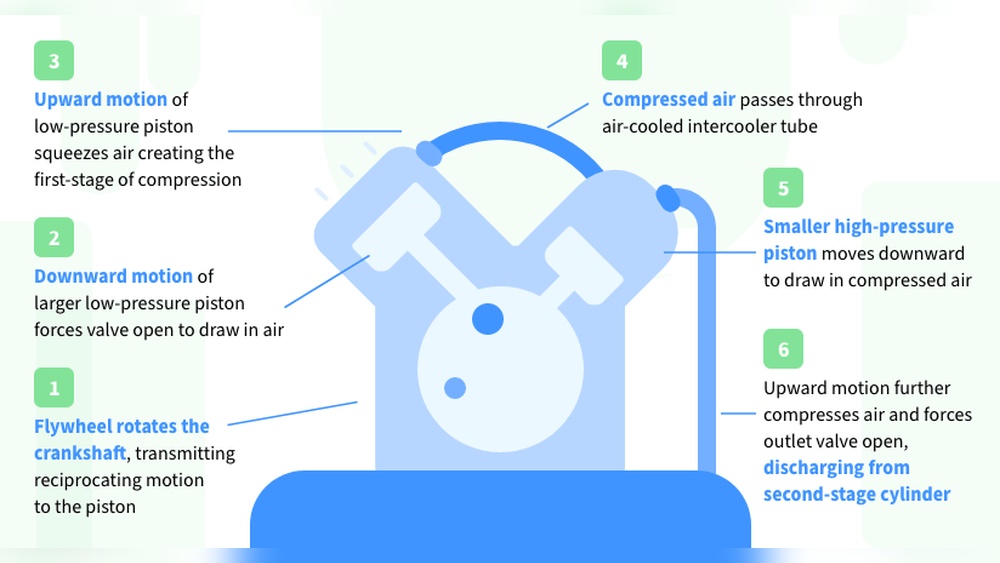
The process starts when air is pulled into the first cylinder, where it is compressed and then sent through a cooling tube or intercooler. The cooled air then enters a second, smaller cylinder, where it is compressed again to reach a much higher pressure before being stored in the tank.
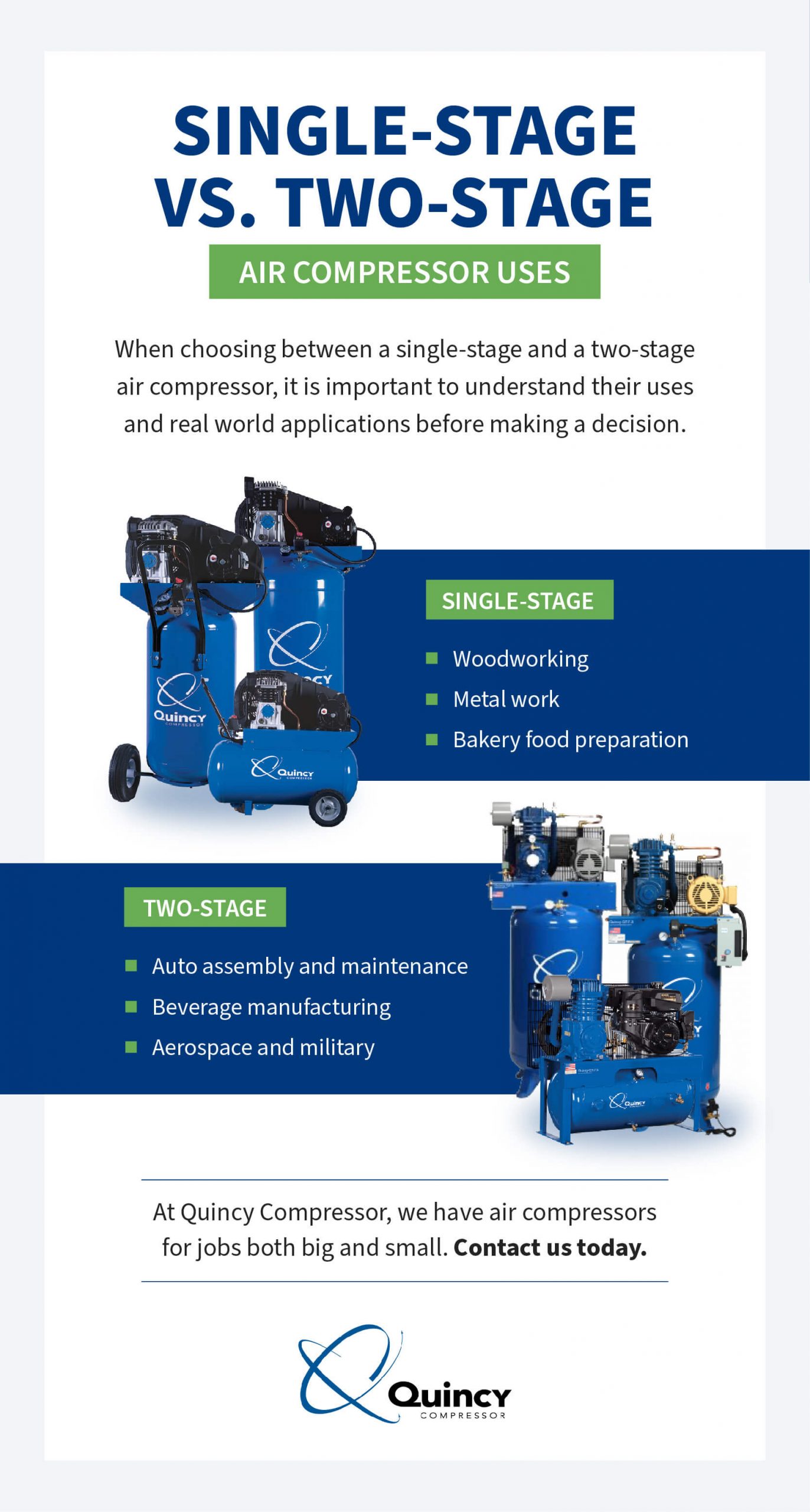
The key difference between a single stage and a two stage compressor lies in how many times the air is compressed. Single stage compressors compress the air just once, while two stage compressors do it twice. This double compression creates higher pressures, which are important for specific tasks like running industrial tools or spray painting large surfaces.
How Does A Two Stage Air Compressor Work?
The operation of a two stage air compressor involves several steps that boost both pressure and efficiency:
- First Compression Stage: The air enters the large, low-pressure cylinder. Here, the piston moves down, drawing in air. As the piston moves back up, it compresses the air to about 80 psi (pounds per square inch).
- Intercooler Cooling: The compressed air then passes through a metal tube called an intercooler. This tube cools the air, making it denser and easier to compress further.
- Second Compression Stage: The cooled air enters the smaller, high-pressure cylinder. Here, the piston compresses the air again, now reaching pressures of 175 psi or higher.
- Storage: The high-pressure air is sent into a storage tank, ready to be used when needed.
This process allows the two stage air compressor to deliver a steady flow of high-pressure air, which is essential for heavy-duty applications.
:max_bytes(150000):strip_icc()/aircompressor_0-8ede7f97528d4633a132cd18344d8b29.jpg)
Credit: www.woodmagazine.com
Main Components Of A Two Stage Air Compressor
Understanding the main parts of a two stage air compressor helps you see how each section contributes to performance and reliability.
- Low-Pressure Cylinder: The larger cylinder starts the compression process, handling more air at lower pressure.
- High-Pressure Cylinder: The smaller cylinder takes over after the air is cooled, pushing the pressure to a much higher level.
- Intercooler: This is a metal tube or coil that cools the air between the two stages, making the second compression more efficient.
- Air Receiver Tank: The tank stores the compressed air, so it is available on demand.
- Motor: Powers the movement of pistons in both cylinders.
- Pressure Switch: Controls when the compressor turns on and off, based on the pressure in the tank.
- Valves: Control the flow of air and prevent backflow.
These components work together to produce the high-pressure air that makes two stage compressors valuable for professional use.
Key Differences: Two Stage Vs. Single Stage Air Compressors
Many people wonder if they should choose a single stage or two stage air compressor. The main differences are pressure, efficiency, and use cases.
| Feature | Single Stage | Two Stage |
|---|---|---|
| Compression Steps | One | Two |
| Max Pressure | Up to 120 psi | Up to 175 psi or more |
| Cooling | Not cooled between stages | Uses an intercooler |
| Best For | Home, light shop use | Industrial, continuous use |
| Price | Lower | Higher |
A two stage air compressor can handle more demanding tasks, run for longer periods, and deliver higher pressures than a single stage model. This is why they are often seen in factories, large workshops, and production lines.
Credit: www.quincycompressor.com
Common Uses Of Two Stage Air Compressors
The power and reliability of two stage compressors make them ideal for heavy-duty tasks. Here are some of the most common uses:
- Manufacturing Plants: For running machines and tools that need high-pressure air all day long.
- Automotive Workshops: Used for powering impact wrenches, paint sprayers, and tire changers.
- Construction Sites: Essential for tools like jackhammers, sandblasters, and rock drills.
- Food and Beverage Industry: Used for packaging, filling, and moving products.
- Pharmaceuticals: For precision mixing, bottle filling, and cleaning.
- Spray Painting: Provides a smooth, even finish for cars, furniture, and other surfaces.
- Textile Factories: Powers machines that spin, weave, and dye fabrics.
Many heavy industries rely on two stage air compressors because single stage models simply cannot provide enough pressure or run long enough without overheating.
Advantages Of Two Stage Air Compressors
Choosing a two stage air compressor offers several key benefits:
- Higher Pressure Output: They can reach much higher pressures (up to 175 psi or more), which is essential for demanding tools.
- Greater Efficiency: Compressing air in two steps, with cooling in between, uses less energy and reduces heat.
- Longer Life Span: Because the work is divided between two cylinders, there is less wear and tear, meaning the machine lasts longer.
- Continuous Operation: Designed for heavy, ongoing use without frequent stops to cool down.
- Lower Operating Temperature: The intercooler keeps the air (and the machine) cooler, preventing overheating.
One insight beginners often miss is that two stage compressors are not just about higher pressure—they are also about reliability and efficiency in tough environments.
Disadvantages And Limitations
While two stage air compressors are powerful, they are not perfect for every situation. Here are some downsides:
- Higher Cost: They cost more to buy and repair than single stage models.
- More Maintenance: More parts mean more things to check, clean, and replace.
- Larger Size and Weight: They take up more space and are harder to move.
- Noisy Operation: While some models have noise reduction, they are generally louder than single stage compressors.
For small workshops or home use, a single stage compressor may be better value. But for any job needing long hours or high pressure, the advantages of a two stage model outweigh the drawbacks.
How To Choose The Right Two Stage Air Compressor
Selecting the right two stage air compressor is about matching the machine’s abilities to your needs. Here are the main factors to consider:
- Required Air Pressure (PSI): Know the maximum pressure your tools need.
- Air Flow (CFM): Check the cubic feet per minute (CFM) needed for your application. More tools or larger tools need more CFM.
- Tank Size: A larger tank stores more air, letting you work longer between cycles.
- Power Source: Choose between electric or gas-powered models, depending on your location and mobility needs.
- Duty Cycle: For continuous industrial use, look for a 100% duty cycle rating.
- Noise Level: If working indoors, consider a quieter model or install soundproofing.
- Maintenance Access: Make sure you can easily reach filters, belts, and valves for cleaning and servicing.
| Factor | Why It Matters |
|---|---|
| CFM Rating | Determines how many tools you can run at once |
| Tank Size | Longer use between motor cycles |
| Portability | Important for moving between job sites |
| Voltage | Matches your power supply (single or three-phase) |
A common mistake is choosing a compressor based only on price. Instead, focus on matching the technical specs to your real-world needs. Overspending on features you will never use is just as wasteful as buying a machine that cannot keep up.

Credit: www.jmindustrial.com
Maintenance Tips For Two Stage Air Compressors
Proper maintenance keeps your compressor running smoothly and safely. Here’s what you should do:
- Check and Change Oil Regularly: Most two stage compressors are oil-lubricated. Fresh oil reduces wear and prevents overheating.
- Inspect Air Filters: Dirty filters can reduce efficiency and let dust into the system.
- Drain the Tank: Water can collect inside the tank, causing rust. Drain it after each use.
- Tighten Bolts and Fittings: Vibration can loosen connections over time.
- Check Belts: Worn or loose belts reduce performance and can break suddenly.
- Clean Cooling Fins and Intercooler: Dust build-up can block airflow and increase heat.
One non-obvious tip is to monitor the intercooler temperature. If it feels too hot to touch, airflow may be blocked, which can lead to overheating and damage.
Real-world Example: Two Stage Air Compressors In Action
Consider a large automotive workshop with five mechanics, each using air tools like impact wrenches, spray guns, and grinders. A single stage compressor might supply enough air for one or two tools, but pressure drops quickly as more tools run at the same time.
A two stage air compressor, with its higher pressure and larger tank, allows all five mechanics to work at once without slowing down.
In manufacturing, two stage compressors keep machines running non-stop for 8, 12, or even 24 hours a day. They offer the reliability and endurance that factories need to avoid costly downtime.
Energy Efficiency And Cost Considerations
Two stage air compressors are more efficient than single stage models, especially for continuous use. By cooling the air between stages, they need less energy to reach high pressures. Over time, this reduces electricity or fuel costs.
However, the upfront price is higher, often by 30–50%. For example, a high-quality single stage compressor might cost $500–$800, while a similar two stage model could be $1,200–$2,000. For businesses that need high pressure and reliability, the extra cost pays for itself in reduced maintenance and downtime.
Safety Tips When Using Two Stage Air Compressors
Safety is vital when working with high-pressure equipment. Always:
- Read the User Manual: Understand the specific steps and warnings for your model.
- Wear Eye and Ear Protection: High-pressure air and noise can be dangerous.
- Check Safety Valves: Make sure pressure relief valves work properly.
- Keep the Area Clear: Remove flammable materials and clutter.
- Never Exceed Rated Pressure: Pushing the machine too hard can cause parts to fail.
Another insight: Always let the compressor cool before touching the intercooler or cylinders, as these parts can get extremely hot during use.
Environmental Impact And Sustainability
Many modern two stage compressors are designed to be more eco-friendly. Features like energy-saving motors, oil-free operation (in some models), and efficient cooling reduce electricity use and pollution. Some factories use compressed air recovery systems to reuse waste energy, making their operations even greener.
If you want to learn more about sustainable compressed air systems, you can visit the Wikipedia page on air compressors.
Frequently Asked Questions
What Is The Main Advantage Of A Two Stage Air Compressor?
The main advantage is higher air pressure and greater efficiency. Two stage compressors can reach pressures up to 175 psi, making them suitable for demanding tools and continuous industrial use.
Can I Use A Two Stage Air Compressor At Home?
Yes, but it may be overkill for most home tasks. If you need to power several tools at once or require high pressure, it can be useful. For simple jobs like inflating tires or running one nail gun, a single stage model is usually enough.
How Often Should I Maintain My Two Stage Air Compressor?
You should check oil, filters, and drain the tank after each use or at least once a week if used daily. A more detailed maintenance check (belts, valves, fittings) should be done monthly.
What Size Of Two Stage Air Compressor Do I Need?
This depends on your tools’ air requirements. Add up the CFM ratings of all tools you plan to use at the same time, then choose a compressor with a higher CFM and a tank size that matches your work volume.
Are Two Stage Air Compressors More Expensive To Run?
They cost more upfront but are often cheaper to run for large jobs because they use less energy per unit of compressed air and require less downtime for cooling.
Choosing the right air compressor is a mix of understanding your needs, knowing the strengths of each type, and planning for the future. Two stage air compressors offer power, reliability, and efficiency for those who need the best performance in challenging environments.
With proper care and the right setup, they will keep your tools running strong for many years.