When setting up a tire machine, the air compressor you choose can make or break your workflow. Many shop owners and DIY mechanics buy the wrong size, leading to slow jobs, poor performance, or even machine damage. But choosing the right air compressor for your tire machine isn’t hard—if you know what to look for.
This guide will explain everything in simple language, so you can make the right decision and keep your shop running smoothly.
Why Air Compressor Size Matters For Tire Machines
A tire machine relies on compressed air to power its main functions, like bead breaking, mounting, and inflating tires. If your air compressor is too small, the machine will lose power, slow down, or stop working during a job. This doesn’t just slow you down—it can damage the machine and lead to unhappy customers.
A properly sized compressor ensures:
- Consistent air supply for all machine functions
- Reliable operation without sudden stops
- Longer machine life due to less stress on equipment
Many first-timers make the mistake of picking any compressor or simply buying the cheapest. But not all compressors are suitable for tire machines. Let’s look at the factors that really matter.
Key Factors When Choosing Air Compressor Size
Not all tire machines are the same, and neither are air compressors. To choose correctly, focus on these important points:
1. Cfm (cubic Feet Per Minute)
CFM tells you how much air the compressor can deliver. Tire machines need a certain CFM to run all their functions without lag. Most tire changers require at least 4–6 CFM at 90 PSI. Heavy-duty or commercial machines may need 8 CFM or more.
2. Psi (pounds Per Square Inch)
PSI is air pressure. Most tire machines work best at 110–150 PSI. Too low, and the bead breaker or inflation won’t work well. Too high, and you waste energy and risk damaging tools.
3. Tank Size
The tank size affects how long your compressor can deliver air before the motor turns on again. For a tire machine, a 20–30 gallon tank is usually enough for light use. Busy shops or commercial settings may need 60 gallons or more.
4. Duty Cycle
A compressor’s duty cycle shows how long it can run before needing a break. Look for at least a 50% duty cycle for tire machines. For busy shops, 100% (continuous) is better.
5. Power Source
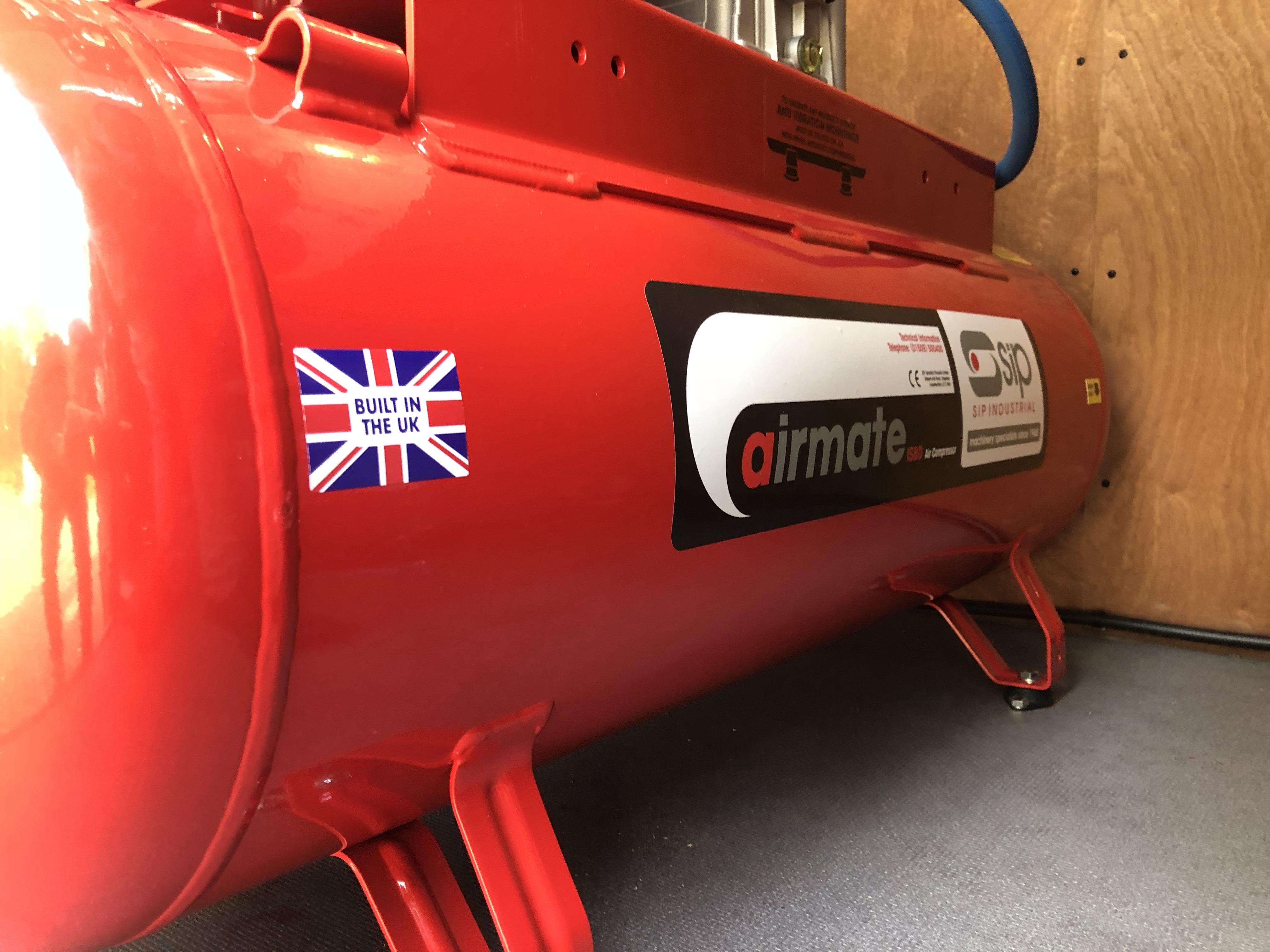
Check if your workspace has 120V or 240V power. Bigger compressors often need 240V, while small ones use 120V. Make sure your garage or shop can handle the compressor you choose.
Credit: www.tyrebaydirect.com
Minimum Air Compressor Size For Tire Machines
If you only remember one thing, remember this:
> For most standard tire changers, you need at least 4–5 CFM at 90 PSI with a 20-gallon tank.
But, if you plan to use the machine all day or work with larger truck tires, go bigger. A 60-gallon tank with 8+ CFM at 90 PSI is a safer bet.
Here’s a quick reference:
| Usage | CFM @ 90 PSI | Tank Size (gallons) |
|---|---|---|
| Home/DIY | 4–5 | 20–30 |
| Small Shop | 5–8 | 30–60 |
| Commercial | 8+ | 60+ |
Matching Air Compressor To Tire Machine Types
Not all tire machines need the same air supply. Here’s how to match them up.
Manual Tire Changers
Manual machines use less air. Usually, 4 CFM at 90 PSI is enough. A 20-gallon tank can work for occasional use.
Semi-automatic Tire Changers
These machines need more air for bead breaking and inflation. Aim for 5–6 CFM at 90 PSI and a 30-gallon tank.
Fully Automatic/commercial Tire Changers
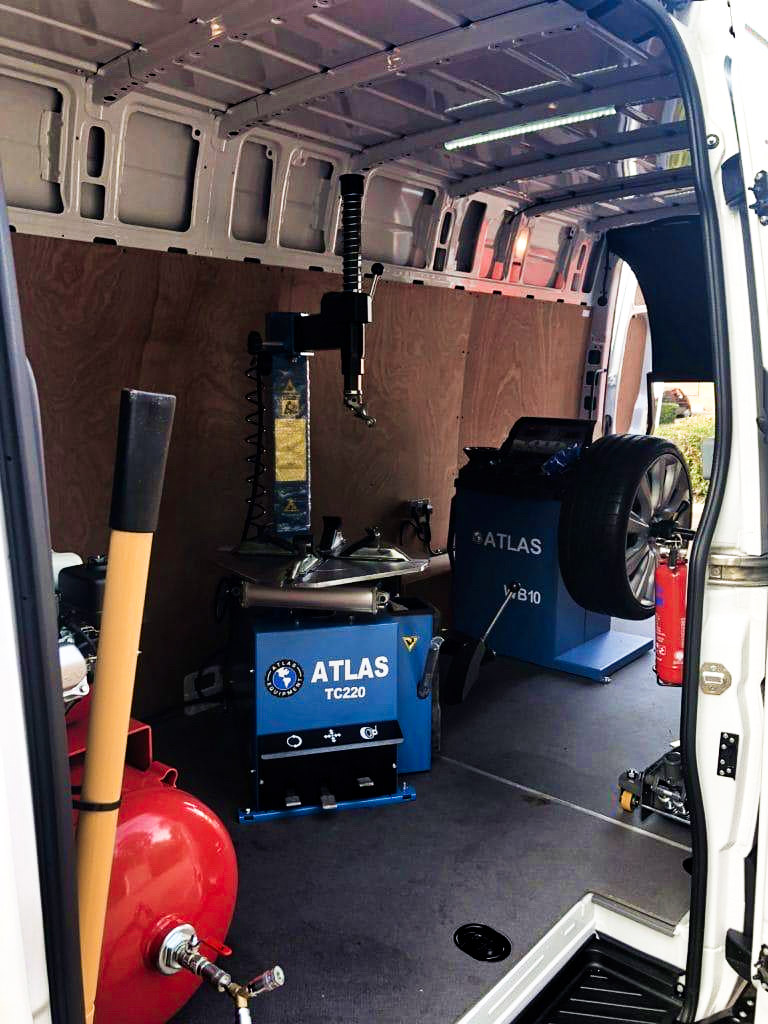
They use air for multiple functions at once. Go for at least 8 CFM at 90 PSI, and a 60-gallon tank or larger. This avoids pressure drops and keeps everything smooth.
Heavy-duty Truck Tire Changers
These need the most air. Some require 10–15 CFM at 90 PSI. A 60- to 80-gallon tank is a must.
Credit: www.tyrebaydirect.com
Example: Sizing For Common Tire Machines
Let’s compare three common machines and what compressor fits best.
| Tire Machine Model | CFM Requirement | Recommended Tank Size | Typical Use |
|---|---|---|---|
| Coats RC-55 | 4.5 CFM @ 90 PSI | 20–30 gal | Home/small shop |
| Atlas TC229 | 6 CFM @ 90 PSI | 30–60 gal | Small/medium shop |
| Corghi Artiglio 5000 | 10 CFM @ 90 PSI | 60 gal+ | Commercial shop |
Mistakes To Avoid When Choosing Compressor Size
Even experienced shop owners sometimes pick the wrong compressor. Watch out for these common mistakes:
- Ignoring CFM: Focusing only on tank size and forgetting CFM leads to weak performance.
- Underestimating Usage: If you run your tire machine all day, a small compressor will overheat and wear out fast.
- Over-buying: Buying a huge compressor for occasional use wastes money and energy.
- Not Checking Power Supply: Some garages can’t handle 240V compressors without new wiring.
- Skipping Maintenance: Dirty filters or low oil can make even a big compressor underperform.
How Usage Frequency Impacts Compressor Choice
If you only change a few tires a week, a small compressor is fine. But for busy shops, the air compressor runs much more often. Heat builds up, and small compressors can’t keep up.
Pro tip: For high-volume shops, buy a compressor that delivers 20–30% more CFM than your tire machine’s minimum. This gives you a safety margin and extends compressor life.
Other Tools? Plan For Extra Air Needs
Many shops use more than just a tire machine. Impact wrenches, air ratchets, and other tools also use compressed air. Add up the CFM of all tools you might use at the same time.
For example:
- Tire machine: 5 CFM
- Impact wrench: 4 CFM
- Total: 9 CFM needed
Always size your compressor for the maximum expected demand.
Oil-lubricated Vs. Oil-free Compressors
Both types can power a tire machine, but there are differences.
- Oil-lubricated compressors: Quieter, last longer, better for heavy use. Need oil changes.
- Oil-free compressors: Lighter, less maintenance, but shorter lifespan and noisier.
Most professional shops use oil-lubricated models for durability.
Single-stage Vs. Two-stage Compressors
- Single-stage: Compresses air once, up to 120 PSI. Good for most tire machines.
- Two-stage: Compresses air twice, up to 175 PSI. Needed for heavy-duty machines or multiple tools.
If you mainly change car tires, a single-stage is enough. For trucks or busy shops, two-stage is better.

Credit: blog.hercrentals.com
Noise And Location: Often Overlooked
A big compressor can be noisy. If your shop is small or attached to your house, consider sound level. Oil-lubricated compressors are quieter. You can also put the compressor in another room and run air lines to your tire machine.
Environmental And Energy Costs
Larger compressors use more electricity. If your shop is in a hot climate, plan for extra ventilation. Compressors also create moisture—make sure you have a drain system and check for rust in the tank.
Example Air Compressor Models For Tire Machines
Here are some real-world examples to help you start shopping:
- California Air Tools 10020C: 6.4 CFM @ 40 PSI, 5.3 CFM @ 90 PSI, 20-gallon. Quiet, good for home use.
- Ingersoll Rand SS3L3: 11.3 CFM @ 90 PSI, 60-gallon tank. Reliable, great for busy shops.
- Campbell Hausfeld VT6271: 10.2 CFM @ 90 PSI, 30-gallon tank. Versatile, good for small to medium shops.
Always check the specs before you buy. Don’t trust just the tank size or horsepower—look for CFM at 90 PSI.
Real-world Tips For Better Performance
- Install a water separator: Removes moisture, protects your machine.
- Use high-quality hoses: Leaky hoses waste air and drop pressure.
- Keep compressor filters clean: Dirty filters lower CFM output.
- Drain the tank regularly: Prevents rust and extends life.
- Check pressure regulators: Set them to your tire machine’s specs.
When To Upgrade Your Compressor
If you notice:
- The tire machine slows down during use
- The compressor runs constantly
- Air tools lose power
- The tank takes longer to fill
…it’s time to upgrade. A bigger compressor saves time and money in the long run.
Comparison: Air Compressor Specs At A Glance
Here’s a simple comparison of three air compressors suitable for different shop types:
| Compressor Model | CFM @ 90 PSI | Tank Size | Power | Best For |
|---|---|---|---|---|
| California Air Tools 10020C | 5.3 | 20 gal | 120V | DIY/Home |
| Campbell Hausfeld VT6271 | 10.2 | 30 gal | 120V/240V | Small Shop |
| Ingersoll Rand SS3L3 | 11.3 | 60 gal | 240V | Commercial |
Frequently Asked Questions
What Is The Minimum Cfm Required For A Tire Machine?
Most tire machines need at least 4–5 CFM at 90 PSI to work reliably. Always check your machine’s manual for the exact number.
Can I Use A Small Portable Compressor For My Tire Machine?
For occasional use or manual tire changers, a small portable compressor (20-gallon, 4–5 CFM) may work. For frequent use or automatic machines, you need a larger, more powerful compressor.
Does Tank Size Matter As Much As Cfm?
Both matter, but CFM is more critical. Tank size helps with short bursts, but if CFM is too low, your machine will slow down or stop during long jobs.
Can I Run Other Air Tools And The Tire Machine At The Same Time?
Yes, but you must add up the CFM requirements for all tools you will use at once. Size your compressor for the total CFM needed.
Where Can I Find More Information On Air Compressor Specs?
For technical specs and more details on air compressors, you can visit OSHA’s compressed air safety page.
Choosing the right size air compressor for your tire machine is one of the smartest investments you can make for your shop. With the right knowledge, you’ll avoid downtime, keep your equipment healthy, and deliver top service every time. Take your time, check the numbers, and buy with confidence.