Are you trying to choose the right air compressor for your needs but feel overwhelmed by the options? Understanding the difference between horizontal and vertical air compressors can make a big difference in your decision.
Each type has its own strengths, and picking the one that fits your space, work style, and budget can save you time and money. Keep reading, and you’ll discover which air compressor suits your projects best, helping you get the job done smoothly and efficiently.
Air Compressor Basics
Air compressors are machines that increase air pressure. They store this air for many uses. You find air compressors in homes, workshops, and industries.
Understanding how they work helps you choose the right type. Two common designs are horizontal and vertical compressors. Each suits different spaces and tasks.
How Air Compressors Work
Air compressors pull in air from the environment. They then squeeze the air into a smaller space. This process raises the air’s pressure.
The compressed air is stored in a tank. This tank holds the air until you need it. When released, the air powers tools or machines.
Compressors use motors or engines to drive the compression. They work quietly or loudly depending on design and size.
Common Applications
Air compressors power many tools like nail guns and paint sprayers. They also inflate tires and clean surfaces. Industries use them for manufacturing and construction.
Homeowners use smaller compressors for DIY projects. Large factories rely on big compressors for heavy tasks. Choosing the right compressor depends on your needs.
Credit: ronixtools.com
Horizontal Air Compressors
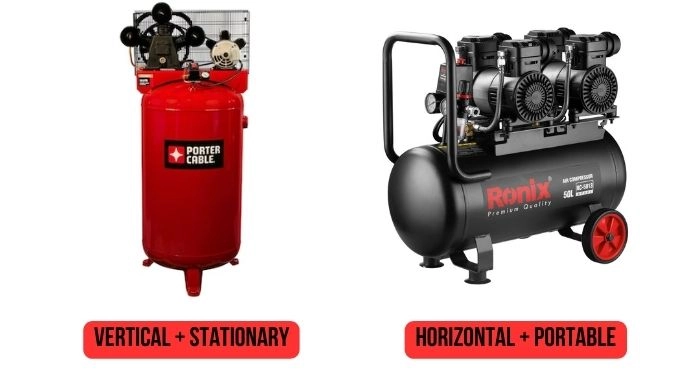
Horizontal air compressors are a common choice for many workshops and industrial settings. Their design suits various tasks and environments. These compressors sit low and stretch out horizontally. This layout makes them stable and easy to use in different spaces.
Design And Structure
Horizontal air compressors have a tank that lies flat. The motor and pump connect on top of this tank. This setup keeps the compressor low to the ground. It spreads the weight evenly, making it steady. The layout allows easy access to parts for repair and maintenance. Most models have wheels or handles for movement.
Advantages
These compressors are very stable due to their wide base. They produce less noise because the tank absorbs sound well. Easy to maintain because parts are simple to reach. They can hold more air, which means longer use without stopping. Their design fits well in places with low ceiling heights.
Limitations
Horizontal compressors take up more floor space. Not ideal for small or crowded rooms. Moving them can be tricky without wheels or handles. They may be heavier than vertical models. Not suitable where vertical space is available but floor space is tight.
Vertical Air Compressors
Vertical air compressors are a popular choice for many workshops and small businesses. Their upright design helps save floor space. These compressors fit well in tight areas and offer easy access to parts.
Many users prefer vertical air compressors because of their compact size. They work well in places where space is limited. The design also allows better cooling during operation.
Design And Structure
Vertical air compressors stand tall with a slim profile. The tank is mounted below the compressor pump. This design helps reduce the footprint of the machine.
The motor and pump sit on top of the tank. Pipes connect these parts to move air efficiently. The upright shape improves heat dissipation and keeps the unit cooler.
Advantages
Vertical air compressors save space in small work areas. Their tall structure fits in corners and narrow spots. This makes them ideal for garages and workshops.
They are easy to maintain because parts are accessible. The cooling system works well, which extends the machine’s life. Many models also come with wheels for easier movement.
Limitations
Vertical air compressors usually have smaller tanks. This limits how long they can run continuously. They may not suit large jobs that need constant air supply.
The tall shape can be less stable on uneven floors. Extra care is needed to prevent tipping. Also, these compressors can be harder to store in low-clearance areas.
Performance Comparison
Performance plays a big role in choosing between horizontal and vertical air compressors. Both types serve the same purpose but differ in how they work and what they offer. Understanding their performance helps pick the right compressor for specific needs. This section compares their efficiency, noise levels, and maintenance requirements.
Efficiency And Power
Horizontal compressors often provide steady power output. They usually have larger tanks, which helps maintain consistent air pressure. Vertical compressors save space but may have smaller tanks. This can cause the motor to run more often, using more energy. Horizontal models tend to be better for heavy-duty tasks. Vertical ones fit well for light or medium work and smaller areas.
Noise Levels
Vertical compressors generally make less noise. Their design helps reduce vibrations and sound. Horizontal compressors can be louder due to larger motors and tanks. Noise depends on the motor size and insulation too. For indoor or quiet spaces, vertical compressors are a good choice. Outdoor or workshop use may handle the noise from horizontal models better.
Maintenance Needs
Horizontal compressors usually require more maintenance. Their larger size means more parts to check and clean. Vertical compressors are easier to maintain because of simpler designs. Both need regular oil changes and filter cleaning. Checking belts and valves is important for both types. Keeping up with maintenance ensures longer life and better performance.
Space And Installation
Choosing between a horizontal and vertical air compressor depends a lot on space and installation needs. These two types differ in how they fit into your workspace and how easy they are to set up. Understanding these differences helps you pick the right one for your area.
Footprint And Placement
Horizontal air compressors take up more floor space. They lie flat and spread out, needing a wide area. These work well in large workshops with open floors. Vertical air compressors stand upright. They use less floor space but need more height clearance. This design fits small rooms or crowded corners better. Consider the size of your workspace before choosing.
Mobility And Portability
Horizontal models are usually heavier and harder to move. They often stay fixed in one spot. Some come with wheels, but moving them is still tough. Vertical compressors are lighter and easier to carry. Their upright shape makes them simpler to roll around. This suits jobs that need moving the compressor often. Choose based on how often you need to relocate the unit.

Credit: www.northerntool.com
Cost Considerations
Cost is a key factor when choosing between horizontal and vertical air compressors. Understanding both initial and ongoing expenses helps in making a smart decision. Each type has different price points and running costs that affect your budget.
Initial Investment
Horizontal air compressors usually cost less upfront. Their simple design lowers manufacturing costs. Vertical compressors often have a higher price. They use more materials and complex parts. Size matters too. Larger models, no matter the type, cost more. Budget size and features carefully before buying.
Operating Expenses
Energy use is a major part of running costs. Horizontal compressors may use more space but can be easier to cool. Vertical compressors save floor space but sometimes need extra maintenance. Maintenance costs vary by model and usage. Check parts availability and service needs. Efficient compressors reduce electricity bills. Choose the one that fits your work volume and power supply.
Choosing The Right Compressor
Choosing the right air compressor depends on your needs and work environment. The decision between horizontal and vertical compressors affects space, performance, and maintenance. Understanding each type helps pick the best fit for your tasks.
Consider the layout of your workspace and the type of projects you handle. This way, you get a compressor that works efficiently without causing hassle.
Matching Needs To Design
Horizontal compressors usually offer more tank space. This suits jobs needing longer air supply without frequent stops. They fit well in wide, open areas where floor space is not tight.
Vertical compressors save floor space by standing tall. They fit small workshops or tight corners. Their design helps avoid clutter and makes cleaning easier.
Think about how often you use the compressor. For heavy, constant use, a larger horizontal tank helps. For occasional or light use, a vertical model might be enough.
Industry-specific Preferences
Construction sites often prefer horizontal compressors. They provide steady air for tools and machines over long periods. Their sturdy build handles rough conditions well.
Small repair shops and home garages lean toward vertical compressors. These units fit better in limited spaces. They offer easy access to controls and require less floor room.
Manufacturing plants may choose based on available space and air needs. Both types can work, but size and placement matter most. Safety and noise levels also influence the choice.

Credit: www.jmindustrial.com
Frequently Asked Questions
What Are The Main Differences Between Horizontal And Vertical Air Compressors?
Horizontal compressors have a horizontal tank, ideal for floor placement. Vertical compressors have a vertical tank, saving floor space. Both types differ in design, space usage, and maintenance access.
Which Air Compressor Is Better For Limited Space?
Vertical air compressors are better for limited space. They occupy less floor area and fit well in tight spots. Horizontal compressors need more floor space but offer easier maintenance.
How Does Tank Orientation Affect Air Compressor Performance?
Tank orientation mainly affects space usage and maintenance access. Performance remains similar if specifications match. Choose based on workspace layout and convenience needs.
Are Vertical Air Compressors Easier To Maintain Than Horizontal Ones?
Horizontal compressors usually allow easier maintenance due to accessible components. Vertical models save space but may have harder access. Maintenance ease depends on design and workspace setup.
Conclusion
Choosing between horizontal and vertical air compressors depends on your space and work needs. Horizontal models fit well in wide spaces and offer easy maintenance. Vertical compressors save floor space and suit tight areas. Both types deliver strong, reliable air power.
Think about your workshop size and how often you use the compressor. This helps pick the best style for your tasks. Each design has clear benefits. The right choice makes your work smoother and more efficient.