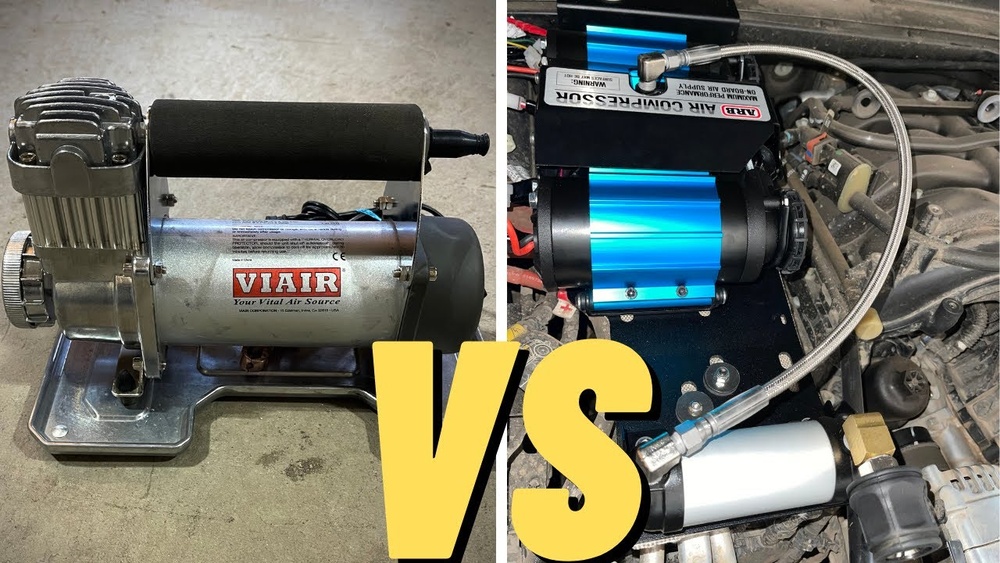
Choosing the right air compressor is important for anyone who loves off-roading or needs reliable air power for vehicles. Two brands stand out in this field: ARB and Viair. Each has a loyal following and unique strengths. Many people wonder, “Which one is better for me?” This article will help you compare ARB and Viair air compressors, explore their features, differences, pros, and cons, and guide you toward the best choice for your needs.
What Makes A Good Air Compressor For Vehicles?
Before you choose between ARB and Viair, it’s important to know what features matter most for air compressors used with vehicles. These are the main factors to think about:
- Airflow rate (CFM) – This tells you how fast the compressor can fill tires or run tools.
- Maximum pressure (PSI) – Higher PSI means the compressor can handle larger tires.
- Duty cycle – This is how long the compressor can run before it needs to cool down.
- Portability – Some compressors are easy to move; others are built-in.
- Power source – Most run on 12V DC, but some use 24V or AC power.
- Reliability and build quality – Off-roaders need compressors that survive harsh conditions.
Many beginners focus too much on price or maximum PSI alone. But CFM and duty cycle are just as important, especially for large trucks or frequent use. Always match the compressor to your tire size and how often you’ll use it.
Overview Of Arb Air Compressors
ARB is an Australian brand known for rugged 4×4 gear. Their air compressors are trusted for off-road trips around the world. Here’s why:
- Build quality: ARB uses strong materials and seals, making their compressors reliable in extreme heat, dust, or water.
- Models: The most popular are the ARB CKMA12 (single), ARB CKMTA12 (twin), and their portable versions.
- Performance: ARB compressors often have high CFM and can handle large tires fast.
- Mounting options: Some ARB units are made for permanent installation inside vehicles, while others are portable.
Key Features Of Arb Compressors
- High airflow: The ARB Twin delivers up to 6.16 CFM at no load.
- Heavy-duty cycle: The twin compressor is 100% duty cycle at 72°F, so it can run continuously without overheating.
- Integrated air locker activation: You can use ARB compressors for both tire inflation and ARB air lockers.
- Water and dust resistance: Most models are rated to IP55 or better.
- Long warranties: Usually 2 years or more.
Arb Compressor Pros And Cons
Pros:
- Excellent for frequent, heavy use
- Fast inflation for big tires
- Reliable in tough conditions
- Good support and spare parts
Cons:
- Higher price than many brands
- Some models require professional installation
- Heavier than smaller compressors
Overview Of Viair Air Compressors
Viair is a US-based company known for value and variety. Their compressors are popular for both off-road and everyday use. Let’s look at why:
- Wide range: Viair has many models for different budgets, tire sizes, and uses.
- Portability: Many Viair compressors come in compact, easy-to-carry kits.
- Affordability: Viair is usually less expensive than ARB, making it a good choice for new users.
- Simple operation: Most Viair models are plug-and-play with alligator clips or cigarette lighter adapters.
Key Features Of Viair Compressors
- Variety of models: From the small Viair 85P to the larger 450P.
- Decent airflow: The Viair 450P portable offers 1.8 CFM at 0 PSI.
- Moderate duty cycle: Many models are 33% duty cycle at 100 PSI, but some go up to 100%.
- Accessory kits: Many Viair compressors include hoses, carrying bags, and inflation tips.
- Lightweight: Most models are easy to store and transport.
Viair Compressor Pros And Cons
Pros:
- Lower price
- Easy to use and set up
- Good for occasional or emergency use
- Lightweight and portable
Cons:
- Slower inflation for big tires
- Lower duty cycles on cheaper models
- Not as rugged as ARB for extreme use
Detailed Comparison: Arb Vs. Viair
To help you make sense of the differences, here’s a side-by-side look at popular ARB and Viair compressors.
| Feature | ARB CKMTA12 Twin | Viair 450P |
|---|---|---|
| Max Airflow (CFM) | 6.16 | 1.8 |
| Max Pressure (PSI) | 150 | 150 |
| Duty Cycle | 100% @ 72°F | 100% @ 100 PSI |
| Weight | 18 lbs | 10.7 lbs |
| Power Source | 12V hardwire | 12V alligator clips |
| Warranty | 2 years | 1 year |
| Average Price | High ($500+) | Medium ($250+) |
This table shows the ARB Twin is much faster, but heavier and more expensive. Viair is lighter and easier for quick use, but slower on large tires.
Inflation Speed Example
Let’s see how long it takes each compressor to fill a 33” tire from 15 PSI to 35 PSI:
| Compressor | Time to Fill One Tire | Time for Four Tires |
|---|---|---|
| ARB CKMTA12 Twin | ~1.5 minutes | ~6 minutes |
| Viair 450P | ~4 minutes | ~16 minutes |
If you air down your tires often, the time difference is noticeable, especially in bad weather.

Credit: www.youtube.com
Which Compressor Is Best For You?
The right choice depends on your needs, not just specs. Here are some typical user types:
For Serious Off-roaders
If you travel remote trails, air down and up often, or run air lockers, ARB is usually better. Its speed and reliability save time and worry. Many overlanders see ARB as a one-time investment that lasts years.
For Daily Drivers Or Casual Use
If you only inflate tires sometimes, don’t need air lockers, or want something easy to carry, Viair is a smart choice. It’s affordable, portable, and gets the job done for most SUVs and cars.
For Budget-minded Buyers
Viair offers good value if you don’t need the fastest or toughest compressor. But avoid the smallest models for trucks or heavy use—they can overheat or take too long.
For Mixed Use
Some users buy a small Viair for emergencies and save up for an ARB later, especially if they plan to upgrade their vehicle or start off-roading more often.
Real-world Durability And Reliability
One thing beginners often miss: how you use the compressor matters more than the specs. For example, leaving any compressor running too long without breaks can shorten its life. Also, dust, water, and vibration can damage cheaper models over time.
ARB compressors are sealed against dust and water, and all wiring is heavy-duty. This matters if you drive in mud, sand, or river crossings. Many ARB owners report 5–10 years of use with little maintenance.
Viair compressors are durable for their price, but not built for extreme conditions. They work well for highway use, emergencies, or light off-roading. However, using a lower-duty model to fill four truck tires in summer heat can cause overheating.

Credit: rebeloffroad.com
Ease Of Installation And Use
Arb Installation
- Hard-mounted models need wiring to the battery and sometimes drilling.
- Can be connected to air lockers, tanks, and hoses.
- Professional installation is best if you’re not confident with wiring.
Viair Setup
- Most models require no installation—just connect to the battery or cigarette socket.
- Ready to use out of the box.
- All parts fit in a bag for easy storage.
Tip: For long trips, always test your compressor at home before you need it.
Extra Features And Accessories
Both brands offer helpful add-ons, but there are differences.
- ARB: Offers air tanks, manifold kits, and digital pressure switches. Air locker-ready models have extra wiring.
- Viair: Many kits include hoses, gauges, and carrying cases. Some models have automatic shut-off.
If you plan to use air tools or run air lockers, only ARB’s system is built for that.
Warranty And Support
ARB offers a 2-year warranty on most compressors, and parts are easy to find worldwide. Their customer service is known for being helpful, especially for off-roaders.
Viair gives a 1-year warranty for most models. Support is solid, but repairs often mean replacing the whole unit if there’s a problem.
Real-world User Reviews
Many users praise ARB for speed and toughness. For example, overlanders report that the ARB Twin can air up four 35” tires in less than 10 minutes, even after years of use. Some mention the high price, but few regret the investment.
Viair users like the price and simplicity. Many say the 88P or 400P gets them home safely after a flat or low tire. Some wish inflation was faster on big tires, but most are happy for casual or emergency use.
Common Mistakes When Choosing
- Choosing too small a compressor: Many people pick based on price, then find it’s too slow or overheats.
- Ignoring duty cycle: If you need to fill several big tires, get a 100% duty cycle model.
- Not considering mounting: If you want easy use, choose portable. For frequent off-roading, consider hard-mounting.
- Forgetting accessories: Check if hoses and tips are included.
When To Upgrade
If your compressor is too slow, overheats, or can’t handle your tires, it’s time to upgrade. Off-roaders often start with Viair and move to ARB as they explore harder trails.

Credit: 813fabrication.com
Trusted Resources
To learn more about air compressor specs and off-road gear, check out the ARB official website.
Frequently Asked Questions
How Do I Know What Size Air Compressor I Need?
Check your tire size and how often you’ll use the compressor. For trucks or 35”+ tires, look for at least 2 CFM at 0 PSI and a 100% duty cycle. For small cars, most Viair models are enough.
Can I Use Arb Or Viair Compressors For Air Tools?
ARB compressors, especially the twin model, can run some light air tools if paired with a tank. Most Viair models are not powerful enough for tools—just tires and inflatables.
Are These Compressors Safe To Use In Rain Or Mud?
ARB compressors are built to handle water, dust, and mud. Viair compressors are water-resistant, but it’s best to avoid heavy exposure. Always check the manual for your model.
What Is The Main Difference Between Arb And Viair?
ARB is built for heavy, frequent use and has higher airflow, but costs more. Viair is affordable, portable, and great for light or emergency use, but not as fast or tough as ARB.
Can I Install These Compressors Myself?
Most Viair models are plug-and-play with alligator clips. ARB hard-mount models need wiring and sometimes drilling—installation is possible for DIYers, but many prefer professional help.
Finding the right air compressor is about matching the tool to your vehicle and adventures. Whether you choose ARB for its power or Viair for its convenience, you’ll be ready for the road ahead.