
When you first start learning about air compressors, you might see the term duty cycle everywhere. It sounds technical, but understanding this concept can save you money, prevent equipment damage, and help you choose the right compressor. If you use air tools, spray paint, or even inflate tires, knowing about duty cycles is essential. Many beginners buy compressors that don’t last long—not because they’re bad, but because the owner didn’t understand duty cycle limits. This guide will break down what an air compressor duty cycle is, why it matters, and how you can use this knowledge to work smarter and safer.
What Does Air Compressor Duty Cycle Mean?
The air compressor duty cycle is a measure of how long a compressor can run compared to how long it must rest in a given time period. It’s usually shown as a percentage. For example, a 50% duty cycle means the compressor can run for half the time and must be off for the other half.
If you see “50% duty cycle at 10 minutes,” the compressor should run for 5 minutes and then rest for 5 minutes before starting again. This prevents overheating and extends the machine’s life. The duty cycle is determined by the compressor’s design, including motor size, cooling system, and intended use.
Manufacturers often test duty cycle in controlled environments, so real-world conditions might affect the actual safe running time. Dust, high temperatures, or poor ventilation can all lower the safe duty cycle.
Why Duty Cycle Matters
Many people ignore duty cycle, thinking that as long as the compressor works, they can run it as much as they want. But this can lead to several problems:
- Overheating: Running a compressor beyond its duty cycle causes heat buildup. This can damage motors, seals, and even melt wires.
- Shorter Lifespan: A compressor that’s always pushed too hard will wear out faster. Replacement parts and repairs can be expensive.
- Warranty Issues: Many manufacturers don’t cover damage caused by ignoring duty cycle limits.
- Work Interruptions: If your compressor overheats, you might have to wait for it to cool down, stopping your project.
- Safety Risks: Extreme overheating can cause fires or electrical hazards.
Understanding duty cycle helps you choose the right compressor for your needs and avoid these problems.
Credit: www.quincycompressor.com
How Duty Cycle Is Calculated
The formula for air compressor duty cycle is straightforward:
Duty Cycle (%) = (Time ON ÷ Total Cycle Time) × 100
For example, if a compressor runs for 4 minutes and then rests for 6 minutes:
- Total cycle time = 4 minutes ON + 6 minutes OFF = 10 minutes
- Duty Cycle = (4 ÷ 10) × 100 = 40%
Some compressors have a 100% duty cycle, meaning they can run continuously without needing to rest. Others may be as low as 20%. Always check the manufacturer’s specs.
Common Duty Cycle Ratings And What They Mean
Manufacturers usually list duty cycles in their product details. Here are some common ratings:
| Duty Cycle (%) | Time ON (minutes) | Time OFF (minutes) | Total Cycle Time (minutes) |
|---|---|---|---|
| 20% | 2 | 8 | 10 |
| 50% | 5 | 5 | 10 |
| 75% | 7.5 | 2.5 | 10 |
| 100% | Continuous | 0 | Any |
A 20% duty cycle means the compressor should not run for more than 2 minutes in a 10-minute period. A 100% duty cycle means the compressor can run non-stop.

Credit: fluidairedynamics.com
Types Of Compressors And Their Duty Cycles
Not all air compressors are built the same. Here’s how duty cycle differs by type:
| Compressor Type | Typical Duty Cycle (%) | Common Uses |
|---|---|---|
| Home/DIY Portable | 20–50 | Inflating tires, light air tools |
| Professional/Contractor | 50–75 | Spray painting, framing, roofing |
| Industrial Stationary | 75–100 | Manufacturing, body shops |
Home-use compressors usually have lower duty cycles because they’re not meant for heavy, continuous work. Industrial compressors are designed for long operation and can handle much tougher jobs.
How To Choose The Right Duty Cycle For Your Needs
Picking the wrong duty cycle is a common beginner mistake. Here’s how to make the right choice:
- List Your Tools: Check the air consumption (CFM—cubic feet per minute) of each tool you plan to use.
- Estimate Usage: Will you run tools continuously or only in short bursts? Painting and sandblasting need longer run times, so you’ll need a higher duty cycle.
- Factor in Breaks: If your workflow naturally includes stops (like repositioning parts), you might get by with a lower duty cycle.
- Consider the Environment: Hot workspaces reduce the actual duty cycle, so choose higher than you think you need if you work in high temperatures.
- Think About Expansion: If you might add tools or use the compressor more in the future, buy a model with a higher duty cycle to avoid outgrowing it.
Pro tip: Always choose a compressor with a duty cycle higher than your actual needs. This prevents overloading and increases reliability.
Real-world Examples Of Duty Cycle Use
Let’s look at a few situations where duty cycle makes a big difference.
Example 1: Tire Shop
A tire shop uses a small compressor (20% duty cycle) to run an impact wrench all day. After a few weeks, the compressor fails. The constant use overheated the motor because 20% duty cycle was not enough.
Better choice: An industrial compressor with a 75–100% duty cycle is needed for this kind of work.
Example 2: Home Garage
A car hobbyist uses a 50% duty cycle compressor for airing up tires and occasionally using a nail gun. Since these tasks are short, the compressor never overheats and lasts for years.
Insight: Many light-duty jobs don’t need a high duty cycle, as long as the user doesn’t run the compressor continuously.
Example 3: Spray Painting
A DIY painter tries to paint a car with a 25% duty cycle compressor. The compressor overheats and shuts off after a few minutes, leaving the paint job unfinished.
Advice: For spray painting, choose a compressor with at least a 75% duty cycle or use a larger tank to allow longer bursts.
The Role Of Tank Size In Duty Cycle
A common mistake is confusing tank size with duty cycle. Tank size affects how long you can use air before the motor must start again, but it doesn’t change the compressor’s true duty cycle.
- Large tanks: Can store more air, giving longer tool use before the compressor needs to run.
- Small tanks: Fill up and empty quickly, causing the compressor to cycle more often.
You can sometimes use a low duty cycle compressor for short jobs if the tank is large enough, but if you need continuous air, you still need a high duty cycle.
How To Extend Your Compressor’s Duty Cycle
While you can’t change a compressor’s basic design, you can help it run cooler and longer:
- Increase Ventilation: Use your compressor in a cool, dry area with good airflow.
- Add Cooling Fans: Some users add extra fans to blow on the compressor’s motor.
- Give It Breaks: Even if you’re in a hurry, give your compressor rest periods.
- Check Oil and Maintenance: For oil-lubricated compressors, fresh oil helps cooling. Clean filters also prevent overheating.
- Don’t Cover the Compressor: Never put rags or covers over the unit while running. This traps heat.
- Upgrade Your Compressor: If you often hit the duty cycle limit, it’s better to buy a bigger unit.
Expert tip: Regular maintenance is often the difference between a compressor that lasts years and one that burns out early.
What Happens If You Ignore Duty Cycle?
People often push compressors past their limits because they want to finish a job faster. Here’s what can happen:
- Thermal Overload: Many compressors have built-in thermal switches that shut them down if they get too hot. This protects the motor, but repeated overheating can still cause damage.
- Motor Failure: Windings and insulation can melt, causing permanent motor failure.
- Air Leaks: Seals and gaskets may warp from heat, leading to leaks and pressure loss.
- Warranty Voided: Manufacturers may refuse to repair a compressor that was used incorrectly.
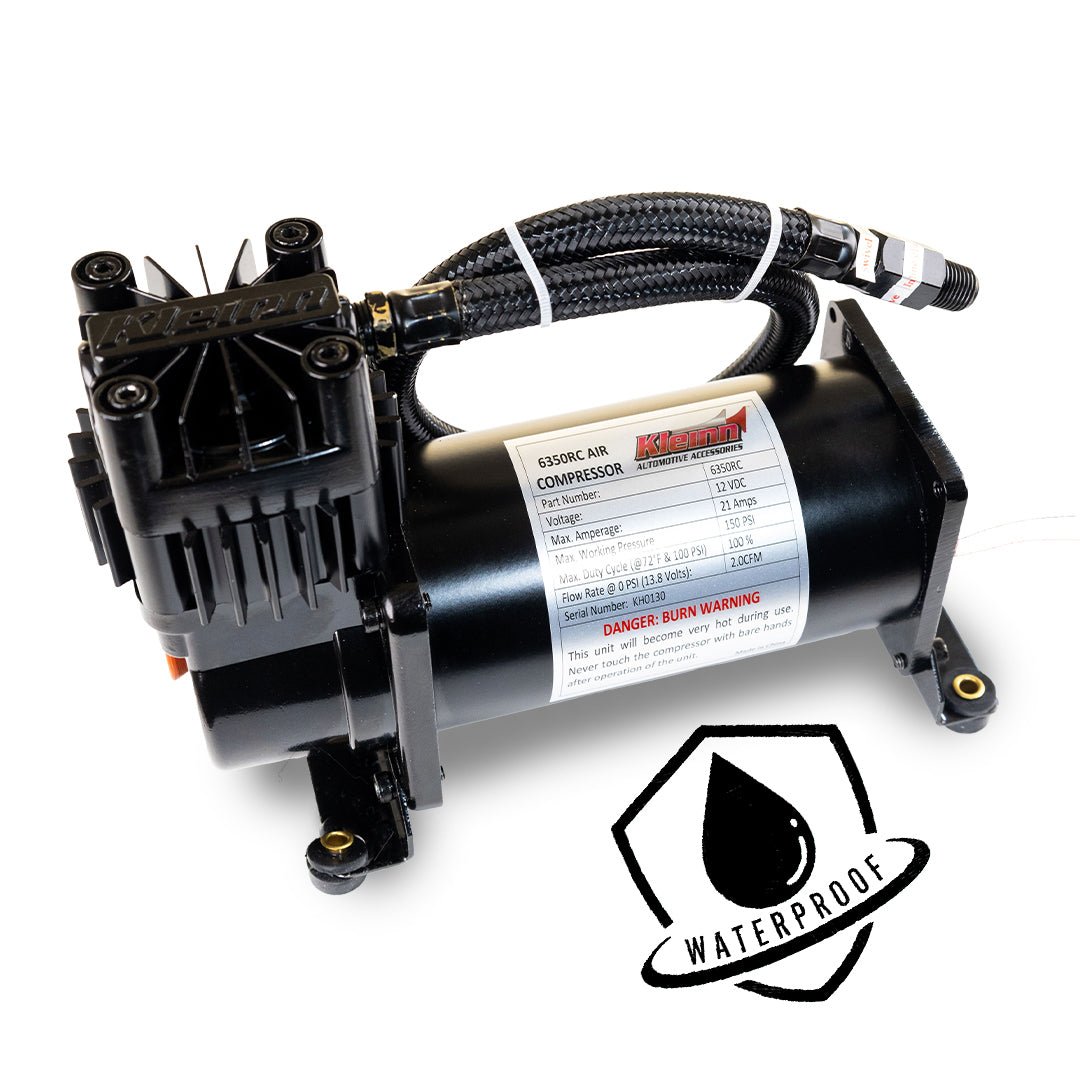
One non-obvious insight: Some compressors may keep running even when overheated if they lack proper safety switches. This is especially true for very cheap or old models. Always check for thermal protection features before buying.
Credit: kleinn.com
Comparing Duty Cycle To Other Compressor Specs
People often focus only on CFM (cubic feet per minute) and PSI (pounds per square inch) when choosing a compressor. These are important, but without enough duty cycle, high CFM and PSI won’t help.
| Specification | What It Means | Why It Matters |
|---|---|---|
| CFM | How much air the compressor delivers | Must match or exceed your tools’ needs |
| PSI | Maximum pressure the compressor can deliver | Must meet the highest tool requirement |
| Duty Cycle | How long the compressor can run without overheating | Determines how much work you can do before stopping |
Non-obvious insight: Some compressors have high CFM/PSI but low duty cycles. This means they can deliver lots of air, but only in short bursts. Always check all three specs before buying.
How Manufacturers State Duty Cycle
Manufacturers may use slightly different terms or methods:
- “Continuous Duty” means 100% duty cycle.
- “Intermittent Duty” means the unit must rest often.
- Some list both duty cycle and “max run time” (e.g., “Runs 5 min ON, 5 min OFF”).
- Others only note “not for continuous operation” in small print.
If specs aren’t clear, ask for more details or look for reviews from real users. Always read the manual—some important details are only there.
Frequently Asked Questions
What Happens If I Run My Compressor Past Its Duty Cycle?
Running a compressor past its duty cycle can overheat the motor, cause permanent damage, or even create safety hazards. Most units will shut down if they have thermal protection, but repeated overheating weakens parts over time.
Is A Higher Duty Cycle Always Better?
Not always. Higher duty cycles usually mean a more expensive and heavier compressor. If you only use air tools in short bursts, a lower duty cycle could be fine and save you money.
Can I Increase The Duty Cycle Of My Compressor?
You can’t change the core design, but you can help the compressor stay cooler by improving ventilation, adding fans, and performing regular maintenance. However, the safest solution is to buy a model with the duty cycle you need.
How Do I Know The Real-world Duty Cycle For My Compressor?
Always check the manual and look for real user reviews. If you work in a hot or dusty area, assume your compressor’s safe duty cycle is lower than the manufacturer’s test numbers.
Where Can I Learn More About Compressor Specs And Maintenance?
For detailed technical info and maintenance tips, check out Wikipedia’s Air Compressor page for a good starting point.
Understanding the duty cycle of your air compressor is the key to choosing wisely, working safely, and getting the longest life from your equipment. Don’t just look at power or pressure—duty cycle tells you how much work your compressor can really do. With this knowledge, you’re ready to make a smart investment and avoid common mistakes many beginners make.