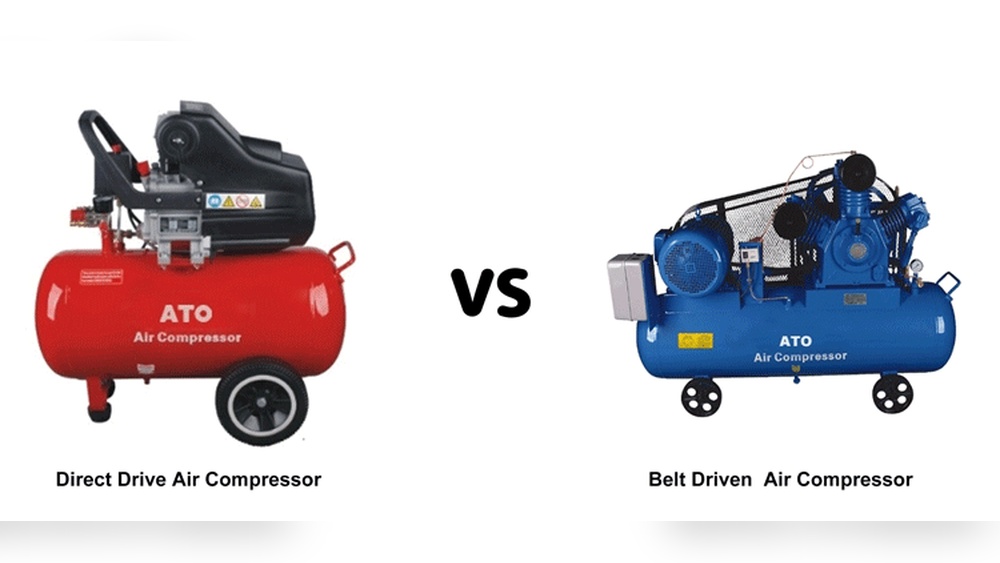
When you’re choosing an air compressor, one big question often comes up: should you get a belt driven or a direct drive air compressor? This decision can affect your work, your costs, and even how long your machine lasts. Many people don’t realize that the way the motor connects to the pump changes more than just performance. It impacts things like noise, maintenance, and energy use. Let’s look closely at these two air compressor types, so you can pick the right one for your needs.
How Belt Driven And Direct Drive Air Compressors Work
Understanding the basics helps a lot. In a belt driven air compressor, the motor uses a belt and pulley system to spin the compressor’s pump. You’ll see a belt running between the motor shaft and the pump shaft. The belt transfers power and sometimes even reduces or increases the speed.
With a direct drive air compressor, the motor is attached directly to the pump. There’s no belt in between. The motor shaft and pump shaft are connected, so they turn at the same speed.
This difference in design leads to many other differences in how these compressors perform, last, and cost.
Performance: Power, Efficiency, And Speed
When you compare these two types, performance is key. Belt driven compressors are often more flexible. Because of the pulley system, you can change the speed of the pump by using different sized pulleys. This means you can adjust the air output if needed.
Direct drive compressors run at the same speed as the motor. This makes them simpler, but also means they’re usually limited in how much you can change their performance.
Here’s a quick look at how they compare on major performance points:
| Feature | Belt Driven | Direct Drive |
|---|---|---|
| Speed Adjustment | Easy (change pulleys) | Fixed |
| Air Output | Higher (for large models) | Lower (small to medium models) |
| Energy Efficiency | Good, but some energy lost in belt friction | Very efficient (less energy loss) |
Non-obvious insight: Belt driven compressors sometimes waste a little energy due to belt friction. But this is not always a big deal, especially for larger industrial models where airflow is more important than a small energy loss.

Credit: www.youtube.com
Durability And Maintenance
When you invest in an air compressor, you want it to last. Maintenance matters too, because downtime can hurt your work.
Belt driven air compressors usually last longer if maintained well. The main reason is that the belt absorbs shocks and vibrations, reducing wear on the pump. Also, the pump in a belt driven compressor often runs at a lower speed, which reduces heat and wear.
However, you will need to check and replace the belt over time. Misalignment or worn belts can cause problems.
Direct drive compressors have fewer moving parts, which means less regular maintenance. But, since the motor and pump are directly connected, they both run at high speed and get hotter. This can wear them out faster if used for long periods.
Here’s a breakdown:
| Aspect | Belt Driven | Direct Drive |
|---|---|---|
| Expected Lifespan | 15-20 years (with good care) | 5-10 years (typical use) |
| Maintenance Needs | Belt check/replace, oiling (if oil-lubricated) | Less frequent, but motor/pump wear faster |
| Common Issues | Belt slip, misalignment | Overheating, seal failure |
A key insight: Many beginners overlook that direct drive compressors are often “throwaway” models. When the pump or motor fails, it’s sometimes cheaper to buy a new unit than to repair.
Noise Levels And Working Environment
Noise might seem like a small thing, but in a shop, garage, or home, it can be a big deal. Belt driven compressors are usually quieter. The belt and pulleys help absorb vibrations, and the pump can run at a lower speed. This means less noise overall.
Direct drive compressors tend to be louder because the motor and pump run fast and are directly connected. This can be uncomfortable in small or indoor spaces.
For example, a typical belt driven unit might run at 65-70 decibels, which is like normal conversation. A direct drive unit can reach 80-90 decibels, which is more like a lawn mower.
If you care about noise, this is something to consider carefully.
Cost: Purchase Price And Running Costs
Everyone wants value for money, but the cheapest air compressor isn’t always the best deal.
Belt driven compressors usually cost more upfront. They are larger, have more parts, and are often designed for heavy-duty or industrial use. You may pay $400 or more for a good belt driven model.
Direct drive compressors are often cheaper, especially for small, portable models. Prices can start around $100.
However, running costs also matter. Belt driven compressors may need more maintenance (belts, oil), but they last longer. Direct drive units may need less care but might not last as long, so you may need to replace them sooner.
Don’t forget electricity costs. Direct drive compressors can be slightly more energy efficient, but with small machines, the savings are not huge.
Application: Who Should Choose Which?
Your work should guide your choice. Here’s how to decide:
- Belt Driven Compressors are best for:
- Workshops and factories
- Heavy-duty, continuous use
- When you need high air output (large tools, sandblasting, painting)
- Places where noise is a concern
- Direct Drive Compressors are best for:
- Home garages and DIYers
- Portable, light-duty work (tires, nail guns, small spray guns)
- Occasional use, or when you need to move the compressor often
- Lower budgets
For example, a car repair shop will benefit from a belt driven compressor because it can run all day and power several tools. But a homeowner inflating tires or running a small airbrush can use a direct drive model without problems.
Size, Weight, And Portability
Belt driven compressors are usually larger and heavier. They have big tanks and pumps, and the belt assembly adds to the size. Moving them around isn’t easy. They often come on wheels but are best kept in one place.
Direct drive compressors are compact and much lighter. Many are designed to be carried by one person. This makes them perfect for contractors who move from site to site, or for anyone with limited space.
Here’s a comparison:
| Feature | Belt Driven | Direct Drive |
|---|---|---|
| Weight | 50-200+ lbs (22-90+ kg) | 20-60 lbs (9-27 kg) |
| Portability | Low (stationary) | High (portable) |
| Typical Tank Size | 30-120 gallons (114-450 L) | 1-30 gallons (4-114 L) |
Maintenance Tips For Each Type
Knowing what to do keeps your compressor running well.
For belt driven compressors:
- Check belt tension and alignment monthly.
- Replace belts when worn or cracked.
- Oil the pump if it’s an oil-lubricated model.
- Drain the tank regularly to avoid rust.
- Keep pulleys free from dust and dirt.
For direct drive compressors:
- Clean intake filters.
- Drain moisture from the tank after each use.
- Watch for overheating.
- Oil the pump if the model needs it (many direct drive units are oil-free).
Non-obvious tip: Always check the user manual for the correct type of oil. Using the wrong oil can shorten your compressor’s life.

Credit: www.youtube.com
Common Mistakes When Choosing
Many buyers make errors that cost them later. Here are some to avoid:
- Choosing solely on price. Cheap direct drive models can be tempting, but may not meet your needs if you use air tools a lot.
- Ignoring noise levels. A loud compressor can make work unpleasant or even harm hearing.
- Underestimating air needs. If you buy too small, the compressor will run constantly and wear out quickly.
- Not considering maintenance. If you don’t want to check belts and oil, a direct drive (especially oil-free) is better.
- Forgetting about power supply. Larger belt driven models may need 220V power, not just a regular outlet.
Environmental And Safety Factors
Direct drive compressors are often oil-free, so there’s less chance of oil leaks or contamination. This is useful for painting or food industry work, where oil must be avoided.
Belt driven compressors may leak oil if not maintained. They also need more care with the moving belt, which can catch loose clothing or tools.
Always follow safety rules: turn off the compressor before maintenance, and keep guards over belts and pulleys.
Real-world Examples
- Automotive Repair Shop: Uses a 60-gallon belt driven compressor. It runs 8 hours a day, powers impact wrenches, and has lasted 15 years with regular belt changes.
- Home DIYer: Has a 6-gallon direct drive pancake compressor. It’s light, easy to carry, and perfect for airing up tires or using a brad nailer. After 5 years, it still works, but if it breaks, it’s cheap to replace.
- Construction Contractor: Uses a direct drive oil-free compressor. It’s portable, reliable for short jobs, and needs almost no maintenance.
Which Is Right For You?
Choosing between belt driven and direct drive air compressors isn’t just about specs. Think about how often you use the compressor, what tools you power, your workspace, noise tolerance, and budget.
If you need something reliable for heavy, daily use, a belt driven model is worth the extra cost and size. If you want something easy, portable, and affordable for home use, direct drive is the way to go.
If you want more technical details, you can find further reading on the Air Compressor Wikipedia page.

Credit: fluidairedynamics.com
Frequently Asked Questions
What Lasts Longer: Belt Driven Or Direct Drive Air Compressors?
Belt driven compressors usually last much longer, often 15 years or more with proper care. Direct drive units have a shorter lifespan, especially if used heavily, but they are often cheaper to replace.
Are Belt Driven Compressors Always Quieter?
Yes, in most cases, belt driven compressors are quieter. The belt and pulleys reduce vibration and let the pump run at a lower speed, which cuts down on noise.
Can I Use A Direct Drive Compressor For Spray Painting?
You can, but be careful. Many direct drive compressors have small tanks and may not keep up with air demand for continuous spray painting. They can also be noisy and may not deliver the smooth airflow that painting needs.
What Maintenance Does A Direct Drive Compressor Need?
Most direct drive compressors are low maintenance, especially oil-free models. You should clean the air filter, drain the tank, and watch for overheating. Oil-lubricated models need oil checks too.
Is A Belt Driven Compressor Better For Professional Use?
For most professional shops, yes. Belt driven compressors handle long hours, deliver more air, and are easier to repair. They cost more and need more care, but they’re built for tough work.
The choice between belt driven and direct drive air compressors depends on your needs. Think about your workload, noise level, budget, and how much maintenance you’re ready to do. The right compressor will make your work easier and save you money in the long run.