Air Compressor Vs Condenser: Understanding The Key Differences
Choosing between an air compressor and a condenser can be confusing, especially if you are new to these terms. Many people mix them up because both deal with air and pressure in some way. However, their functions, applications, and technical details are very different. If you want to make an informed decision, whether for an industrial project, home maintenance, or just to understand your air conditioner better, it’s essential to know what sets these two devices apart.
This guide will clarify everything you need to know about air compressors and condensers. We will look at how they work, where they are used, their technical differences, and what to consider if you need one for your project. By the end, you will not only know the difference, but also understand why it matters.
What Is An Air Compressor?
An air compressor is a machine that takes in air from the environment and compresses it to a higher pressure. It does this by reducing the air’s volume. The compressed air is then stored in a tank and can be released as needed. Air compressors are widely used in many areas of daily life and industry.
How Air Compressors Work
Air compressors use a motor (usually electric or gas-powered) to drive a piston or rotary element. This mechanism draws in air, squeezes it into a smaller space, and pushes it into a storage tank. When you need the air, it comes out of the tank at a high pressure.
There are several types of air compressors, but the most common are:
- Reciprocating (Piston) Compressors: Use pistons to compress air.
- Rotary Screw Compressors: Use rotating screws to push air into a smaller space.
- Centrifugal Compressors: Use a spinning impeller to increase air pressure.
Common Uses
- Powering pneumatic tools (like drills, hammers, and spray guns)
- Inflating tires
- Industrial manufacturing
- HVAC systems (for moving air, not cooling it)
- Construction sites
Key Features
- Stores compressed air for later use
- Adjustable pressure for different applications
- Usually portable (especially smaller models)
What Is A Condenser?
A condenser is a device that takes a gas or vapor and changes it into a liquid by cooling it. In most cases, condensers are used to remove heat from a system. They are essential in processes where you need to turn a hot vapor (like steam or refrigerant) into a liquid.
How Condensers Work
Condensers work by passing the hot gas through a series of coils or tubes. As the gas flows, it contacts cooler surfaces or air, causing it to lose heat. When the gas temperature drops enough, it becomes a liquid.
There are different types of condensers, including:
- Air-cooled condensers: Use air to cool the gas.
- Water-cooled condensers: Use water to absorb the heat.
- Evaporative condensers: Combine air and water cooling.
Common Uses
- Refrigeration systems (like fridges and freezers)
- Air conditioners
- Power plants (to condense steam from turbines)
- Chemical processing
Key Features
- Removes heat from gases and vapors
- Changes state from gas to liquid
- Integral part of cooling and refrigeration
Main Differences Between Air Compressor And Condenser
Understanding the technical and functional differences is essential. The table below summarizes the core distinctions:
| Feature | Air Compressor | Condenser |
|---|---|---|
| Main Function | Increases air pressure | Removes heat and changes gas to liquid |
| Type of Media | Air (gas) | Gas (like refrigerant) |
| Application | Power tools, inflating, industrial uses | Cooling, refrigeration, AC systems |
| Energy Input | Mechanical (electric/gas motor) | Usually passive, uses coolant/air flow |
| Output | Compressed air | Liquid (from vapor) |
How They Work In Hvac And Refrigeration Systems
Both air compressors and condensers play important roles in HVAC (heating, ventilation, and air conditioning) and refrigeration, but their jobs are very different.
Air Compressor In Hvac
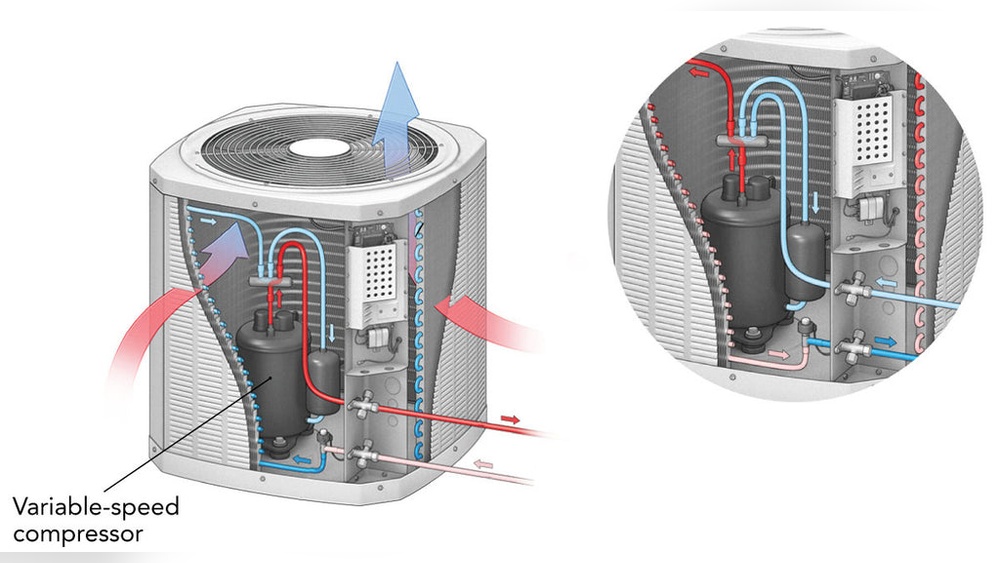
In some systems, an air compressor is used to move air or power pneumatic controls. However, in refrigeration and air conditioning, the term “compressor” refers to the refrigerant compressor, not an air compressor. This refrigerant compressor squeezes the refrigerant gas, which then moves to the condenser.
Condenser In Hvac
After the refrigerant gas is compressed, it enters the condenser as a hot, high-pressure vapor. The condenser cools it down, turning it into a liquid. This liquid can then absorb heat from the space you want to cool.
Example: Air Conditioner Cycle
- Compressor squeezes refrigerant gas
- Hot gas moves to condenser
- Condenser cools gas, turns it to liquid
- Liquid refrigerant absorbs heat inside the building
- Cycle repeats
Many people confuse the air compressor (which compresses atmospheric air for tools or other uses) with the refrigerant compressor in AC units. These are not the same. The AC compressor is a specialized part, and the condenser is where the hot gas is cooled and turned to liquid.
Technical Details: How Pressure And Heat Are Managed
The air compressor deals with increasing pressure. Its job is to squeeze air into a storage tank, raising its pressure. The air gets warmer as it is compressed (because squeezing air makes it hotter), but the main goal is pressure, not heat removal.
The condenser deals with removing heat. It takes a hot vapor and removes enough heat to turn it into a liquid. The main goal is cooling and state change, not pressure.
| Aspect | Air Compressor | Condenser |
|---|---|---|
| Pressure Change | Increases pressure | Reduces pressure slightly as gas condenses |
| Heat Management | Air becomes hotter, often cooled before storage | Removes heat to change state |
| State Change | No change, still air (gas) | Changes vapor to liquid |
When Should You Use An Air Compressor?
If you need pressurized air for any of these tasks, an air compressor is the right choice:
- Powering pneumatic tools (impact wrenches, nail guns, paint sprayers)
- Inflating tires or sports equipment
- Cleaning machinery with high-pressure air
- Sandblasting or painting
- Running industrial equipment that needs compressed air
Homeowners often buy small portable air compressors to keep in their garage for car maintenance or DIY projects. Industrial sites use large, stationary compressors to run multiple machines at once.
One insight that many beginners miss: the size of the air tank and the maximum pressure (PSI) are both critical. A small tank will run out of compressed air quickly, which means the compressor will need to turn on more often. This can shorten its life and reduce efficiency.
Another point: The flow rate (CFM, cubic feet per minute) is just as important as maximum pressure. Some tools need a lot of airflow, not just high pressure. Always check your tool’s requirements before choosing an air compressor.

Credit: www.youtube.com
When Should You Use A Condenser?
A condenser is needed whenever you need to remove heat from a gas and turn it into a liquid. This is common in:
- Air conditioning systems (both home and car ACs)
- Refrigerators and freezers
- Industrial cooling processes
- Power plant steam cycles
For example, in an air conditioner, the condenser is the outdoor unit with a fan and coils. It releases the heat taken from inside your home to the outside air. In a refrigerator, the condenser is usually a set of coils on the back or bottom that gets warm to the touch.
A non-obvious insight: The efficiency of a condenser depends on airflow and temperature difference. If the air around the condenser is too hot, or if airflow is blocked by dust, the condenser cannot work well. This is why cleaning your AC or fridge coils helps save energy.
Another point: Water-cooled condensers are more efficient than air-cooled ones, but they need a water source and more maintenance. This is why large buildings and industrial plants often use water-cooled systems.
Cost, Maintenance, And Energy Use
Let’s compare both devices in terms of cost, maintenance, and efficiency:
| Factor | Air Compressor | Condenser |
|---|---|---|
| Initial Cost | $100–$2,000+ (depending on size) | $50–$1,000+ (as part of a system) |
| Maintenance | Oil changes, filter replacement, draining tank | Cleaning coils, checking for leaks, ensuring airflow |
| Energy Use | Can be high if used often; depends on motor size | Passive, but the connected system (like AC) uses energy |
| Common Failure Points | Leaks, worn seals, overheating, motor failure | Clogged fins, corrosion, refrigerant leaks |
Regular maintenance is key for both. For compressors, neglecting oil changes or leaving water in the tank can cause rust and failure. For condensers, dust and dirt are the biggest enemies, as they block airflow and reduce heat transfer.
Common Mistakes People Make
Many beginners make these errors:
- Confusing the two devices: Thinking an air compressor can replace a condenser, or vice versa, especially in DIY cooling projects.
- Ignoring airflow for condensers: Placing AC units in tight spaces or not cleaning coils reduces efficiency.
- Buying the wrong air compressor size: Choosing a compressor that is too small for the job leads to poor performance and frustration.
- Overlooking safety: Pressurized air tanks can be dangerous if not properly maintained; always check for leaks and drain water regularly.
- Mixing up compressor types: Not all compressors are for air; some are for refrigerants, which is a completely different application.
Real-world Examples
- Car Mechanic Shop: Uses a large air compressor to power tools. The shop’s air conditioning system has a condenser, but it does not use compressed air from the shop compressor.
- Homeowner with a Garage: Uses a small air compressor to inflate tires and run nail guns. The air conditioner for the house has a condenser (outside), but no air compressor.
- Industrial Plant: May have both, but the air compressor runs machines, and the condensers are part of the cooling system for heavy equipment.

Credit: thefurnaceoutlet.com
Which One Do You Need?
If your goal is to power tools, inflate, or supply pressurized air, you need an air compressor. If you need to cool a vapor, condense steam, or run a refrigeration cycle, you need a condenser.
It’s not about one being better than the other—it’s about their purpose. Using the wrong device for the job can cause damage, waste energy, or even be dangerous.
For more technical details on thermodynamics and cooling, you can refer to the Wikipedia page on condensers.
Frequently Asked Questions
What Is The Main Difference Between An Air Compressor And A Condenser?
The main difference is their function. An air compressor increases air pressure and stores it for use. A condenser removes heat from a gas, turning it into a liquid.
Can An Air Compressor Be Used Instead Of A Condenser?
No, they are not interchangeable. An air compressor cannot cool or condense vapors. It only compresses air. A condenser cannot produce pressurized air.
Why Does My Air Conditioner Need Both A Compressor And A Condenser?
The compressor raises the pressure of the refrigerant gas, while the condenser cools the gas and turns it into a liquid. Both are essential for the cooling cycle to work.
What Happens If A Condenser Is Not Working Properly?
If a condenser is dirty or blocked, it can’t remove heat efficiently. This can cause high energy bills, poor cooling, or even system failure.
How Do I Choose The Right Air Compressor For My Needs?
Check the tools you plan to use and note their pressure (PSI) and airflow (CFM) requirements. Choose a compressor that meets or exceeds these ratings. Also, consider tank size and portability.
Understanding the difference between air compressors and condensers helps you avoid costly mistakes and choose the right equipment for your needs. Both are important in their own fields, and knowing when to use each one will save you time, money, and frustration.
Credit: thefurnaceoutlet.com