When you look for an air compressor, two numbers seem to matter most: CFM and tank size. You see these numbers everywhere—on product labels, in manuals, and in online reviews. But what do they really mean? And which one should you care about more? Many beginners get confused, thinking a bigger tank always means more power, or that a high CFM is the only thing that matters. Understanding the real difference between air compressor CFM vs tank size will help you choose the right tool for your needs, save money, and avoid common mistakes.
Let’s break down these technical terms, see how they work together, and find out what really matters when choosing an air compressor for your shop, garage, or business.
What Is Cfm In Air Compressors?
CFM stands for Cubic Feet per Minute. It measures how much air the compressor can deliver every minute. Think of it as the “breathing speed” of the compressor. The higher the CFM, the more air it can provide to your tools.
Many air tools, like spray guns, sanders, and impact wrenches, need a certain CFM to work properly. If your compressor doesn’t deliver enough CFM, your tools may slow down, stop working, or perform poorly.
How Is Cfm Determined?
CFM depends on the compressor’s:
- Pump size
- Motor power
- Pressure (PSI) setting
Most manufacturers list CFM at a specific PSI, usually 90 PSI, because many tools are rated for this pressure. For example, a compressor might say “5. 0 CFM at 90 PSI. ”
Why Cfm Matters
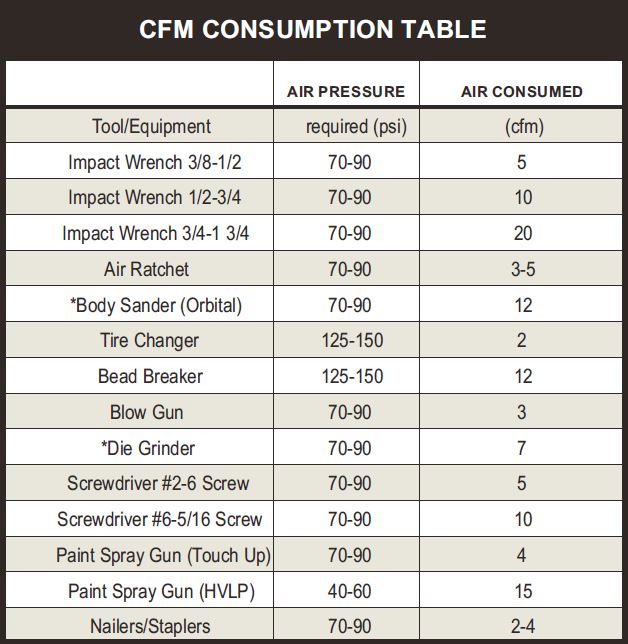
- Tool performance: Using a spray gun that needs 6 CFM, but your compressor only provides 4 CFM? The gun will sputter and give poor results.
- Continuous use: If you run tools for long periods, you need enough CFM to keep up without waiting for the tank to refill.
- Multiple tools: Using several tools at once increases the total CFM required.
Pro tip: Always check your tools’ CFM requirements before buying a compressor.
What Is Tank Size In Air Compressors?
Tank size is measured in gallons (or sometimes liters). It tells you how much compressed air the tank can hold and store. A bigger tank means more air is available before the compressor has to turn on again to refill.
Why Tank Size Matters
- Air storage: A larger tank can run tools longer before the pressure drops and the pump needs to refill.
- Duty cycle: For short, high-demand bursts (like impact wrenches), a big tank can supply more air immediately.
- Cooling and wear: With a bigger tank, the compressor motor cycles on and off less often, reducing wear and overheating.
Common Air Compressor Tank Sizes
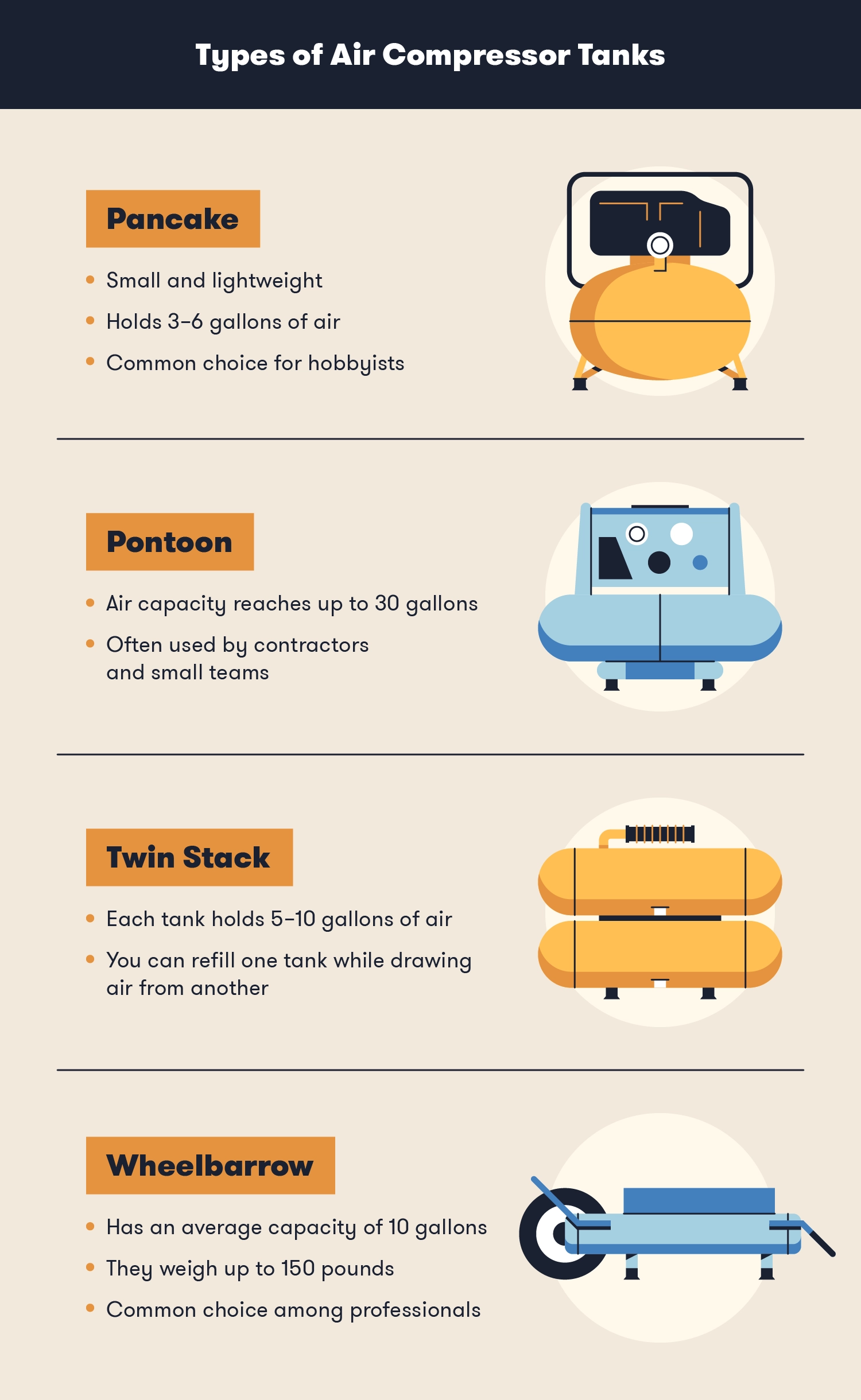
You will find compressors with tank sizes from 1 gallon (small, portable) to 80 gallons (large, industrial). Here’s a quick guide:
| Tank Size (Gallons) | Typical Use |
|---|---|
| 1–6 | Inflating tires, brad nailers, staplers |
| 8–20 | Home garages, small spray jobs, light air tools |
| 30–60 | Automotive repair, large tools, small shops |
| 80+ | Industrial, continuous heavy use |
Cfm Vs Tank Size: Key Differences
It’s easy to mix up CFM and tank size. Here’s a clear look at what each does:
- CFM is about the rate of airflow. It shows how much air the compressor can produce per minute.
- Tank size is about storage. It tells you how much compressed air you have ready to use.
A compressor with high CFM but a small tank can run powerful tools, but only for a short time before the compressor must refill. A big tank with low CFM can supply air for a little while, but the refill rate is slow, so you may have to wait.
| Feature | CFM | Tank Size |
|---|---|---|
| Main Function | Airflow rate | Air storage |
| Affects | Tool performance | Run time before refill |
| Best for | Continuous-use tools | Short, high-demand bursts |
| Analogy | Speed of faucet | Size of water tank |
How Do Cfm And Tank Size Work Together?
A common mistake: thinking you only need to look at tank size or only at CFM. In reality, both numbers work together. Here’s how:
- If your tool uses more CFM than your compressor produces, the tank acts as a “buffer.” You can use the tool until the tank empties, then you must wait for the compressor to catch up.
- If your compressor produces more CFM than your tools use, the tank will stay full, and you can work continuously.
- If you do short, quick jobs (like a nail gun), a small tank may be enough, even if CFM is not high.
- For long, continuous jobs (like painting), you need enough CFM and a tank big enough to avoid frequent stops.
Non-obvious insight: Many people think a bigger tank can make up for low CFM. This only works for a few minutes. Once the tank empties, you’re limited by the compressor’s CFM.
Choosing The Right Balance For Your Needs
Finding the right air compressor is about matching both CFM and tank size to your work. Here’s how to do it:
1. Check Your Tool Requirements
Look at the air tools you plan to use. Each tool lists a minimum CFM at a specific PSI. Add up the CFM if you plan to run more than one tool at once.
Example:
- Paint sprayer: 6 CFM at 40 PSI
- Impact wrench: 5 CFM at 90 PSI
If you want to use both together, you need at least 11 CFM at the higher pressure.
2. Think About Run Time
- For continuous use (painting, sanding), get a compressor that supplies at least as much CFM as your tool needs.
- For short bursts (nail guns, tire inflation), a larger tank can give you enough air, even with a lower CFM.
3. Consider Portability And Space
- Small compressors (1–6 gallons) are easy to move but only good for light, quick jobs.
- Large tanks (30+ gallons) are heavy and less portable, but support bigger jobs.
4. Calculate Your True Needs
Many beginners buy a bigger tank “just in case. ” But if the CFM is too low, it won’t help for bigger jobs.
Non-obvious insight: For many home users, a compressor with 4–6 CFM at 90 PSI and a 20–30 gallon tank is a good middle ground for most jobs.
5. Don’t Forget About Power Source
- Electric compressors are common for small and medium jobs.
- Gas-powered units are used where electricity is not available, usually for large, high-CFM needs.
Real-world Examples
Let’s look at two users with different needs:
Example 1: Diyer With A Nail Gun
- Tool: Brad nailer (uses 0.5 CFM at 90 PSI)
- Usage: Short bursts to fasten trim or wood
A small compressor (2–4 gallons, 1–2 CFM at 90 PSI) is perfect. No need for a big tank or high CFM.
Example 2: Auto Shop Spray Painter
- Tool: HVLP spray gun (uses 8–12 CFM at 40 PSI)
- Usage: Continuous painting for several minutes
Needs a compressor with at least 12 CFM and a 60-gallon (or bigger) tank to work without stopping.
Credit: penryair.com
Common Mistakes When Choosing An Air Compressor
Many buyers make the same errors when picking out a compressor:
- Ignoring CFM: Choosing a compressor only by tank size and ignoring CFM leads to poor tool performance.
- Overestimating Tank Size: Thinking a huge tank makes up for low CFM. It doesn’t for long jobs.
- Underestimating Tool Needs: Not adding up CFM for multiple tools.
- Not Checking PSI Compatibility: Some tools need higher PSI than the compressor can provide.
- Choosing Wrong Power Source: Buying an electric compressor for a remote site with no electricity.
How To Read Compressor Specs Like A Pro
You’ll see specs like “6-gallon, 2.6 SCFM at 90 PSI.” Here’s how to decode:
- Tank size: How long you can use air before refilling.
- CFM (sometimes SCFM): Standard CFM, measured at certain temperature and humidity.
- PSI: Pounds per Square Inch; the air pressure the compressor can deliver.
Tip: Always use the CFM at the PSI your tool needs. Don’t just use the highest CFM number in the ad.
Do You Need A Big Tank Or High Cfm?
It depends on your use:
- Short, powerful bursts: Focus on tank size.
- Continuous use: Focus on CFM.
- Both: You need a balance of both.
For example, an auto repair shop running impact wrenches and air ratchets all day needs both a large tank and high CFM.
Practical Tips For Getting The Most From Your Compressor
- Drain your tank after each use to prevent rust.
- Use the right hose size: A too-small hose can restrict airflow.
- Don’t run a compressor at max pressure all the time. Set it to what your tool needs.
- Regularly check for leaks—even small leaks reduce efficiency.
Credit: www.compressorpros.com
When Should You Upgrade?
If you notice these signs, you may need a bigger compressor:
- Tools slow down or stop during use
- Compressor runs constantly and overheats
- You wait for pressure to build up often
- You want to use new, larger tools
Upgrading to a higher CFM or bigger tank (or both) will solve these problems.
Frequently Asked Questions
What Does Cfm Mean On An Air Compressor?
CFM means Cubic Feet per Minute. It measures how much air the compressor delivers each minute. More CFM means the compressor can power more or bigger air tools at once.
Does Tank Size Affect Cfm?
No, tank size and CFM are different. Tank size is about how much air is stored. CFM is about how fast air is supplied. A bigger tank doesn’t increase CFM, but it lets you use air tools for a bit longer before the compressor needs to refill.
Can I Use A Compressor With Lower Cfm Than My Tool Requires?
You can, but only for a short time. The tank will supply the tool until it empties. After that, your tool will run slowly or stop until the compressor catches up. For best results, match or exceed your tool’s CFM needs.
How Much Tank Size Do I Need For Home Use?
For most home uses like inflating tires or using nail guns, a 6 to 20-gallon tank is enough. For painting or running tools longer, a 20–30 gallon tank is better. Always check your tool’s CFM needs, too.
Where Can I Learn More About Air Compressor Ratings?
For more detailed information, visit the Wikipedia page on air compressors.
Credit: www.bigrentz.com
Final Thoughts
Choosing between air compressor CFM vs tank size isn’t about picking one or the other—it’s about matching both to your real needs. Think about the tools you use, how long you use them, and how often. Understanding the difference will help you avoid common mistakes, save money, and get the best results from your air tools. With a smart choice, you’ll have a compressor that works smoothly for years, whether you’re a weekend DIYer or a busy professional.