Choosing the right size air compressor for your impact wrench is more than just reading a label. Many people buy a compressor that’s too small, and then wonder why their wrench can’t loosen a simple bolt. Others buy a huge, expensive compressor, wasting money and space. The truth is: the air compressor size you need depends on more than just matching numbers. You need to think about the wrench size, air requirements, your work habits, and even the climate in your workshop. Let’s break down exactly how to choose the right air compressor for your impact wrench—so you get power, reliability, and a tool that just works.
Understanding Air Compressor Basics
Before you can choose the right size, you need to know a few key terms. The most important are CFM (Cubic Feet per Minute), PSI (Pounds per Square Inch), and tank size.
- CFM measures how much air the compressor can deliver. Impact wrenches need a lot of air fast, so CFM is a big deal.
- PSI is the air pressure. Most impact wrenches run at 90 PSI, but check your tool’s manual.
- Tank size is how much air the compressor can store. A bigger tank gives you more work time before the compressor needs to refill.
Many beginners look only at tank size, but CFM is what really matters for impact wrenches. Two compressors with the same tank size can have very different CFM ratings—one may run your wrench smoothly, while the other stutters and stops.
Impact Wrench Air Requirements
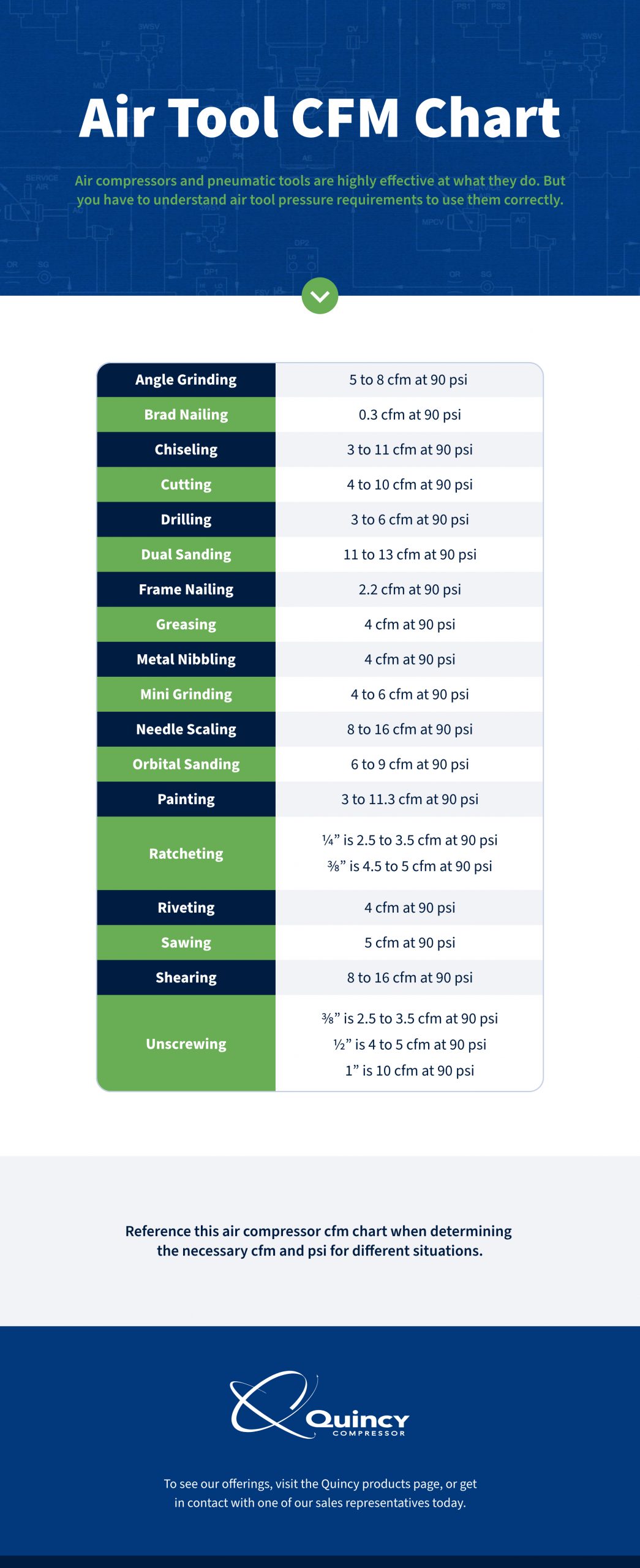
Each impact wrench needs a certain amount of air. The most common sizes are 1/4″, 3/8″, 1/2″, 3/4″, and 1″. The bigger the wrench, the more air it uses.
Here’s a quick look at typical air requirements:
| Wrench Size | Average CFM @ 90 PSI | Typical Use |
|---|---|---|
| 1/4″ | 2-3 | Light assembly, small bolts |
| 3/8″ | 3-4 | Automotive, small machinery |
| 1/2″ | 4-5 | General automotive, wheels |
| 3/4″ | 6-7 | Heavy equipment, trucks |
| 1″ | 10+ | Industrial, large machinery |
Important insight: Manufacturers usually list average CFM for “intermittent” use—short bursts, not continuous. If you plan to use the wrench for longer periods, you’ll want a compressor with a higher CFM.

Credit: axatool.com
How To Match Air Compressor Size To Your Impact Wrench
Now that you know the basics, here’s how to find the right compressor size:
- Check your impact wrench’s CFM requirement (usually found in the manual or on the tool itself).
- Multiply by 1.5 to 2. This gives you a safety margin, so your compressor isn’t running at maximum all the time. For example, if your 1/2″ wrench needs 4 CFM, aim for 6-8 CFM.
- Make sure your compressor can deliver that CFM at 90 PSI. Some compressors list “max CFM” at lower PSI—don’t be fooled! The important number is CFM at 90 PSI.
- Consider tank size. For short jobs, a 10-20 gallon tank is fine. For longer jobs or using more tools, 20-30 gallons or more is better.
Let’s look at some common combinations:
| Wrench Size | Compressor CFM Needed (90 PSI) | Recommended Tank Size |
|---|---|---|
| 3/8″ | 4-6 | 10-20 gal |
| 1/2″ | 6-8 | 20-30 gal |
| 3/4″ | 7-10 | 30+ gal |
| 1″ | 12+ | 60 gal |
Common Mistakes When Choosing A Compressor
Many people make the same errors when picking a compressor for their impact wrench. Here are a few to watch out for:
- Ignoring CFM: Buying a big tank but not enough CFM. The wrench might work for a few seconds, then lose power.
- Not checking PSI: Some compressors deliver high CFM, but only at low PSI. Your wrench needs at least 90 PSI.
- No safety margin: Running your compressor at its max rating means more heat and wear. It won’t last as long.
- Forgetting about future tools: If you plan to add more air tools, buy a slightly bigger compressor now.
A practical tip: Always get a compressor with at least 30% more CFM than your tool needs. This keeps performance steady and extends compressor life.
Air Compressor Types And Their Impact
There are several types of air compressors. The right type can make your work easier and more efficient.
- Single-stage compressors: Good for most home and small shop uses. They compress air to about 120 PSI in one step.
- Two-stage compressors: Better for heavy use or bigger wrenches. They compress air twice, reaching up to 175 PSI. This gives more air at a steady pressure, which is ideal for large impact wrenches or long jobs.
- Portable vs. stationary: Portable compressors are easy to move, but usually have smaller tanks and lower CFM. Stationary models have bigger tanks and higher CFM, but need a permanent spot in your shop.
If you only use your impact wrench occasionally, a single-stage portable compressor may be enough. For daily use or heavy jobs, a two-stage stationary model is more reliable.
Other Factors To Consider
Duty Cycle
Duty cycle is how long a compressor can run before it needs a break. For example, a 50% duty cycle means the compressor can run for 5 minutes, then must rest 5 minutes. Cheaper compressors have lower duty cycles. If you do long jobs, get a compressor with a high duty cycle.
Power Source
Compressors come in electric and gas-powered models. Electric is quieter and better for indoor use. Gas-powered is stronger and good for outdoor or job sites without easy electricity.
Climate And Maintenance
Humidity and dust can shorten the life of your compressor. If you live in a humid area, drain your tank often to avoid rust. Also, use good quality hoses and keep filters clean.
Noise Level
Some compressors are very loud. If you work in a small garage, look for a “quiet” model, or add noise insulation. Your ears will thank you.
Credit: www.quincycompressor.com
Real-world Examples
Let’s look at some practical situations:
Case 1: You’re a hobby mechanic, working on cars at home. You use a 1/2″ impact wrench to change tires and do light repairs. Your wrench needs 4.5 CFM. You pick a 6.5 CFM, 20-gallon compressor. Result: No power loss, even for stubborn bolts.
Case 2: You’re a professional truck mechanic. Your 3/4″ wrench needs 7.5 CFM, but sometimes you use two wrenches at once. You buy a 15 CFM, 60-gallon, two-stage compressor. Now, both tools run with full power all day.
Case 3: You bought a small, 6-gallon pancake compressor because it was on sale. It only delivers 2.5 CFM at 90 PSI. Your 1/2″ wrench works for 3 seconds, then stops. You get frustrated and have to upgrade.
How To Read Compressor And Tool Specs
Many people get confused by air tool and compressor specs. Here’s what to focus on:
- For the compressor, always check CFM at 90 PSI. Ignore “max CFM” if it’s rated at lower pressure.
- For the tool, check both minimum CFM and operating PSI.
- If possible, read reviews from people who use similar tools. Real-world feedback is valuable.
Non-obvious tip: Some manufacturers “inflate” their CFM numbers by measuring at lower PSI. Always compare numbers at the same PSI.
Cost Vs. Value
A bigger compressor costs more, but it can save you money in the long run. Here’s why:
- Fewer breakdowns, less downtime
- Tools last longer with consistent air flow
- You can add more tools in the future
Still, you don’t need to overbuy. For most home garages, a 20-30 gallon, 6-8 CFM compressor is perfect for a 1/2″ impact wrench.
Quick Reference: Air Compressor Sizing
Here’s a handy summary to help you decide:
| Compressor CFM @ 90 PSI | Best For | Impact Wrench Size |
|---|---|---|
| 2-4 | Light DIY, short bursts | 1/4″, 3/8″ |
| 4-6 | General automotive | 3/8″, 1/2″ |
| 6-10 | Professional/Shop | 1/2″, 3/4″ |
| 10+ | Industrial/Multiple tools | 3/4″, 1″ |

Credit: www.youtube.com
Professional Advice: When In Doubt
If you’re between two sizes, always go bigger. Air tools run better with more air. A slightly larger compressor costs a bit more, but saves a lot of frustration.
Another beginner mistake: ignoring hose diameter. A thin hose restricts air, even with a big compressor. Use a 3/8″ or 1/2″ hose for best results, especially for 1/2″ wrenches or larger.
Where To Learn More
For more technical details about CFM, PSI, and compressor types, visit the Wikipedia Air Compressor page. It’s a good resource if you want to go deeper.
Frequently Asked Questions
What Happens If My Air Compressor Is Too Small For My Impact Wrench?
If your compressor doesn’t supply enough CFM or PSI, the impact wrench will lose power. It may start strong, but quickly weaken, making it hard to remove bolts or nuts. The compressor will also run more, wearing out faster.
Can I Use A Pancake Compressor With My Impact Wrench?
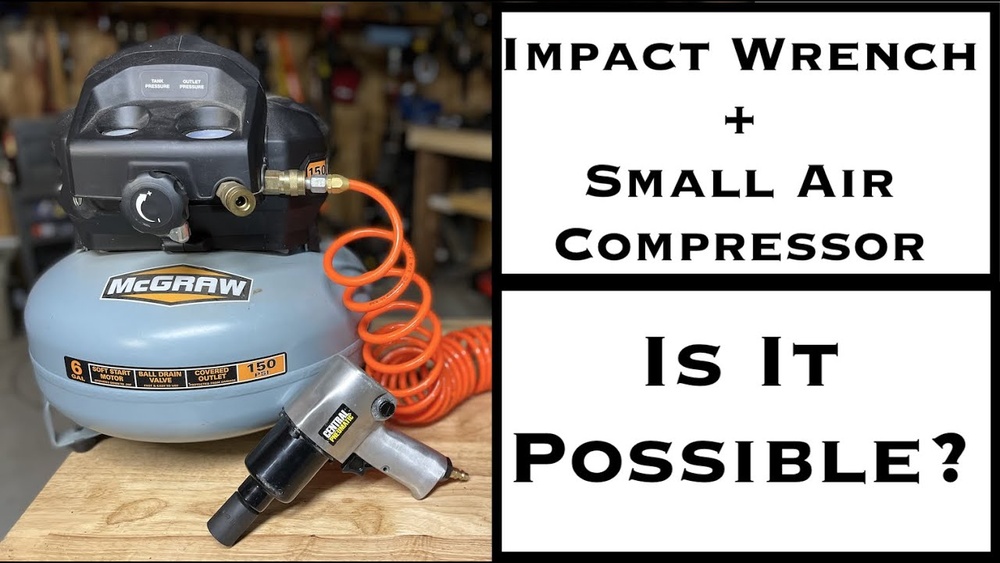
Pancake compressors (usually 6 gallons) rarely provide enough CFM for anything larger than a 1/4″ impact wrench. For a 3/8″ or 1/2″ wrench, they will not deliver steady power.
Is Tank Size Or Cfm More Important For Impact Wrenches?
CFM is more important. Tank size affects how long you can work before the compressor needs to refill, but CFM decides if your tool gets enough air.
How Do I Know If My Compressor Can Run Two Impact Wrenches At Once?
Add up the CFM requirements for both tools, then multiply by 1.5 for a safety margin. Buy a compressor that can deliver that total CFM at 90 PSI.
Do I Need An Air Dryer Or Filter With My Compressor?
Moisture in compressed air can damage your impact wrench. An air dryer or filter is a good idea, especially in humid areas or for professional shops.
Finding the right size air compressor for your impact wrench is about understanding the numbers and matching them to your real needs. With the right choice, your air tools will always have the power you expect, and you’ll avoid the frustration of underperforming equipment.