Choosing the right air compressor can make a big difference in your work—whether you’re a contractor, a DIY fan, or someone setting up a home garage. Two popular brands often compared are Bostitch and Ridgid. Both have strong reputations, but they serve slightly different needs. If you’re stuck between them, you probably want real-world advice, not just marketing claims. In this guide, you’ll get a complete look at both brands, their top models, performance, reliability, and what really matters when buying. You’ll also get practical tips and facts that aren’t always obvious to beginners.
Brand Overview: Bostitch And Ridgid
Understanding the companies behind the compressors helps you know what to expect in terms of quality, support, and innovation.
Bostitch is a well-known American brand, famous for its nailers and fastening tools since 1896. Over the years, Bostitch has built a reputation for making reliable, lightweight, and affordable compressors aimed at DIYers and professionals who value portability and ease of use.
Ridgid, founded in 1923, is another respected American brand, best known for their plumbing and pipe tools. Ridgid air compressors are designed with durability in mind and are often targeted at contractors and heavy users. They’re known for robust construction, longer warranties, and a focus on jobsite performance.
Key Features: What Matters Most
When comparing Bostitch vs Ridgid air compressor options, focus on these features:
- Tank size: Affects how long you can run tools before the compressor refills.
- CFM (Cubic Feet per Minute): Tells you how much air the compressor delivers. Higher CFM = more power for demanding tools.
- Max PSI: Maximum pressure delivered. Most tools need at least 90 PSI; higher PSI allows longer tool use.
- Portability: Size, weight, and handle design matter if you move the compressor often.
- Noise level: Important for indoor or residential work.
- Durability: How well the compressor handles regular use and tough environments.
- Price: Upfront cost and long-term value.
Let’s see how Bostitch and Ridgid stack up in these areas.
Credit: www.youtube.com
Bostitch Air Compressors: Strengths And Weaknesses
Bostitch compressors are popular in workshops and garages. Their models are usually small to mid-sized, oil-free, and focused on portability.
Main Bostitch Models
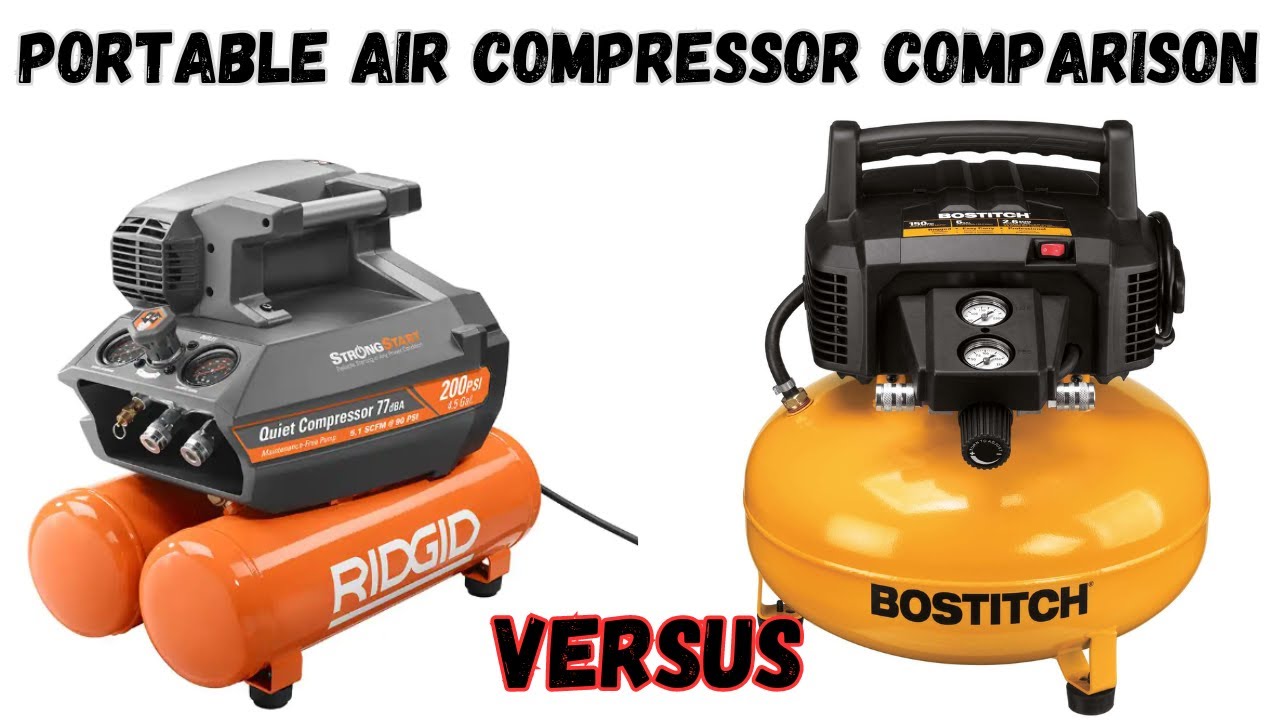
- Bostitch BTFP02012: This is the famous “pancake” compressor with a 6-gallon tank, 2.6 CFM at 90 PSI, and 150 max PSI. It weighs 29 lbs, making it easy to carry.
- Bostitch BTFP1KIT: A kit version of the pancake compressor, often bundled with nail guns.
- Bostitch CAP1512-OF: A compact 1.2-gallon “trim” compressor, with 2.8 CFM at 90 PSI, designed for finish work and quick jobs.
Strengths
- Portability: Most Bostitch compressors are light and compact. The pancake design is easy to carry and fits in car trunks or small shelves.
- Quiet Operation: Average noise levels are around 78-80 dBA, which is quieter than many competitor brands.
- Oil-Free Pump: No need to add oil or worry about leaks. Less maintenance.
- Fast Recovery: They refill quickly, so you wait less between tasks.
- Affordable: Prices are usually lower than similar-sized Ridgid compressors.
Weaknesses
- Limited Power: Most Bostitch models are not meant for running large air tools (like impact wrenches) for long periods.
- Plastic Components: Some users note that handles and parts feel less sturdy compared to all-metal designs.
- Shorter Warranty: Warranties are often 1 year, shorter than Ridgid’s.
Ridgid Air Compressors: Strengths And Weaknesses
Ridgid compressors are aimed at professionals. They offer both small portable models and larger, more powerful units.
Main Ridgid Models
- Ridgid OF60150HB: A 6-gallon pancake compressor, 2.6 CFM at 90 PSI, 150 max PSI, weighing 35 lbs.
- Ridgid OF45200SS: A 4.5-gallon twin-stack compressor, 5.1 CFM at 90 PSI, 200 max PSI. Heavier, but much more powerful.
- Ridgid GP90135A: A wheelbarrow-style, 9-gallon compressor, 13.5 CFM at 90 PSI, built for heavy-duty tasks.
Strengths
- Durability: Ridgid uses more metal parts. Tanks and handles are sturdy, made to survive jobsite drops and knocks.
- Higher Power Options: Models like the twin-stack and wheelbarrow types can run multiple tools or demanding equipment.
- Longer Warranty: Most Ridgid compressors have a 3-year limited warranty. Some offer lifetime service agreements if registered.
- Dual Universal Couplers: Some Ridgid models let you connect two tools at once.
Weaknesses
- Heavier: Even the pancake model is heavier than Bostitch. Larger models are not easy to move without wheels.
- Louder Operation: Some units reach 80-82 dBA, which can be louder in small spaces.
- Higher Cost: Ridgid compressors cost more, especially the heavy-duty models.
Head-to-head Comparison
To help you compare quickly, here’s a look at two similar pancake models from each brand:
| Feature | Bostitch BTFP02012 | Ridgid OF60150HB |
|---|---|---|
| Tank Size | 6 gallons | 6 gallons |
| CFM @ 90 PSI | 2.6 | 2.6 |
| Max PSI | 150 | 150 |
| Weight | 29 lbs | 35 lbs |
| Noise Level | 78.5 dBA | 81 dBA |
| Warranty | 1 year | 3 years |
| Price (approx.) | $130 | $180 |
Key Takeaway: The Bostitch is lighter and cheaper, but the Ridgid offers a longer warranty and is more rugged.
Performance In Real-world Use
Both brands can handle framing nailers, brad nailers, and inflation tasks. But if you plan to use tools that need more air (like sanders, grinders, or spray guns), Ridgid’s higher-end models perform better due to higher CFM and bigger tanks.
- Bostitch is best for light to medium tasks: Trim carpentry, furniture assembly, and blowing dust.
- Ridgid is better for heavy-duty use: Roofing, framing, or running multiple tools at once.
An often-missed detail: CFM matters more than just PSI. Many beginners focus on max PSI, but it’s CFM at 90 PSI that tells you if your tool will run smoothly. Always check your tool’s air requirements before buying.

Credit: www.reddit.com
Durability And Maintenance
Ridgid compressors are built for tough environments. Metal roll cages and thick tanks mean they last longer under hard use. Maintenance is usually simple—oil-free pumps in both brands mean no oil changes. However, always drain the tank after each use (to avoid rust inside) and check the air filter.
Bostitch units, while less rugged, can last for years with proper care. A hidden tip: Avoid storing any compressor in damp locations. Even “rust-proof” tanks can develop leaks over time if moisture stays inside.
Portability And Storage
If you need to move your compressor often, Bostitch wins. The pancake models have a smaller footprint and lighter weight, perfect for home garages and quick jobs. Ridgid’s portable compressors are heavier but have better handles and sometimes wheels, making them manageable for bigger sites.
A subtle difference: Ridgid’s rubber feet are thicker and grip better on slick surfaces, which adds safety in busy workshops.

Credit: www.reddit.com
Noise Levels
Noise can be a big issue in small spaces or residential neighborhoods. Bostitch usually runs quieter, thanks to smaller motors and better muffling. If you work indoors or want to avoid complaints, this is a big plus.
However, remember that quieter usually means less power. Ridgid’s larger compressors are louder, but they get the job done faster for big tasks.
Price And Value
Bostitch compressors cost less upfront, sometimes by $50–$100. For many hobbyists, this is enough reason to choose Bostitch. But if you use your compressor every day, Ridgid’s higher price often pays off with longer life and fewer repairs.
Don’t forget to factor in the warranty. Ridgid’s longer coverage means you might save money if something goes wrong.
When To Choose Bostitch
Pick Bostitch if:
- You need a light, portable compressor for small jobs.
- Your budget is tight.
- You mostly use nailers, staplers, or for inflating.
- You want quieter operation for indoor use.
When To Choose Ridgid
Pick Ridgid if:
- You work on jobsites or need a rugged compressor.
- You plan to run air-hungry tools or multiple tools at once.
- You want a longer warranty and more durable build.
- You don’t mind the extra weight and noise.
Common Mistakes When Choosing An Air Compressor
- Ignoring CFM Ratings: Many buyers look only at PSI. Always check CFM at 90 PSI for tool compatibility.
- Choosing Too Small a Tank: A small tank means frequent motor cycling, which wears out the compressor faster if you use it heavily.
- Overestimating Needs: Don’t buy the biggest, most powerful compressor if you’ll only use it for tire inflation or brad nailers.
- Forgetting About Power Source: Some larger Ridgid models need a 20-amp circuit. Check your workshop’s wiring.
- Neglecting Maintenance: Even oil-free units need regular draining and cleaning.
User Experiences And Real-world Feedback
Most DIYers love Bostitch for its ease of use and reliability for everyday tasks. It’s often recommended for home workshops and first-time buyers. Users praise the quick setup and light weight.
Contractors and professionals often prefer Ridgid, especially for demanding jobs. They report fewer breakdowns and better performance in rough conditions. The longer warranty is a big plus, especially when tools are used daily.
One not-so-obvious insight: Many users find that the air hose and fittings matter as much as the compressor itself. Poor hoses can leak air or fail under pressure, so don’t skimp on quality accessories.
Summary Table: Bostitch Vs Ridgid Strengths
Here’s a quick summary of which brand wins in each category:
| Category | Bostitch | Ridgid |
|---|---|---|
| Portability | ✔️ | |
| Durability | ✔️ | |
| Noise Level | ✔️ | |
| Power (CFM) | ✔️ | |
| Price | ✔️ | |
| Warranty | ✔️ |
Where To Buy And Support
Both brands are easy to find in home improvement stores and online. Bostitch compressors are often sold at Home Depot and Amazon. Ridgid is exclusive to Home Depot in the US. Support and parts are good for both, but Ridgid’s lifetime service agreement is a unique feature if you register after purchase.
For detailed specs and model comparisons, you can check the official Home Depot product pages.
Frequently Asked Questions
What Size Air Compressor Do I Need For Home Use?
For most home tasks like inflating tires, stapling, or brad nailing, a 6-gallon pancake compressor (like those from Bostitch or Ridgid) is enough. If you plan to use larger tools, look for at least 4 CFM at 90 PSI.
Are Oil-free Compressors Better Than Oil-lubricated Ones?
Oil-free compressors are easier to maintain and lighter. They’re great for most DIY and light professional work. Oil-lubricated compressors last longer and are quieter, but need regular oil changes.
How Do I Make My Air Compressor Last Longer?
Always drain the tank after use to prevent rust, clean the air filter, and store the compressor in a dry place. Use the right extension cord: too long or too thin cords can overheat the motor.
Can I Run Multiple Tools At Once?
Yes, but only if your compressor has enough CFM and at least two couplers. Ridgid’s larger models can handle this better than small Bostitch units.
Which Brand Is Better For Beginners?
Bostitch is usually better for beginners due to its light weight, simplicity, and lower price. If you need something tougher or plan to expand your tool set, consider Ridgid.
Making the right choice between Bostitch and Ridgid depends on your real needs, not just specs on paper. Think about how, where, and how often you’ll use your compressor. Both brands have their strengths, and now you have the facts to choose with confidence.