
Air compressors and vacuum pumps are two essential machines that move air, but in opposite ways. One compresses air to higher pressure, while the other removes air to create a vacuum. Many people confuse these devices, but they serve very different roles in industry, science, and daily life.
If you’re unsure whether you need an air compressor or a vacuum pump, or just want to understand their differences, you’re in the right place. This guide will break down how each works, where they are used, their pros and cons, and how to choose the right one for your needs.
How Air Compressors Work
An air compressor is a machine that takes air from the environment and compresses it to a higher pressure. This pressurized air is then stored in a tank or sent directly to tools and machines that need it.
There are several ways to compress air, but the most common methods are:
- Reciprocating (Piston) Compressors: Use pistons moving inside cylinders to push air into a storage tank.
- Rotary Screw Compressors: Use two rotating screws to compress air as it moves through the device.
- Centrifugal Compressors: Use high-speed spinning to increase air pressure, often for large industrial uses.
When the compressed air is released, it can power many types of tools—like paint sprayers, nail guns, or even large factory machines.
Key Features Of Air Compressors
- Pressure Output: Measured in pounds per square inch (PSI), usually 90–175 PSI for many tools.
- Flow Rate: Measured in cubic feet per minute (CFM), showing how much air the compressor can deliver.
- Tank Size: Ranges from small (1–6 gallons) for home use, up to hundreds of gallons for industry.
- Power Source: Can use electricity, gasoline, or diesel.
How Vacuum Pumps Work
A vacuum pump removes air (or gas) from a sealed space, creating a lower pressure than the surrounding atmosphere. Instead of pushing air in, it pulls air out. This is useful for many scientific and industrial tasks.
There are different types of vacuum pumps:
- Rotary Vane Pumps: Use rotating vanes to trap and move air out of a chamber.
- Diaphragm Pumps: Use a moving membrane to suck air out.
- Scroll Pumps: Use two spiral-shaped parts to move air and create a vacuum.
- Turbomolecular Pumps: Used for ultra-high vacuum, especially in labs.
Vacuum pumps are rated by the lowest pressure they can achieve (measured in Torr, mbar, or Pa) and how fast they can remove air (pumping speed).
Key Features Of Vacuum Pumps
- Ultimate Vacuum Level: How low the pressure can go, often below 1 mbar for advanced models.
- Pumping Speed: Usually shown in liters per minute (L/min) or cubic meters per hour (m³/h).
- Contamination Resistance: Some pumps can handle dusty or wet air, others need clean, dry environments.
- Noise and Vibration: Important in labs or hospitals.
Core Differences: Air Compressor Vs Vacuum Pump
Understanding the main differences is essential before making a choice. Here’s a side-by-side comparison for clarity:
| Feature | Air Compressor | Vacuum Pump |
|---|---|---|
| Purpose | Increase air pressure | Decrease air pressure (create vacuum) |
| Flow Direction | Pushes air in | Pulls air out |
| Common Units | PSI, CFM | Torr, mbar, L/min |
| Main Use | Power tools, inflating tires | Lab processes, packaging, suction |
| Pressure Range | Above atmospheric | Below atmospheric |
Where Air Compressors Are Used
Air compressors are everywhere, from small homes to massive factories. Some typical uses include:
- Inflating tires: Cars, bicycles, and even airplane tires.
- Powering tools: Nail guns, sanders, paint sprayers, and impact wrenches.
- Industrial processes: Running conveyor belts, robotic arms, and packaging machines.
- Medical uses: Dental drills and hospital air systems.
- HVAC systems: Some air conditioners use compressors to move refrigerant.
An important insight: In many factories, compressed air is called the “fourth utility” after electricity, water, and natural gas. Losing compressed air can stop an entire production line.

Credit: www.youtube.com
Where Vacuum Pumps Are Used
Vacuum pumps serve many different industries and scientific fields:
- Laboratories: Create vacuums for experiments, freeze drying, and mass spectrometry.
- Medical equipment: Surgical suction, dental vacuum, and MRI machines.
- Food packaging: Remove air from bags to keep food fresh longer.
- HVAC systems: Remove air and moisture before filling with refrigerant.
- Electronics and semiconductor manufacturing: Required for clean, dust-free environments.
One non-obvious example: In the automotive industry, vacuum pumps are critical for brake systems in diesel engines, which do not create enough vacuum naturally.
How They Work: The Science
Air Compressor Science
An air compressor uses a motor to compress air into a small space. As air molecules are packed closer, the pressure rises. When released, this energy can do mechanical work, like spinning a drill or blowing up a balloon.
Compressing air also heats it up. For large systems, cooling is important to prevent overheating and to make sure the air is dry enough for use. That’s why many compressors have after-coolers or dryers attached.
Vacuum Pump Science
A vacuum pump creates a low-pressure space by removing air, not by adding anything. The goal is to make the inside pressure lower than the outside, so air (or other gases) want to rush in. This is the opposite of what an air compressor does.
Many beginners miss this: A vacuum pump can never create a perfect vacuum (zero pressure), but advanced pumps can get extremely close—down to billionths of atmospheric pressure.
Pros And Cons
Both devices have advantages and limitations.
Air Compressor Pros
- High power output: Can run many tools at once.
- Versatile: Used in dozens of industries.
- Relatively low maintenance: Especially small models.
Air Compressor Cons
- Can be noisy: Industrial compressors are often loud.
- Need for air drying: Moist air can cause rust and damage.
- Energy cost: Compressing air is not very efficient; energy losses as heat.
Vacuum Pump Pros
- Enables special processes: Essential for labs, packaging, and electronics.
- Can handle delicate materials: No mechanical contact with product.
- Precise control: Good for sensitive environments.
Vacuum Pump Cons
- Can be expensive: Especially high-vacuum models.
- Maintenance: Some types need oil changes and cleaning.
- Leaks are critical: Even a small leak can ruin a vacuum system.
Choosing Between Air Compressor And Vacuum Pump
When selecting a device, focus on what you need it to do. Here’s a decision guide:
- What’s the task?
- Need to power tools, inflate, or spray? Go with an air compressor.
- Need to suck air out, create a vacuum, or hold something in place? Go with a vacuum pump.
- Pressure needs
- Tools require high pressure (over 80 PSI)? Air compressor.
- Processes need low or near-zero pressure? Vacuum pump.
- Environment
- Dusty or dirty air? Choose models designed for tough environments.
- Clean lab or medical use? Look for oil-free and quiet models.
- Continuous or short-term use
- Most air compressors are made for intermittent use unless industrial-grade.
- Many vacuum pumps are built for continuous operation.
- Budget
- Small air compressors are much cheaper than quality vacuum pumps.
- For deep vacuum, be ready for higher investment.
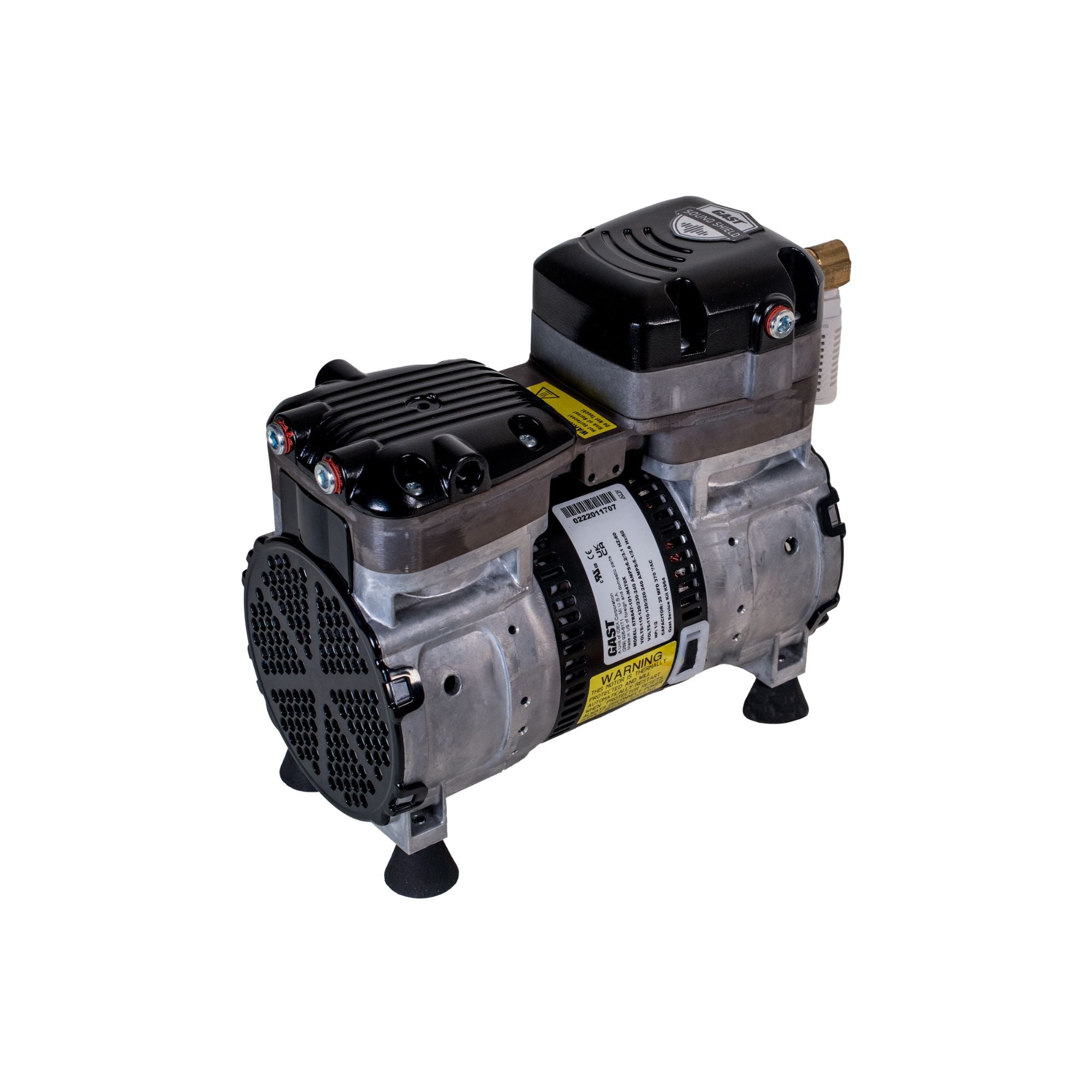
Credit: tecotechnology.com
Real-world Examples
Let’s look at practical examples to make the differences clear.
- Car repair shop: Uses an air compressor to power impact wrenches and inflate tires. Also uses a vacuum pump to remove air from air conditioning systems before refilling.
- Hospital: Uses a central air compressor for dental chairs. Uses vacuum pumps for surgical suction and laboratory work.
- Food packaging plant: Uses vacuum pumps to seal bags and extend shelf life. May use air compressors for moving products or operating machines.
Performance Comparison
To give a clear view, here’s a table showing key performance differences:
| Parameter | Air Compressor | Vacuum Pump |
|---|---|---|
| Working Pressure | +1 to +300 PSI | 1 atm to 10-9 Torr |
| Energy Efficiency | 60–80% (typical) | Varies, often lower for deep vacuum |
| Common Power Source | Electric, gas, diesel | Electric |
| Maintenance Needs | Low–Medium | Medium–High (for high vacuum) |
| Startup Cost | $100–$10,000+ | $200–$100,000+ |
Common Mistakes And Non-obvious Insights
Beginners often believe that air compressors and vacuum pumps are interchangeable because both move air. This is false. Using an air compressor as a vacuum pump, or vice versa, can damage equipment and give poor results.
Here are two key insights:
- Air leaks affect vacuum pumps much more than compressors. Even a tiny leak can make a vacuum pump useless, while compressors can still work with small leaks.
- Compressed air contains water unless dried. This can damage tools and cause rust. Always consider an air dryer or moisture trap for compressors.
Also, some advanced machines can do both jobs, but they are specialized and more expensive. For most people and businesses, it’s better to get the right tool for the job.
Maintenance And Safety
Both air compressors and vacuum pumps need regular care.
- Check for leaks: Vacuum systems should be airtight; compressors should not lose air quickly.
- Change filters and oil: Dirty filters or old oil reduce performance.
- Drain water: Air compressors collect water in the tank, which must be drained to prevent rust.
- Follow safety rules: High-pressure air and deep vacuum can both be dangerous if handled wrong.
Environmental Impact
Air compressors use a lot of electricity, so energy-efficient models save money and reduce pollution. Vacuum pumps, especially those using oil, can create waste that needs proper disposal.
Some modern systems use oil-free technology to reduce environmental risks. Always check local laws for disposal and emissions.
For further technical reading, the Wikipedia Vacuum Pump page is a solid resource.
Frequently Asked Questions
What Is The Main Difference Between An Air Compressor And A Vacuum Pump?
The main difference is direction of air movement. An air compressor increases pressure and pushes air into a tank or system, while a vacuum pump removes air to create a lower pressure or vacuum.
Can I Use An Air Compressor As A Vacuum Pump?
Generally, no. Air compressors are not designed to create vacuum and may get damaged or perform poorly if used this way. Some special devices can do both, but they are not common.
Which Device Is Better For Inflating Car Tires?
An air compressor is the correct choice for inflating tires because it provides high-pressure air.
Why Do Vacuum Pumps Need To Be Airtight?
Vacuum pumps must be airtight because even a small leak lets air in, preventing the pump from creating or holding a vacuum. This is much more critical than with compressors.
Are Oil-free Compressors And Pumps Better?
Oil-free models are better for clean environments (labs, hospitals) and require less maintenance, but may be more expensive or have lower performance for some tasks.
Air compressors and vacuum pumps each have unique strengths. Knowing the differences helps you make the right choice, saving time, money, and effort in your projects. Understanding their science and uses will also help you get the best performance, safety, and results.

Credit: indoair.com