When it comes to choosing the right air compressor for your needs, the options can feel overwhelming. You might be asking yourself: Should you go for a rotary screw air compressor or a scroll air compressor?
Each type has its own strengths and weaknesses that can impact your work, costs, and efficiency. Understanding these differences can save you time, money, and frustration down the line. You’ll discover exactly how these two compressors compare, so you can make the smartest choice for your specific situation.
Ready to find out which one suits you best? Let’s dive in.

Credit: www.atlascopco.com
Rotary Screw Air Compressors
Rotary screw air compressors provide steady and reliable air pressure. They work well in many industries. These compressors are known for their durability and efficiency. They supply air continuously without stopping. This makes them ideal for tasks needing constant airflow.
How They Work
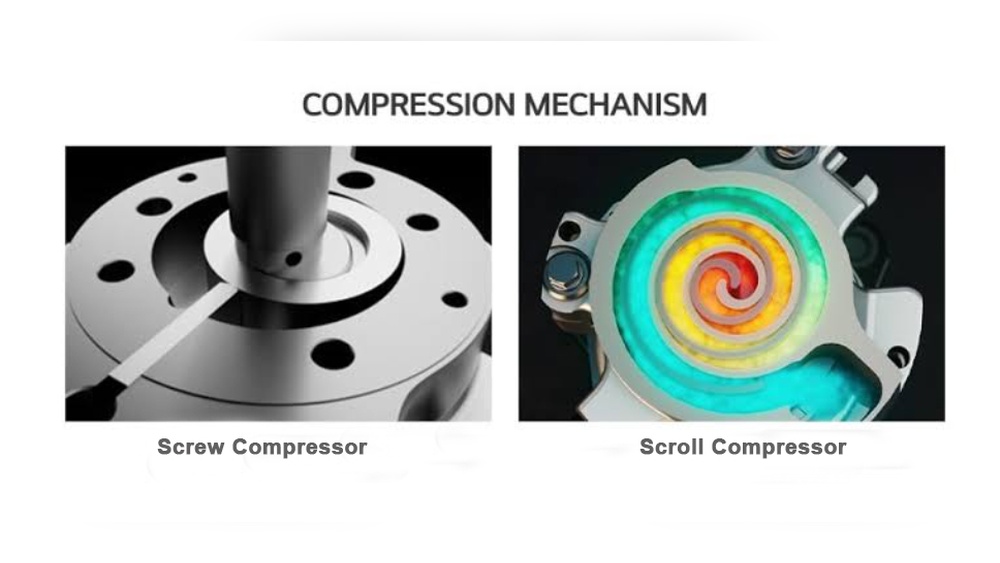
Rotary screw compressors use two helical screws. These screws turn in opposite directions. Air enters the compressor and gets trapped between the screws. The screws compress the air as it moves forward. This compression raises the air pressure. The compressed air then flows out for use.
Key Features
These compressors run smoothly and quietly. They have fewer moving parts, which reduces wear. They can operate for long hours without overheating. Their design allows for easy maintenance. Energy efficiency is another important feature. They adjust speed based on air demand.
Common Applications
Rotary screw compressors are common in factories and workshops. They power tools like drills and grinders. They support assembly lines and paint spraying. Many food and beverage plants use them. They also work well in automotive repair shops. Anywhere constant, reliable air is needed, they fit well.
Scroll Air Compressors
Scroll air compressors are popular in many industries. They provide clean and quiet compressed air. These compressors have a simple design. This makes them reliable and easy to maintain. They are often used in places where noise matters.
Scroll air compressors work well for small to medium air needs. They deliver steady pressure without many vibrations. Their compact size saves space in workshops or factories.
How They Work
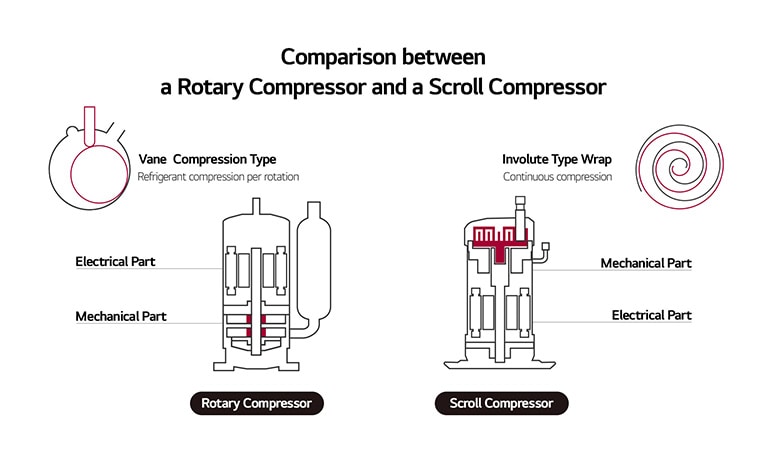
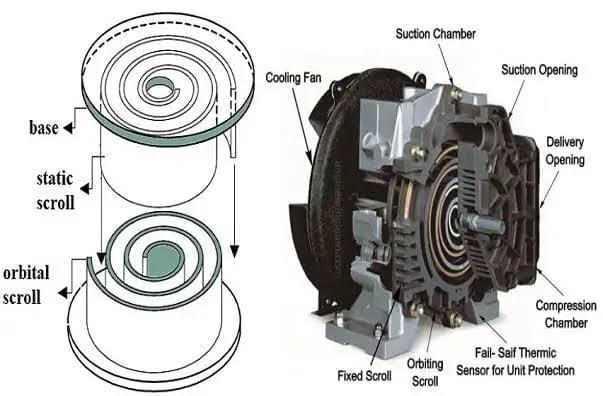
Scroll compressors use two spiral-shaped disks. One disk stays still. The other moves in a circular motion. Air gets trapped between the spirals. It is pushed towards the center. This action compresses the air. The process runs smoothly without valves.
Key Features
These compressors run quietly with low vibration. They have fewer moving parts. This lowers the risk of breakdowns. Scroll compressors need less maintenance. They produce clean air with no oil contamination. Their compact design fits in tight spaces.
Common Applications
Scroll air compressors suit dental offices and hospitals. They work well in labs and small factories. These compressors power tools and equipment that need clean air. They are good for places that require low noise levels.
Performance Comparison
Comparing the performance of rotary screw and scroll air compressors helps you choose the right one. Each type works differently and fits various needs. Understanding their key features can save energy and reduce costs. Below is a clear look at their performance aspects.
Efficiency And Energy Consumption
Rotary screw compressors use continuous rotation to compress air efficiently. They suit high-demand tasks and keep energy use steady. Scroll compressors use two spiral elements to compress air. They work well for small to medium tasks but may use more energy in heavy jobs.
Rotary screw models often have higher energy efficiency. Scroll compressors can save energy in low-demand or intermittent use. Consider the workload to pick the best option.
Noise Levels
Scroll compressors are quieter due to their smooth, vibration-free design. They fit well in offices or places needing low noise. Rotary screw compressors generate more noise because of their fast-rotating screws. They are better suited for industrial environments where noise is less of a concern.
Maintenance Requirements
Scroll compressors need less maintenance since they have fewer moving parts. This means lower downtime and repair costs. Rotary screw compressors require regular checks and oil changes. Their complex design needs more care to keep running well.
Durability And Reliability
Rotary screw compressors are built for heavy use and last long under tough conditions. They handle continuous operation without many problems. Scroll compressors offer reliable performance but are best for lighter tasks. Overuse can reduce their lifespan.
Credit: www.lg.com
Cost Factors
Cost plays a big role in choosing between rotary screw and scroll air compressors. Understanding the different cost factors helps make a smart choice. These factors include how much you spend first, what it costs to run, and the value over time.
Initial Investment
Rotary screw compressors usually cost more upfront than scroll compressors. The price depends on size and power. Scroll compressors are smaller and simpler, so they often have a lower purchase price. This makes scroll units good for small to medium tasks.
Rotary screw models suit heavy-duty use and last longer. This higher initial cost may be worth it for big jobs.
Operating Costs
Energy use is a key part of operating costs. Rotary screw compressors are more efficient for continuous use. They save more power in long runs. Scroll compressors use less energy for short or light work.
Maintenance costs also matter. Scroll compressors have fewer moving parts, so maintenance is cheaper. Rotary screws need regular checks and parts replacement, raising costs.
Long-term Value
Rotary screw compressors often last longer and handle tough jobs better. This adds value over years of use. Scroll compressors fit best for smaller needs and lighter work. They offer good value with less upfront and maintenance cost.
Consider how often and how hard you will use the compressor. This affects which type gives better value over time.
Choosing The Right Compressor
Choosing the right air compressor is important for your business success. The right compressor improves efficiency and lowers costs. Two popular types are rotary screw and scroll compressors. Each suits different needs and settings. Understanding key factors helps make the best choice.
Industry Needs
Different industries require different air pressure levels. Rotary screw compressors provide continuous, high-volume air. They work well in factories and heavy industry. Scroll compressors deliver quieter, lower volume air. They fit small workshops and labs better. Match the compressor to the air demand and work environment.
Space Constraints
Space often limits compressor choice. Scroll compressors are compact and take less room. They fit tight spaces and small rooms. Rotary screw compressors are larger and need more space. Plan compressor placement carefully to avoid installation problems. Space size and layout affect compressor type.
Budget Considerations
Initial cost and maintenance impact budget decisions. Scroll compressors usually cost less upfront. They have fewer parts and lower maintenance costs. Rotary screw compressors cost more but last longer. They handle heavy use with less breakdown. Calculate long-term expenses before choosing a compressor.
Credit: sprsunheatpump.com
Frequently Asked Questions
What Is The Main Difference Between Rotary Screw And Scroll Compressors?
Rotary screw compressors use meshing helical screws to compress air. Scroll compressors use two interleaved spiral scrolls. This makes rotary screw ideal for high-volume needs, while scroll compressors suit low to medium volume applications with quieter operation.
Which Air Compressor Is More Energy Efficient?
Scroll compressors are generally more energy efficient for smaller, intermittent tasks. Rotary screw compressors excel in continuous, heavy-duty use but may consume more power. Efficiency depends on application size and duty cycle, so choose accordingly.
Are Rotary Screw Compressors Noisy Compared To Scroll?
Rotary screw compressors are typically noisier due to their mechanical design. Scroll compressors operate with less noise, making them suitable for noise-sensitive environments. Noise levels vary based on model and installation.
What Maintenance Differences Exist Between The Two Compressor Types?
Rotary screw compressors require regular oil changes and filter replacements. Scroll compressors have fewer moving parts, resulting in lower maintenance needs. Proper upkeep extends compressor life and maintains performance.
Conclusion
Rotary screw and scroll air compressors serve different needs. Rotary screw models work well for large jobs and continuous use. Scroll compressors suit smaller tasks and offer quieter operation. Choosing depends on your air demand and budget. Both types provide reliable air supply when used right.
Think about space, noise, and efficiency before buying. This helps match the compressor to your work. Understanding these basics saves time and money in the long run. Your choice should fit your specific needs clearly and simply.