When you need an air compressor for your workshop, factory, or even at home, one big choice stands out: 1 phase or 3 phase air compressor. This decision can affect your costs, efficiency, and even how long your equipment lasts. Many buyers quickly choose based on price or what they see in stores. But there’s much more to understand if you want the best value and performance.
Let’s break down these two types, see how they work, and help you pick the right one for your needs.
What Does “phase” Mean In Air Compressors?
Before comparing, it’s important to know what phase means. Electrical power comes in different “phases.” In simple terms:
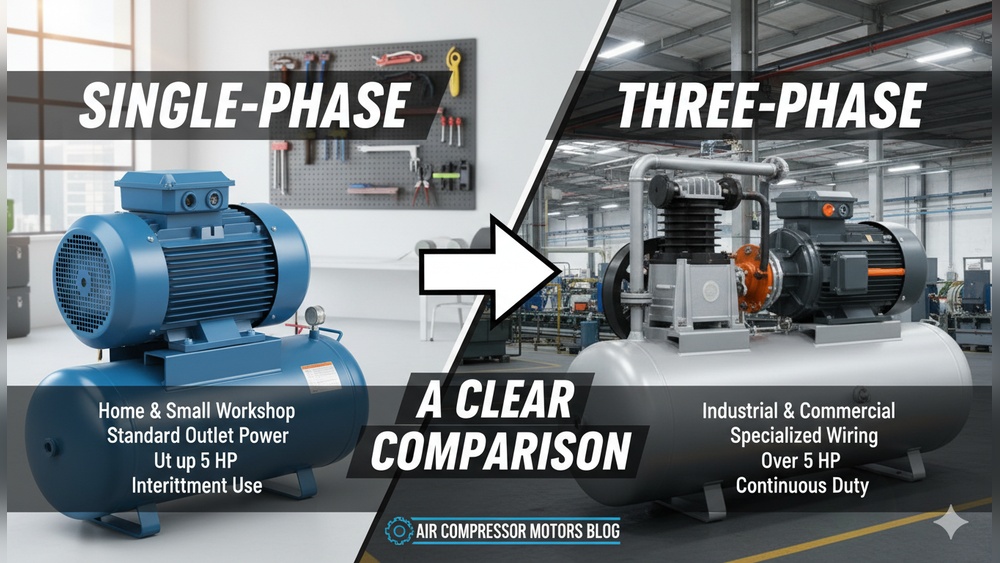
- 1 phase (single-phase): Uses one alternating current (AC) wave. Common in homes and small shops.
- 3 phase (three-phase): Uses three AC waves, each offset. Found in factories and bigger buildings.
Air compressors use electric motors, and the type of power they need affects how they run.
How A 1 Phase Air Compressor Works
A 1 phase air compressor uses a motor powered by single-phase electricity. This is the same kind of power that runs your lights and most home appliances. These compressors are usually smaller, simpler, and cheaper.
- Voltage: Most run on 110V or 220V.
- Motors: Usually up to 3 horsepower (HP).
- Usage: Great for garages, home workshops, and small businesses.

Credit: emaxcompressor.com
How A 3 Phase Air Compressor Works
A 3 phase air compressor uses a motor that gets three separate currents. This gives smoother, more powerful operation. You’ll find these in places with bigger machines or heavier workloads.
- Voltage: Commonly 208V, 380V, or 415V.
- Motors: Can be much larger (5 HP up to 100 HP or more).
- Usage: Perfect for factories, large workshops, and continuous industrial work.
Key Differences: 1 Phase Vs 3 Phase Air Compressor
Understanding the real-life differences can help you avoid mistakes and extra costs.
| Feature | 1 Phase Air Compressor | 3 Phase Air Compressor |
|---|---|---|
| Power Source | Single-phase | Three-phase |
| Motor Size | Up to 3 HP (rarely 5 HP) | 5 HP and above |
| Startup Power Surge | High | Low |
| Efficiency | Lower | Higher |
| Cost | Lower initial price | Higher initial price |
| Maintenance | Simple | Complex but less frequent |
Advantages Of 1 Phase Air Compressor
Many people choose 1 phase air compressors because they are practical for smaller jobs. Here’s why:
- Easy Installation: No need to change your building’s wiring.
- Lower Price: The machines and the repairs usually cost less.
- Good for Light Use: If you only use your compressor a few hours a week, this is enough.
- Portable Options: Many 1 phase units are small and can be moved.
Still, there are limits. Overloading a 1 phase compressor can wear it out quickly.
Advantages Of 3 Phase Air Compressor
3 phase air compressors are the choice for serious, non-stop work.
- Higher Efficiency: They turn electricity into power better, saving money if you run them a lot.
- Lower Power Surge: Motors start smoothly, which protects your electrical system.
- Longer Life: The motors stay cooler and last longer.
- Bigger Power: You can run large machines and tools without problems.
- Less Vibration: 3 phase motors run more smoothly, which means less wear and tear.
However, you need access to a three-phase power supply, which is not common in homes.
Where Each Type Works Best
Let’s match each compressor to the right use.
Best Uses For 1 Phase Air Compressor
- Small woodworking or car repair shops
- Home garages for inflating tires or using air tools
- Hobby projects needing short bursts of air
A simple rule: If you plug most things into a wall socket, 1 phase is probably enough.
Best Uses For 3 Phase Air Compressor
- Factories running many tools all day
- Car assembly lines or big paint booths
- Large-scale woodworking shops
If you need to run the compressor all day, or power many tools at once, 3 phase is better.
What About Power Supply Availability?
One common mistake is buying a 3 phase air compressor when you only have single-phase power. Getting 3 phase power installed is costly and often not possible in homes. You can use a phase converter, but this adds cost, complexity, and sometimes reduces efficiency.
Check your building’s power supply before deciding. If you are unsure, an electrician can help you find out.
Credit: compressor-source.com
Cost Breakdown: Not Just The Machine Price
Some buyers look only at the price tag. But the real cost includes:
- Installation: 3 phase systems may need new wiring.
- Electricity Use: 3 phase is more efficient for big jobs.
- Repair and Downtime: Harder to find parts for 3 phase in small towns.
- Lifespan: 3 phase often lasts longer in heavy use.
Here’s a typical cost comparison over five years for a medium-sized shop:
| Item | 1 Phase | 3 Phase |
|---|---|---|
| Compressor Price | $1,500 | $2,200 |
| Installation | $300 | $700 |
| Yearly Electricity | $600 | $450 |
| Typical Repair (5 yrs) | $400 | $300 |
| Total (5 years) | $4,700 | $4,950 |
Insight: Even though 3 phase costs more at first, the savings on power and repairs can balance out over time if you use it a lot.
Performance: Power, Efficiency, And Reliability
Power Output
3 phase compressors deliver more continuous power. This means less overheating and fewer stops during busy work.
Energy Efficiency
A 3 phase motor can be up to 15% more efficient than a 1 phase motor of the same size. Over time, this can save hundreds of dollars in energy bills.
Reliability
Because of smoother operation, 3 phase motors last longer and need less repair.
Safety And Maintenance
1 phase compressors are simple to fix, but they often have more wear because the motors work harder. Common issues include overheating and frequent starts.
3 phase compressors have fewer moving parts in the motor and start more gently. This means less risk of electrical fires or burned-out motors.
Non-obvious tip: Always check the compressor’s duty cycle. Many 1 phase models are not made for all-day use and can overheat if pushed too hard.
Noise And Vibration
3 phase compressors are generally quieter and vibrate less. This matters if you want a calm working environment or need to avoid disturbing neighbors.
Credit: www.homedepot.com
Common Mistakes When Choosing
- Ignoring Power Supply: Don’t buy a 3 phase unit without 3 phase power.
- Underestimating Air Demand: Many people pick 1 phase for heavy work and regret it later.
- Focusing Only on Price: Cheaper machines can end up costing more in repairs and downtime.
- Not Checking Duty Cycle: Some compressors are not built for long use. This can cause breakdowns.
Real-world Example
Imagine a small auto repair shop. At first, the owner buys a 1 phase, 2 HP compressor for tire work and simple tools. Business grows, and now they run two impact wrenches, a paint sprayer, and an air ratchet at once.
The 1 phase compressor overheats and breaks often. Upgrading to a 3 phase, 7. 5 HP compressor solves the problem. The tools run without stopping, and the compressor lasts for years.
Which One Should You Choose?
If you only use air tools for a short time each day, or don’t have 3 phase power, a 1 phase air compressor is usually best. It’s cheaper, simple, and easy to set up.
If you run a busy shop, factory, or need to run tools all day, and you have 3 phase power, a 3 phase air compressor will save money over time and give you less trouble.
Non-obvious insight: Some people try to save money by using a cheap 1 phase compressor for heavy work. This often leads to frequent breakdowns and lost time. It’s better to invest in the right machine for the job.
For more details on how 3 phase electricity works and why industries prefer it, see this article from Wikipedia.
Frequently Asked Questions
What Is The Main Difference Between 1 Phase And 3 Phase Air Compressors?
The main difference is the power supply. 1 phase air compressors use single-phase electricity, suitable for small jobs and homes. 3 phase air compressors use three-phase electricity, giving more power and efficiency, perfect for industrial use.
Can I Use A 3 Phase Air Compressor At Home?
Usually, no. Most homes do not have three-phase power. Installing it is expensive and often not allowed by utility companies. You can use a phase converter, but it’s rarely cost-effective for home use.
Why Do Factories Prefer 3 Phase Air Compressors?
3 phase compressors are more efficient, reliable, and can run larger tools without problems. They handle continuous, heavy workloads and have a longer lifespan, making them ideal for industrial settings.
How Do I Know If My Building Has 3 Phase Power?
Check your main electrical panel. Three-phase panels have three main wires or breakers for the compressor circuit. If unsure, ask a licensed electrician or your building manager.
Is It Possible To Convert A 1 Phase Compressor To 3 Phase?
No, you cannot simply convert a 1 phase air compressor to 3 phase. The motor and internal wiring are different. You would need to replace the motor and possibly other components, which is often more expensive than buying a new 3 phase unit.
Choosing between 1 phase and 3 phase air compressors is more than picking a size or price. Think about your power supply, how much you’ll use the machine, and the real cost over time. Making the right choice means better performance, lower bills, and fewer headaches in the future.