Every industry that uses compressed air faces one big question: should you choose an air cooled or water cooled compressor? This choice affects your energy bills, equipment lifespan, maintenance workload, and even your production reliability. While both systems aim to remove the heat produced during air compression, the way they do it—and the impact on your operation—can be very different. Deciding between air cooled vs water cooled compressors isn’t just about picking a product; it’s about matching the right cooling system to your actual needs and environment.
Let’s dive deeper. This guide covers what makes each system work, their pros and cons, key technical differences, and how to decide which is best for you. Whether you run a small workshop or manage a large factory, understanding these differences will help you avoid common mistakes and save money over the compressor’s lifetime.
How Compressors Produce Heat
All air compressors generate heat as they work. When air is compressed, its temperature rises quickly due to increased pressure. If this heat is not removed, it can damage compressor components, reduce efficiency, and even cause safety risks. That’s why an effective cooling system is essential.
There are two main cooling methods:
- Air cooled compressors use fans or radiators to transfer heat from the compressor to the surrounding air.
- Water cooled compressors use water to absorb and carry away the heat, usually through a heat exchanger.
The choice between these systems changes how your compressor runs, how much it costs, and how easy it is to maintain.
Understanding Air Cooled Compressors
Air cooled compressors use ambient air as their cooling medium. They have fins or radiators that increase the surface area for heat transfer. A fan blows air over these surfaces, removing heat from the system.
Advantages Of Air Cooled Compressors
1. Simplicity
Air cooled systems have fewer parts. There’s no need for water pumps, pipes, or cooling towers. This makes them easier to install and operate.
2. Lower Initial Cost
Since they don’t require extra water cooling systems, the upfront cost is usually lower.
3. Minimal Maintenance
With no water system to monitor, you only need to check the air filters and fans for dust or blockage.
4. Portability
Air cooled compressors are often lighter and more compact, making them suitable for mobile or temporary setups.
Disadvantages Of Air Cooled Compressors
1. Lower Cooling Efficiency
Air is not as effective as water at absorbing heat. This can limit the compressor’s performance, especially in hot environments.
2. Noise
The cooling fans and moving air create more noise than water cooled systems.
3. Dependence On Ambient Temperature
If the surrounding air is hot or dusty, the cooling efficiency drops. High room temperatures can cause the compressor to overheat or shut down.
4. Limited For Large Systems
For very large compressors or continuous-duty operations, air cooling might not be enough.
When To Use Air Cooled Compressors
- Small to medium-sized applications
- Where water supply is limited or expensive
- Portable or outdoor setups
- Sites with good ventilation and moderate temperatures
Understanding Water Cooled Compressors
Water cooled compressors use water to absorb the heat generated during compression. The hot water is then sent through a heat exchanger or cooling tower, where it releases the heat before returning to the compressor.
Advantages Of Water Cooled Compressors
1. Superior Cooling Performance
Water absorbs heat much better than air. This allows the compressor to work efficiently, even in hot or enclosed spaces.
2. Stable Operating Temperatures
Water cooling maintains a steady temperature, reducing thermal stress on compressor parts. This extends the machine’s life.
3. Quiet Operation
Without large cooling fans, these systems are quieter—an advantage in noise-sensitive environments.
4. Better For Large Or Continuous Use
Water cooled systems can handle bigger compressors and higher workloads.
Disadvantages Of Water Cooled Compressors
1. Higher Initial Cost
You need extra equipment: pumps, pipes, water treatment, and possibly a cooling tower.
2. Complex Installation
Setting up water lines and managing drainage or recycling can be difficult.
3. Ongoing Maintenance
Water systems need regular checks for leaks, corrosion, scaling, and water quality.
4. Water Use And Environmental Concerns
You need a consistent, clean water supply. In some places, water usage can be expensive or restricted.
When To Use Water Cooled Compressors
- Large industrial applications
- High ambient temperatures or poor ventilation
- Continuous-duty or critical operations
- Where noise control is important
Technical Comparison: Air Cooled Vs Water Cooled Compressors
To see the differences clearly, here is a side-by-side comparison:
| Feature | Air Cooled | Water Cooled |
|---|---|---|
| Cooling Efficiency | Moderate (depends on air temp) | High (stable, independent of room temp) |
| Installation Cost | Lower | Higher |
| Maintenance | Low | High (needs water treatment, regular checks) |
| Noise Level | Higher (fan noise) | Lower |
| Water Requirement | None | Significant |
| Best For | Small/Medium, portable, dry areas | Large, continuous, hot or enclosed spaces |
Energy And Cost Considerations
Choosing between air and water cooling isn’t just about the purchase price. Energy use, maintenance, and water costs all add up over time.
- Air cooled compressors use more electricity for fans, especially in hot weather.
- Water cooled compressors save energy by keeping the compressor at a more constant, cooler temperature, which can improve efficiency by 5-10%. However, you’ll need to pay for water and water treatment.
Here’s a rough idea of long-term costs:
| Cost Factor | Air Cooled | Water Cooled |
|---|---|---|
| Initial Purchase | Lower | Higher |
| Installation | Simple | Complex (plumbing, cooling tower) |
| Annual Maintenance | $300–$800 | $1,000–$2,500 (includes water treatment) |
| Annual Water Cost | None | $500–$3,000 (depending on use and local rates) |
| Electricity Use | Higher (fans) | Lower (steady temps) |
Non-obvious insight: In areas with high humidity, air cooled compressors may have reduced cooling ability, increasing the risk of overheating. This is often missed when planning for seasonal changes.
Environmental Impact
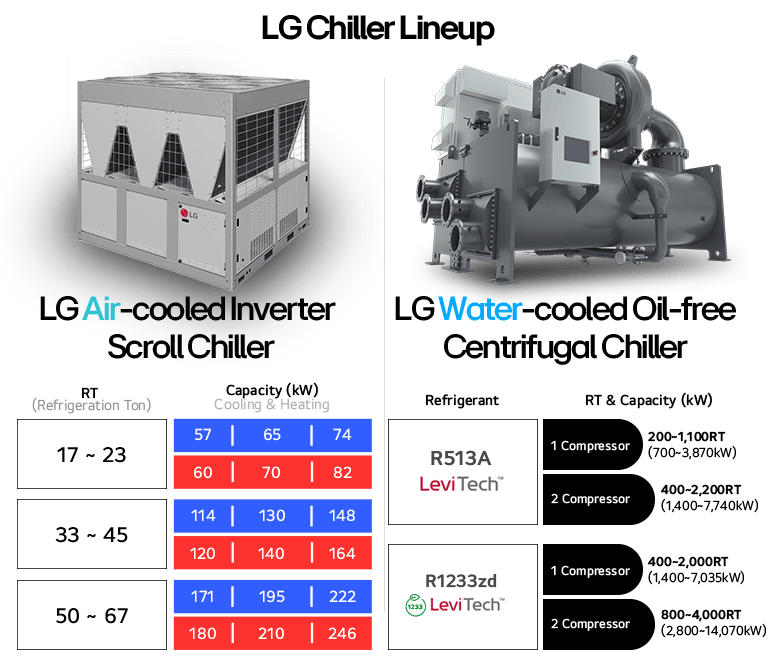
Water cooled compressors can use thousands of liters of water per year. If you don’t recycle or treat the water, this can be a serious environmental issue. In contrast, air cooled compressors have a smaller water footprint but may use more electricity, especially in hot climates.
Some modern systems use closed-loop cooling to recycle water, reducing waste. If environmental impact matters to you, this option is worth exploring.
Credit: www.lg.com
Common Mistakes When Choosing A Compressor
1. Ignoring Ambient Conditions
Some buyers pick air cooled compressors for hot, enclosed spaces. This often leads to overheating and downtime.
2. Underestimating Maintenance
Water cooled systems need regular water treatment. Without it, scaling and corrosion can shorten compressor life.
3. Not Planning For Water Supply
Large water cooled compressors need a steady, clean water supply. In drought-prone regions, this can become a critical issue.
4. Focusing Only On Initial Cost
It’s easy to be attracted by a lower purchase price, but running costs over 10–15 years often matter more.
5. Skipping Proper Sizing
Oversized compressors waste energy. Undersized compressors overheat and wear out quickly—especially if cooling is inadequate.
Real-world Examples
- Automotive workshops often use air cooled compressors due to their simplicity and portability.
- Large food processing plants prefer water cooled compressors, as they offer consistent performance and can be placed in temperature-controlled rooms.
- Construction sites use air cooled systems because water is often unavailable and setups change frequently.
- Pharmaceutical factories usually need water cooled compressors to ensure stable, clean, and quiet operation.
Credit: europe.sullair.com
Factors To Consider Before Choosing
Before making a decision, ask yourself:
- How large is your compressor, and how many hours per day will it run?
- What is the average temperature and humidity in your compressor room?
- Is water easily available and affordable in your area?
- How much noise can you tolerate in your workspace?
- Are you prepared for the extra maintenance required for water cooled systems?
- What are your local environmental regulations concerning water use and waste?
Non-obvious insight: The temperature of the cooling water in water cooled compressors should be kept below 32°C (90°F) for best efficiency. Warmer water will reduce cooling performance and may increase energy use.
Maintenance Tips For Both Systems
No matter which system you choose, proper maintenance is key.
- Air cooled compressors:
- Clean the air filters and cooling fins regularly.
- Make sure the fan is working and the airflow is not blocked.
- Check for dust buildup, especially in industrial settings.
- Water cooled compressors:
- Inspect water quality and treat for minerals or bacteria.
- Check all hoses, pumps, and connections for leaks.
- Clean heat exchangers and cooling towers as part of a regular schedule.
Skipping these steps can cause overheating, reduced efficiency, or expensive breakdowns.
Summary Table: Quick Reference
Here’s a one-glance summary of key differences:
| Aspect | Air Cooled | Water Cooled |
|---|---|---|
| Upfront Cost | Lower | Higher |
| Operating Cost | Medium-High | High (water use, maintenance) |
| Maintenance Need | Low | High |
| Environmental Impact | Lower (no water use) | Potentially high (water waste) |
| Best For | Small/medium, portable, variable use | Large, continuous, critical operations |
Final Thoughts
Choosing between an air cooled and water cooled compressor is not just a technical decision—it’s a strategic one. Consider your environment, water availability, noise limits, and the long-term cost of ownership. While air cooled compressors are simple and easy for most small to medium operations, water cooled compressors shine in large, hot, or noise-sensitive settings.
The right choice will keep your equipment running longer, save energy, and reduce headaches.
For more technical details on compressor cooling systems, you can visit this Wikipedia page.

Credit: us.fscurtis.com
Frequently Asked Questions
What Happens If An Air Cooled Compressor Overheats?
If an air cooled compressor overheats, it can shut down automatically to protect itself. Repeated overheating damages seals, bearings, and other parts, reducing the machine’s lifespan. Always ensure good airflow and clean filters to prevent this.
Is Water Cooled Always Better Than Air Cooled?
Not always. Water cooled compressors are better for large, continuous-duty operations or hot environments. But they cost more and need more maintenance. For small or portable needs, air cooled is often simpler and cheaper.
How Much Water Does A Water Cooled Compressor Use?
Usage depends on size and workload. A large industrial compressor can use thousands of liters per day. Newer systems may recycle water to reduce waste. Always check local water costs and regulations before choosing.
Can I Switch From Air Cooled To Water Cooled Later?
It’s possible but not easy. Switching requires adding water lines, pumps, and possibly changing the compressor’s internal cooling system. It’s usually cheaper and easier to choose the right type from the start.
What Are Signs That My Compressor’s Cooling System Isn’t Working Well?
Common signs include rising air temperatures, frequent shutdowns, unusual noises (fan or pump), and increased energy use. In water cooled systems, look for leaks, rust, or changes in water flow. In air cooled systems, check for blocked airflow or dirty filters.