When you think of an air compressor, you might imagine a loud, rattling machine shaking the floor in a workshop. For many years, noise was just something you had to accept. But times have changed. Today, there’s a real demand for quiet air compressors—in garages, small businesses, and even homes. Whether you’re a hobbyist who values peace, a professional working in noise-sensitive areas, or someone who simply hates the constant drone, finding the quietest air compressor can make all the difference.
But which air compressor is truly the quietest? The answer is more complex than you might think. There’s no single “winner” for everyone. Different types, sizes, and brands offer varying levels of quietness, and what works for a nail gun in a home shop may not be right for a dental office.
Let’s explore how noise levels are measured, what really makes a compressor quiet, and which models stand out for their whisper-soft performance.
Understanding Air Compressor Noise
Before you choose, it helps to know how noise levels are measured. Sound is measured in decibels (dB). For reference:
- Normal conversation: 60 dB
- City traffic: 85 dB
- Power tools: 90–100 dB
Many traditional air compressors produce 80–100 dB. That’s loud enough to require hearing protection if you use them for a long time. But some modern models now run as low as 40–60 dB, which is similar to a quiet office or gentle rainfall.
What Makes An Air Compressor Quiet?
Several factors decide how noisy a compressor will be:
- Compressor Type: Oil-free compressors are often louder, while oil-lubricated and rotary screw models tend to be quieter.
- Motor Speed: Lower RPM motors make less noise.
- Pump Design: Dual-piston and scroll pumps are generally quieter than single-piston designs.
- Insulation and Housing: Sound-dampening materials and enclosed designs cut down on noise escape.
- Size and Power: More powerful units may be noisier, but there are exceptions.
Many buyers miss the fact that quiet compressors may sacrifice some power or airflow. If you need to run heavy air tools, you may have to accept a bit more noise.
The Quietest Air Compressors: Top Picks
Let’s look at some of the quietest air compressors available today. These are proven models, not just by specs but also by user reviews and professional tests. Each is suitable for specific needs, from home workshops to professional use.
1. California Air Tools 8010 Ultra Quiet
- Noise Level: 60 dB
- Tank Size: 8 gallons
- Type: Oil-free
- CFM: 2.2 CFM @ 90 PSI
The California Air Tools 8010 is famous for its low noise. At just 60 dB, you can have a normal conversation next to it. It’s oil-free, so maintenance is minimal. The 8-gallon tank is big enough for small air tools and inflating tires, but not for heavy-duty use. Many users love it for home garages and indoor projects.
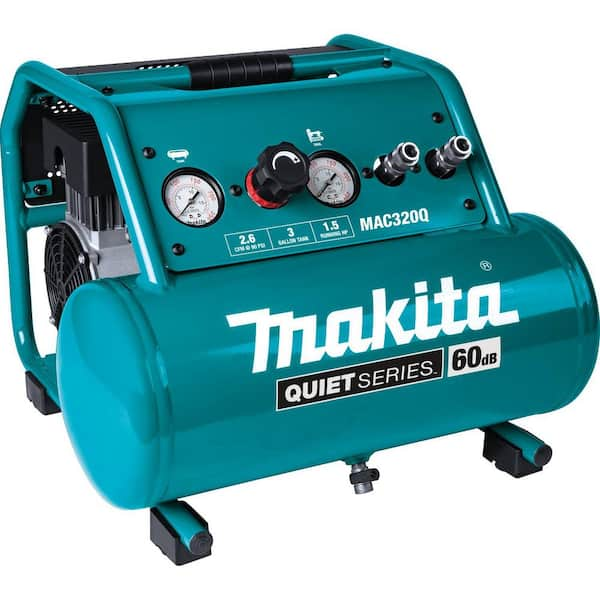
2. Makita Mac210q Quiet Series
- Noise Level: 60 dB
- Tank Size: 2 gallons
- Type: Oil-free
- CFM: 2.0 CFM @ 90 PSI
Makita’s MAC210Q is compact and easy to move. At 60 dB, it’s just as quiet as the California Air Tools, but with a smaller tank. It’s perfect for finish nailers, staplers, and trim work, especially in homes or apartments where noise is a concern.
3. Stealth 12-gallon Ultra Quiet Air Compressor
- Noise Level: 68 dB
- Tank Size: 12 gallons
- Type: Oil-free
- CFM: 4.0 CFM @ 90 PSI
For larger projects, the Stealth 12-Gallon model offers more air storage and higher airflow. Its 68 dB noise level is still much lower than most traditional compressors of this size. It’s a good fit for workshops and garages where you need more air but want to keep noise down.
4. Rolair Jc10 Plus
- Noise Level: 60 dB
- Tank Size: 2.5 gallons
- Type: Oil-less
- CFM: 2.35 CFM @ 90 PSI
The Rolair JC10 Plus is often picked by professionals for its reliability and quiet operation. The roll-cage design protects it on job sites, and at 60 dB, it’s safe for indoor work. It’s popular among carpenters and finish workers.
5. Dewalt D55167
- Noise Level: 71 dB
- Tank Size: 15 gallons
- Type: Oil-free
- CFM: 5.0 CFM @ 90 PSI
The Dewalt D55167 offers more power and a bigger tank, making it suitable for running multiple tools. It’s a bit louder at 71 dB, but still much quieter than many similar compressors. If you need both capacity and reduced noise, this is a strong choice.
Credit: www.homedepot.com
Quick Comparison: Top Quiet Air Compressors
Here’s a side-by-side look at key features and noise levels:
| Model | Noise Level (dB) | Tank Size | CFM @ 90 PSI | Weight |
|---|---|---|---|---|
| California Air Tools 8010 | 60 | 8 gal | 2.2 | 48 lbs |
| Makita MAC210Q | 60 | 2 gal | 2.0 | 44 lbs |
| Stealth 12-Gallon | 68 | 12 gal | 4.0 | 95 lbs |
| Rolair JC10 Plus | 60 | 2.5 gal | 2.35 | 42 lbs |
| Dewalt D55167 | 71 | 15 gal | 5.0 | 92 lbs |
Types Of Quiet Air Compressors
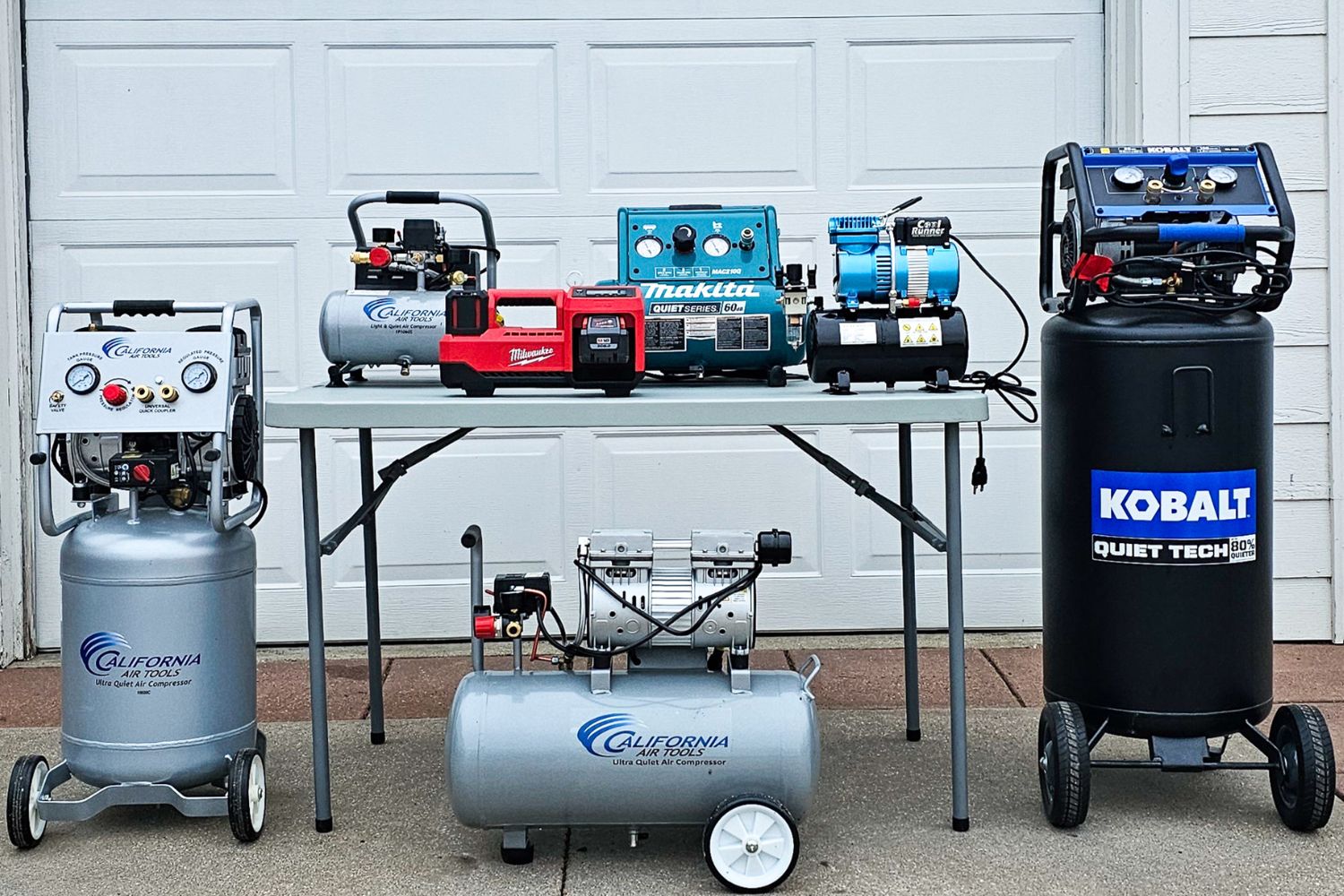
Not all compressors are the same. Here are the main types you’ll see when shopping for a quiet model:
Oil-free Compressors
Oil-free models use special bearings and materials to avoid lubrication. They’re lighter, require less maintenance, and are common in portable, quiet units. But they may wear out faster if used heavily.
Oil-lubricated Compressors
These use oil to keep parts running smoothly, which cuts down on noise and vibration. They last longer and are often quieter, but need regular oil changes.
Rotary Screw Compressors
Rotary screw compressors are used in businesses and factories. They are very quiet for their size and run smoothly for hours. But they are expensive and too large for most home use.
Scroll Compressors
Scroll compressors use a special spiral design. They are extremely quiet and reliable, but rare and costly.
Credit: www.bobvila.com
How To Choose The Quietest Air Compressor For You
Noise is important, but you also need a compressor that fits your work. Here are key questions to ask before you buy:
- How much air do you need? Look at CFM (cubic feet per minute) and PSI (pounds per square inch). More powerful tools need higher numbers.
- Where will you use it? For indoor use, a quieter, smaller model is best. For outdoor or heavy use, you might need to accept a bit more noise.
- How portable should it be? Lighter, smaller units are easier to move but often have less power.
- How often will you use it? Occasional use is fine with oil-free models. Daily, heavy use may need an oil-lubricated or rotary screw compressor.
Mistakes Beginners Often Make
- Focusing only on decibels: Some compressors are quiet but weak. Match noise level with power needs.
- Ignoring air delivery: If the compressor can’t keep up with your tools, you’ll waste time waiting for it to recover.
- Overlooking maintenance: Oil-free models need less care, but oil-lubricated types may last longer with the right upkeep.
Real-world Performance: What To Expect
No compressor is completely silent. Even the quietest models still produce some sound, especially during startup. Placement matters—putting your compressor on a soft surface or using a rubber mat can reduce noise. Walls, doors, and insulation also make a difference.
Some people build a simple soundproof box for their compressor with air vents to cut noise even further.
Here’s how different compressors sound compared to common noises:
| Compressor Noise Level | Comparable Everyday Sound |
|---|---|
| 40 dB | Quiet library |
| 60 dB | Normal conversation |
| 68 dB | Busy office |
| 80 dB | City traffic |
| 100 dB | Chainsaw |
Practical Tips For Reducing Compressor Noise
Even with a quiet model, you can make things even better:
- Place the compressor on a rubber mat to absorb vibration.
- Keep it away from hard walls and corners (they reflect sound).
- Use longer hoses to keep the compressor farther from your workspace.
- Regularly check and tighten bolts—loose parts make more noise.
- For stationary units, consider building a soundproof enclosure with proper ventilation.
Pro insight: Some users find that adding a simple plywood box lined with foam can reduce noise by up to 10 dB. Just make sure the compressor doesn’t overheat.
Are Quiet Air Compressors Worth It?
Quiet compressors often cost more than standard models with the same power. But for many people, the benefits are clear:
- Less stress and fatigue from constant noise
- Easier communication while working
- Safer for hearing, especially in small spaces
- Better for home use or shared workspaces
If you work late at night or have close neighbors, a quieter compressor is almost always worth the extra money.
Credit: www.bobvila.com
Frequently Asked Questions
How Are Air Compressor Noise Levels Measured?
Noise levels are measured in decibels (dB), usually from about 3–5 feet away from the compressor. Manufacturers typically test under standard conditions, but real-world noise can be higher if the compressor is in a small, echoing space.
Can I Make My Existing Air Compressor Quieter?
Yes, you can reduce noise by placing your compressor on a rubber mat, building a soundproof box (with ventilation), and tightening all bolts and fittings. Regular maintenance also helps keep it running smoothly and quietly.
Are Oil-free Compressors Always Louder?
Not always, but oil-free compressors tend to be a bit louder than oil-lubricated ones. However, technology has improved, and many oil-free models are now very quiet. For example, the California Air Tools 8010 is oil-free and only 60 dB.
What Is A Safe Noise Level For Working Long Hours?
Prolonged exposure to noise above 85 dB can damage hearing. For regular, long-term use, compressors rated at 60–70 dB are much safer and more comfortable. Always wear hearing protection if you use louder machines.
Where Can I Find Official Data On Air Compressor Noise And Safety?
You can find guidelines and research on safe noise levels at the Occupational Safety and Health Administration (OSHA) website, which offers advice for both workplaces and home users.
Choosing the quietest air compressor is about more than just numbers on a box. Think carefully about your needs, compare real noise levels, and consider the tips above. With the right choice, you can enjoy powerful air tools—without the ear-splitting noise.