Choosing the right air compressor hose size is more important than many people realize. If you use the wrong size, your tools may not work well, your compressor will run longer, and you could even damage your equipment. Two of the most common hose sizes are 3/8 inch and 1/2 inch, but they are not the same. Each has its strengths and weaknesses. Picking the right one can save you money, reduce hassle, and keep your projects on track.
Many beginners think all hoses are the same as long as they fit. This is a mistake. The right hose affects air flow, tool power, safety, and even the noise you hear in your workshop. Let’s break down the real differences between 3/8 inch and 1/2 inch air compressor hoses. We’ll cover the 8 most important factors to help you decide which size is best for your needs.
1. Air Flow Capacity
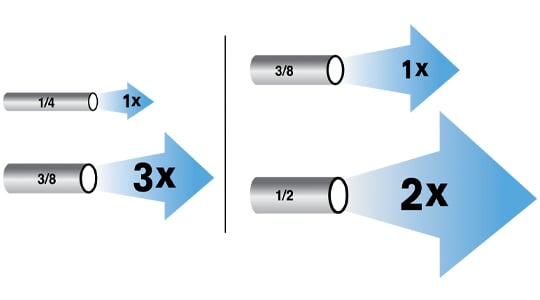
The diameter of a hose is one of the main factors that affects how much air passes through. A 1/2 inch hose can carry more air than a 3/8 inch hose because it has a bigger opening. This is important if you use tools that need a lot of air, like sanders, grinders, or spray guns.
For example, a typical 3/8 inch hose might deliver around 20-22 cubic feet per minute (CFM) at 90 psi. A 1/2 inch hose can deliver 30 CFM or more under the same conditions. If your tool requires a high CFM and you use a smaller hose, you may notice weak power or slow performance. This is called bottlenecking.
Non-obvious tip: Even a short section of narrow hose can limit the flow for the whole system. It’s not just the main hose size—every fitting, connector, and tool inlet matters.
2. Pressure Drop
As air travels through a hose, it loses pressure. This is called pressure drop. The smaller the hose, the more pressure is lost. A 1/2 inch hose has less pressure drop than a 3/8 inch hose, especially over long distances.
Let’s look at some typical numbers:
| Hose Size | Length (feet) | Pressure Drop (psi at 90 psi input, 20 CFM) |
|---|---|---|
| 3/8 inch | 50 | ~10 psi |
| 1/2 inch | 50 | ~3 psi |
If you use a long hose, the pressure loss is higher. For most home users with short hoses (25 feet or less), this might not be a big deal. For professionals, or anyone with long hoses, the difference is clear.
Common mistake: People often buy a powerful compressor, but use a small hose. The air pressure at the tool drops, so the tool feels weak—even though the compressor is fine.
Credit: www.youtube.com
3. Tool Compatibility
Different tools need different amounts of air. Light-duty tools, like nail guns or small ratchets, work well with a 3/8 inch hose. Heavy-duty tools, like impact wrenches or sand blasters, often need a 1/2 inch hose to work at full power.
Here’s a quick guide:
| Tool Type | Typical CFM | Recommended Hose Size |
|---|---|---|
| Nail Gun | 2-4 | 3/8 inch |
| Paint Sprayer | 7-12 | 3/8 inch |
| 1/2” Impact Wrench | 8-12 | 3/8 or 1/2 inch |
| Die Grinder | 12-20 | 1/2 inch |
| Sandblaster | 20+ | 1/2 inch |
If you use a mix of tools, start with the one that needs the most air. Choose a hose that can handle it, so you don’t have to swap hoses all the time.
4. Weight And Flexibility
A 3/8 inch hose is lighter and easier to handle than a 1/2 inch hose. If you need to move around a lot, or work overhead, the lighter hose reduces arm fatigue and is less likely to drag on your tools.
For example, a 50-foot 3/8 inch rubber hose usually weighs around 7-8 pounds. The same length in 1/2 inch can weigh 12-14 pounds or more. The larger hose is also stiffer, especially in cold weather.
Non-obvious insight: Flexibility matters most for jobs that require constant movement. If you work at a fixed station, the weight is less of an issue.
5. Hose Length Impact
Both 3/8 inch and 1/2 inch hoses lose pressure as length increases, but the effect is much stronger on smaller hoses. If you need a 100-foot hose, a 1/2 inch hose will keep more pressure and deliver more air to your tool.
If you only need 10-25 feet, you can often use a 3/8 inch hose without problems. But as you go longer, consider moving up in size. Always check your tool’s air needs and the total hose length.
Practical example: For a 25-foot hose, the pressure drop for a 3/8 inch hose may only be 2-3 psi. At 100 feet, it could be 20 psi or more—enough to make your tool unusable.
6. Fittings And Connectors
Most air hoses use standard 1/4 inch NPT or 3/8 inch NPT fittings, but the hose size still matters. A 1/2 inch hose may come with larger fittings, which allow more air to pass. If you use a large hose with small connectors, you create a bottleneck.
Tip: Make sure your connectors, couplers, and fittings match your hose size and tool needs. Upgrading your hose but keeping small connectors can limit performance.
Common mistake: Many users buy a bigger hose but forget to upgrade their connectors, so they don’t get the full benefit.
7. Cost And Availability
3/8 inch hoses are cheaper and more widely available. You can find them at most hardware stores in many styles—rubber, PVC, hybrid, retractable, and more. 1/2 inch hoses cost more and have fewer options, especially for home users.
A typical 50-foot 3/8 inch hose costs around $30–$50. The same length in 1/2 inch can cost $60 or more. In addition, larger hoses may need bigger (and more expensive) connectors, and they take up more storage space.
Insider advice: Don’t buy a bigger hose just in case. Buy the size that matches your tools and the work you do most.
8. Application Scenarios
When do you need a 3/8 inch hose, and when is a 1/2 inch hose better? Here are some common scenarios:
- Home garage work: For inflating tires, using nail guns, or running small ratchets, a 3/8 inch hose is perfect. It’s light and easy to coil.
- Automotive repair: For impact wrenches, air ratchets, and spray guns, a 3/8 inch hose is usually enough. But if you use heavy tools or longer hoses, a 1/2 inch hose can help.
- Construction sites: For big jobs with long hoses or multiple users, a 1/2 inch hose delivers more power and keeps pressure up.
- Painting and finishing: For HVLP spray guns, a 3/8 inch hose is fine for most jobs. For industrial painting, a 1/2 inch hose may be needed.
- Industrial workshops: For sandblasting, grinding, or using multiple tools at once, a 1/2 inch hose is the right choice.
- Portable compressors: Most portable compressors work best with a 3/8 inch hose. Larger hoses may be overkill and harder to manage.
- Long-distance runs: If your hose needs to reach over 50 feet, a 1/2 inch hose helps prevent pressure drop.
- Fixed installations: For permanent lines in a shop, a 1/2 inch hose or hard piping is common to supply multiple outlets.
Key takeaway: Match your hose size to your tool’s CFM needs, your working distance, and the type of work you do most often.
Practical Comparison: Which Should You Choose?
Here’s a summary to help you decide:
- Choose a 3/8 inch hose if:
- You use light to medium-duty tools
- Your hoses are less than 50 feet
- You want the lightest, most flexible option
- Cost and storage matter
- Choose a 1/2 inch hose if:
- You use high-CFM tools (grinders, sanders, sandblasters)
- Your hoses are over 50 feet
- You want to reduce pressure drop
- You work in a shop with multiple users or tools
If you’re not sure, start with a good quality 3/8 inch hose. If you run into performance issues, upgrade to 1/2 inch for the tools that need it.
Real-world Example
Let’s say you have a 60-gallon, 5 HP compressor in your garage. You use a 3/8 inch hose for a 1/2 inch impact wrench. You notice the wrench feels weak and doesn’t break bolts easily. You switch to a 1/2 inch hose, and suddenly the wrench hits harder, even though the compressor didn’t change. Why? The bigger hose delivers more air with less pressure drop, so your tool works as designed.
On the other hand, if you only run a small nail gun, the heavier hose just makes your job harder, with no benefit.
Credit: info.topring.com
Common Mistakes To Avoid
- Using a small hose with high-demand tools: This limits tool performance and can damage both the tool and compressor.
- Ignoring fittings: If your connectors are too small, the hose size doesn’t matter.
- Buying the biggest hose “just in case”: Larger hoses are heavier and harder to handle. Choose what fits your needs.
- Not checking tool CFM ratings: Always match your hose size to the CFM your tool requires.
Additional Insights
- Hose material also matters: Rubber hoses are more flexible but heavier. PVC is lighter but stiffer, especially in cold weather. Hybrid hoses offer a balance.
- Storage: Larger hoses need more space and stronger reels.
- Noise: Larger hoses can reduce whistling or hissing sounds, especially at higher air flows.
If you want to read more about air compressor basics and hose sizing, check out this detailed guide from Wikipedia.
Credit: accuair.com
Frequently Asked Questions
What Happens If I Use A 3/8 Inch Hose With A High-demand Air Tool?
You may experience weak tool performance. The tool might not reach full power or run as fast as it should because the hose can’t deliver enough air.
Is A 1/2 Inch Air Compressor Hose Always Better Than 3/8 Inch?
Not always. 1/2 inch hoses deliver more air but are heavier, cost more, and are less flexible. For small tools and short distances, a 3/8 inch hose is usually the better choice.
Can I Use Different Hose Sizes Together?
Yes, but the smallest section controls the air flow. If you use a 1/2 inch hose with a 3/8 inch connector, you still limit the air to what the smaller size can handle.
How Do I Know What Size Hose My Tool Needs?
Check the CFM rating on your tool. Compare it to your compressor’s output and the hose’s flow rating. For tools needing under 10 CFM, a 3/8 inch hose is usually enough. For higher CFM, consider 1/2 inch.
Does Hose Length Matter As Much As Hose Size?
Yes. Longer hoses lose more pressure, especially if they are small. If you need to run air far from your compressor, choose a larger diameter to keep your tools working their best.
Choosing between a 3/8 inch and 1/2 inch air compressor hose is about finding the right balance for your tools, your work style, and your budget. Think about what you use most, check your tool ratings, and remember: the right hose makes your work easier, faster, and safer.