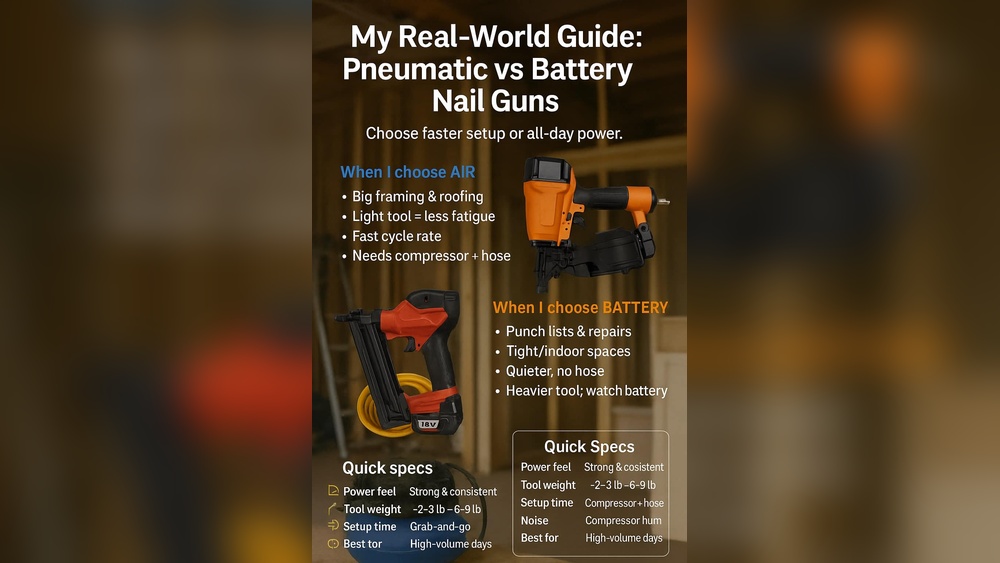
Choosing between an air compressor nail gun and a battery-powered nail gun can be confusing, especially if you’re not a professional. Both tools have changed the way people do construction and carpentry. But which one is best for you? This article breaks down everything you need to know about air compressor vs battery nail guns—from power and convenience to long-term costs and common mistakes. Whether you’re a DIY enthusiast or a contractor, you’ll finish this article confident in your choice.
How Air Compressor Nail Guns Work
An air compressor nail gun (also called a pneumatic nail gun) uses compressed air to drive nails into wood, drywall, or even metal. The air compressor connects to the nail gun with a hose. When you pull the trigger, the gun releases a burst of compressed air, which pushes the nail into your material.
These tools have been around for decades and are trusted on job sites worldwide. Their design is simple, and they often work reliably for years with basic care. For projects that need lots of power or speed, pneumatic nailers have always been the go-to option.
How Battery Nail Guns Work
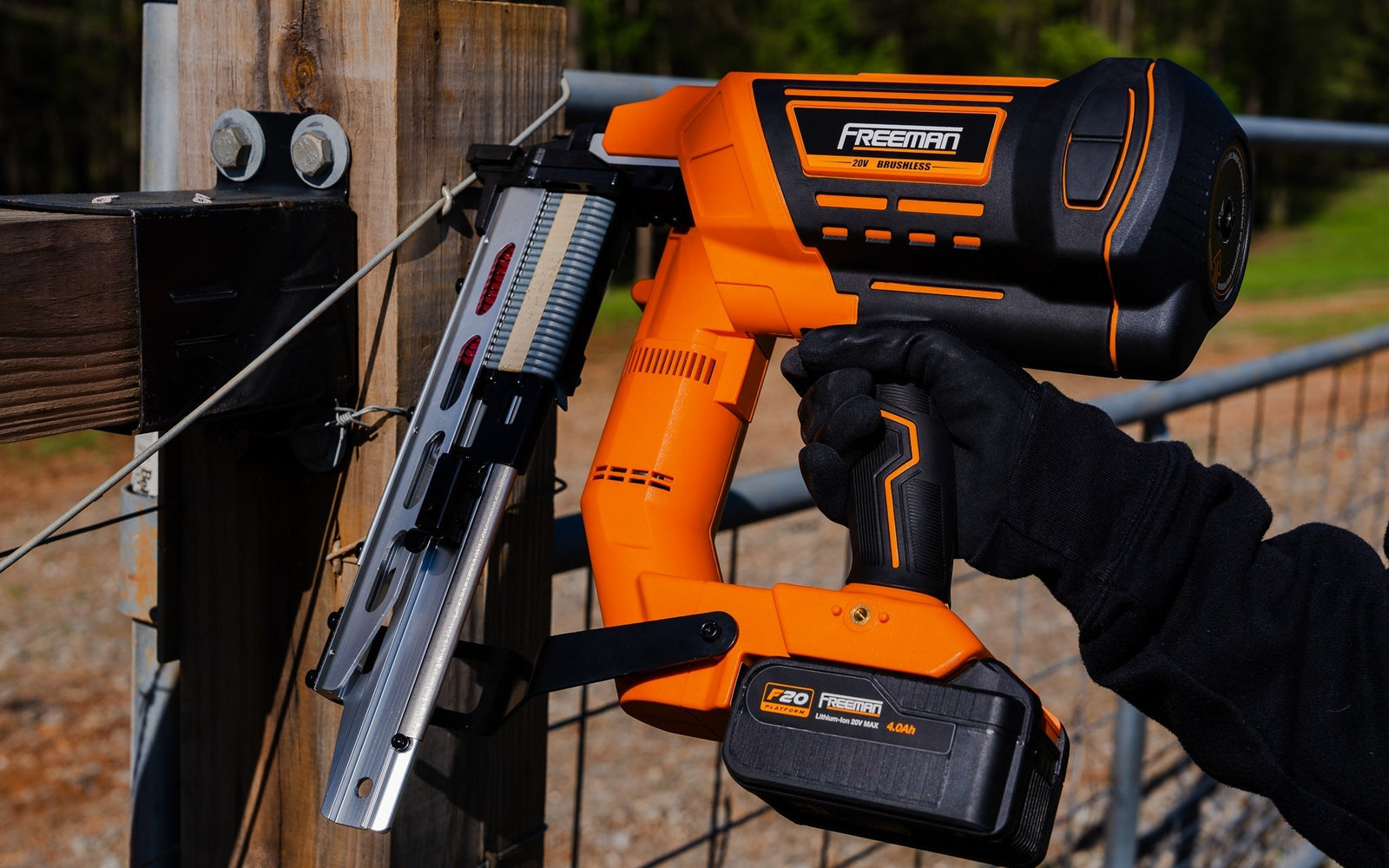
A battery nail gun (also called a cordless nail gun) runs on a rechargeable battery, usually lithium-ion. Instead of air, it uses a motor and sometimes a small internal gas canister to push the nail out. There’s no hose, no compressor—just the gun and the battery.
Cordless nail guns have improved a lot in the last decade. They’re now much more powerful, and the batteries last longer. For people who hate dealing with cords, hoses, or heavy equipment, battery nail guns are a big step forward.
Credit: freemantools.com
Comparing Power And Performance
Nail Driving Force
- Air compressor nail guns are famous for their raw power. They can drive nails into hard woods, thick materials, and even engineered lumber with ease.
- Battery nail guns have improved, but some still struggle with the hardest woods or the biggest nails.
Firing Speed
- Pneumatic nailers can shoot nails as fast as you can pull the trigger. This is useful for large framing or roofing jobs.
- Battery nailers sometimes have a short delay between shots, especially in cheaper models.
Depth Consistency
- With air-powered nail guns, you get very even nail depth if your compressor is set correctly.
- Cordless models can be less consistent, especially as the battery runs low.
Here’s a quick performance comparison:
| Feature | Air Compressor Nail Gun | Battery Nail Gun |
|---|---|---|
| Maximum Power | High (good for tough jobs) | Medium to High (depends on model) |
| Firing Speed | Very Fast | Fast (slower in budget models) |
| Nail Depth Control | Very Consistent | Varies with battery level |
Portability And Ease Of Use
Weight And Bulk
- Air compressor nail guns are light, but the compressor and hose add bulk. Moving the compressor takes effort, and dragging hoses can be annoying.
- Battery nail guns are heavier than the gun alone, but you only carry one unit. No hose, no compressor, just grab and go.
Setup Time
- With a pneumatic nailer, setup means plugging in the compressor, attaching hoses, and waiting for air pressure.
- Cordless nailers are ready in seconds—just put in the battery and nails.
Working In Tight Spaces
- Battery nail guns excel in tight spots, up ladders, or when moving from room to room. There’s nothing to trip on.
- Air hose can get tangled or caught, making some tasks harder.
Here’s a look at portability factors:
| Aspect | Air Compressor Nail Gun | Battery Nail Gun |
|---|---|---|
| Total Weight (with equipment) | 15–40 lbs (gun + compressor + hose) | 6–10 lbs (gun + battery) |
| Setup Time | 3–5 minutes | 30 seconds |
| Mobility | Low (tied to compressor) | High (go anywhere) |
Cost Comparison
Initial Investment
- Air compressor nail guns require buying both the gun and the compressor. Compressors can cost $100–$300, and the gun $50–$250.
- Battery nail guns are usually $200–$400 for the gun and battery, but you don’t need a compressor.
Maintenance And Accessories
- Pneumatic nailers need regular oiling, and you must maintain the compressor (draining water, changing filters).
- Cordless nailers need battery care. Batteries can cost $50–$100 to replace after a few years.
Long-term Costs
- Pneumatic: You may pay more up front, but compressors last years and can power other tools.
- Cordless: Batteries wear out over time, and new models may use different batteries, which can be costly to upgrade.
Here’s a cost breakdown:
| Item | Air Compressor Nail Gun | Battery Nail Gun |
|---|---|---|
| Starter Kit (gun + power) | $150–$500 | $200–$400 |
| Ongoing Maintenance | Low (oil, filters) | Medium (battery replacement) |
| Accessory Compatibility | High (many tools use same compressor) | Varies (depends on battery system) |
Noise And Safety
Noise Levels
- Air compressors are loud (70–90 dB), especially when refilling. The nail gun itself is also sharp and sudden.
- Battery nail guns are quieter. Some models are as low as 80 dB, making them better for indoor use or busy neighborhoods.
Safety Factors
- Both tools can cause serious injury if used incorrectly.
- Cordless nailers have more electronic safety features, like trigger locks and dry-fire prevention.
- Pneumatic guns can double-fire if the trigger is held too long, which is dangerous.
Extra tip: Always wear ear protection with pneumatic setups, and never point a nail gun at yourself or others.
Versatility And Tool Range
Types Of Projects
- Pneumatic nail guns come in many types: Framing, finish, brad, roofing, and more. You can switch the gun but keep the same compressor.
- Battery nail guns are now available for most tasks but have fewer options for very large framing or specialized jobs.
Indoor Vs Outdoor Use
- Cordless nailers are great for outdoor decks, fencing, or jobs without electricity.
- Pneumatic nailers can run all day if you have power, but compressors are hard to carry far from an outlet.
Cold Weather Performance
- Air compressors can freeze or lose pressure in cold weather. Moisture inside hoses can turn to ice.
- Battery nail guns may have shorter battery life in cold, but they keep working if you keep the battery warm.
Common Mistakes And Overlooked Factors
- Ignoring air requirements. Some people buy a small compressor that can’t keep up with a big nail gun. Always check the required CFM (cubic feet per minute) for your tool.
- Not considering battery life. If your job takes all day, bring a spare battery or plan for charging breaks.
- Forgetting about hose length. A short hose limits your range, and a long one can drop air pressure.
- Assuming all batteries are the same. Brands use different battery types—your old batteries may not fit a new gun.
- Failing to maintain the compressor. Water buildup can ruin both your compressor and your nail gun.
Credit: www.gz-supplies.com
Real-world Examples
A home builder needs to frame a new house. He chooses a pneumatic framing nailer because he’ll drive thousands of nails every day and needs maximum speed and power. The compressor also runs his other tools, like a stapler and impact wrench.
A DIY homeowner wants to build a fence. She picks a battery nail gun because she doesn’t want to drag a compressor outside or run extension cords. She can finish the fence in a weekend, and the battery lasts long enough for her project.
Environmental Impact
- Air compressors use electricity and sometimes release oil mist into the air. Old compressors may leak.
- Battery nail guns use lithium batteries, which can be recycled but are often thrown away. Batteries are getting better, but still have an environmental footprint.
Choosing the greener option depends on how you use your tool and how you dispose of batteries or maintain your compressor.

Credit: www.youtube.com
Which Should You Choose?
Pick an air compressor nail gun if:
- You do heavy-duty work, like framing or roofing.
- You already own other pneumatic tools.
- You need speed and consistent power for long hours.
Choose a battery nail gun if:
- You need portability and quick setup.
- You work in finished homes, up ladders, or in tight spaces.
- You dislike dealing with hoses, cords, or compressors.
If you’re a beginner, renting both types for a day is a smart way to find your favorite. Some tool rental shops allow this for a low cost, and you’ll understand the real pros and cons much better.
Frequently Asked Questions
Are Battery Nail Guns As Powerful As Air Compressor Nail Guns?
Battery nail guns have become much stronger in recent years. For most home projects and light construction, their power is enough. However, for the hardest woods or the biggest framing nails, air compressor nail guns still have the edge.
How Long Does A Battery Last In A Cordless Nail Gun?
A typical lithium-ion battery can fire 400–1,000 nails per charge, depending on the model and nail size. For big jobs, always have a spare battery ready. Cold weather and heavy use can reduce battery life.
Can I Use The Same Compressor For Different Pneumatic Tools?
Yes! That’s a big advantage. One air compressor can power your nail gun, stapler, air ratchet, and more. Just make sure your compressor is strong enough for each tool’s air requirements.
Are Battery Nail Guns Safe For Beginners?
Yes, they are safe if you follow instructions. Most have extra safety features like trigger locks. Still, always wear eye protection and never point the gun at anyone.
Where Can I Learn More About Tool Safety And Best Practices?
A good resource is the OSHA Nail Gun Safety Guide, which covers essential safety tips for both types of nail guns.
Choosing between an air compressor and a battery nail gun is about more than just power. Think about your work style, space, and future needs. With the right information, you’ll make a choice that saves you time, money, and frustration—and helps you build better projects, every time.