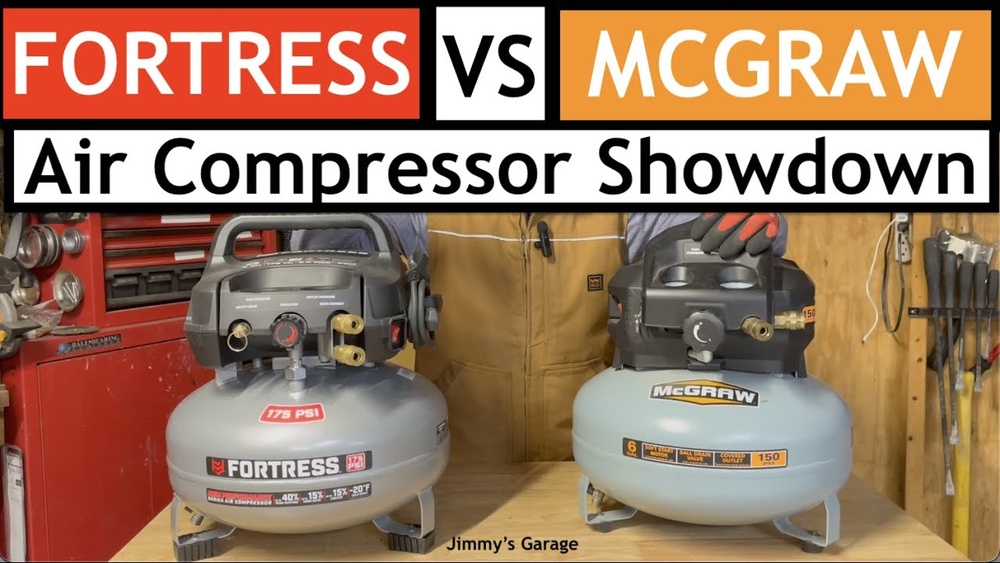
Choosing the right air compressor can make your work faster, easier, and more reliable. For many people, two brands often come up when looking for portable and affordable air compressors: Fortress and McGraw. Both are widely available at Harbor Freight and are popular among DIYers, mechanics, and small shop owners. But which one is better for your needs? This guide compares the Fortress and McGraw air compressors in detail, looking at performance, build quality, price, features, and real-world experiences. By the end, you’ll have the facts you need to make a confident choice.
Key Features: What Sets Fortress And Mcgraw Apart?
When comparing air compressors, several features matter most: airflow (CFM), maximum pressure (PSI), tank size, noise level, and durability. Both Fortress and McGraw offer various models, but they target similar users—people who want value and decent performance without spending thousands.
Fortress is marketed as Harbor Freight’s premium compressor line. Their compressors promise quieter operation, faster recovery times, and stronger build quality. McGraw is positioned as the budget-friendly choice, providing functional compressors for lighter jobs at a lower price point. Let’s look at what both brands offer and how their main features compare.
Performance Comparison: Cfm, Psi, And Power
CFM (Cubic Feet per Minute) shows how much air a compressor can deliver. PSI (Pounds per Square Inch) is the maximum pressure. These numbers decide what tools you can use.
| Model | Brand | Max PSI | CFM @ 90 PSI | Tank Size |
|---|---|---|---|---|
| 6 Gallon Pancake | Fortress | 175 | 2.8 | 6 Gal |
| 6 Gallon Pancake | McGraw | 150 | 2.8 | 6 Gal |
| 27 Gallon Vertical | Fortress | 200 | 4.1 | 27 Gal |
| 20 Gallon Vertical | McGraw | 175 | 4.0 | 20 Gal |
Fortress compressors usually offer higher maximum PSI, especially in their larger models. For example, their 27-gallon unit goes up to 200 PSI, while the similar McGraw model tops out at 175 PSI. This higher PSI means you can run tools longer before the compressor needs to refill.
However, for smaller models like the 6-gallon “pancake” style, the CFM is about the same—both brands deliver 2. 8 CFM at 90 PSI. This is enough for finish nailers, inflation, and brad nailers, but not for large sanders or spray guns.
For most DIY tasks, both brands are adequate. But if you want extra power or plan to use tools that need more air, Fortress usually has the edge.

Credit: www.reddit.com
Build Quality And Durability
Build quality can decide how long your compressor lasts. Fortress compressors feature reinforced tanks, better rubber feet, and stronger control panels. The handles and wheels feel sturdy, and the fit and finish are usually above average for the price range.
McGraw compressors are more basic. Their tanks are solid, but the plastic parts (like handles, control panels, and feet) may feel cheaper. This does not mean McGraw compressors are fragile, but they may not survive rough treatment as well as Fortress models.
A small but important detail: Fortress often includes better air filters and quieter intake mufflers. Over time, these small upgrades can make a difference in both reliability and user comfort.
Noise Levels: How Quiet Are They?
Noise is a big factor, especially if you use your compressor indoors or in a small garage. Many users want a quiet compressor to avoid disturbing family or neighbors.
| Model | Brand | Noise Rating (dBA) |
|---|---|---|
| 6 Gallon Pancake | Fortress | 78 |
| 6 Gallon Pancake | McGraw | 84 |
| 27 Gallon Vertical | Fortress | 78 |
| 20 Gallon Vertical | McGraw | 88 |
Fortress compressors are promoted as ultra-quiet, and real-world tests support this. For instance, the Fortress 6-gallon model rates at around 78 dBA, while the McGraw equivalent can reach 84 dBA. This difference might not sound huge, but every 3 dBA is a noticeable jump in volume.
For people working in shared spaces, the lower noise of Fortress compressors can be a real benefit. Quieter operation also means less fatigue if you use the compressor for long periods.
Price: What Do You Pay?
Price is often the deciding factor for many buyers. Here’s a general idea of what you can expect to pay for similar models:
- 6 Gallon Pancake: Fortress about $149, McGraw about $99
- 20-27 Gallon Vertical: Fortress about $399, McGraw about $299
These prices may change with sales and promotions, but McGraw compressors are almost always cheaper. If you are on a tight budget and only need a compressor for light work, McGraw is the more affordable choice.
It’s important to consider what you get for the extra cost with Fortress—quieter operation, higher PSI, and better build quality. For some, these upgrades are worth the higher price.
Ease Of Use: Controls, Portability, And Maintenance
Both brands are made for easy use, but Fortress models tend to add more user-friendly touches. For example:
- Pressure gauges on Fortress are larger and easier to read.
- Drain valves are often easier to reach on Fortress tanks.
- Fortress handles and wheels feel more comfortable for moving the compressor.
McGraw units have simple controls, but sometimes the gauges are smaller, and the drain valves can be harder to turn. This matters if you plan to move your compressor often or need to drain the tank after each use.
Maintenance is similar for both brands: drain the tank after use, keep filters clean, and check for leaks. Fortress air filters are easier to access and replace, which can extend the life of your machine.

Credit: www.reddit.com
Real-world Performance And Reliability
User reviews and hands-on tests give a better picture than specs alone. Here’s what people often report:
- Fortress compressors start quickly in cold weather, recover pressure faster, and rarely trip breakers.
- McGraw compressors sometimes take longer to refill, and a few users mention slow leaks from the fittings over time.
- Both brands are oil-free, making them easier to maintain for beginners.
A non-obvious insight: ambient temperature affects performance. Fortress compressors often run better in unheated garages because their motors are rated for lower temperatures. This means fewer problems on cold mornings.
Another detail beginners miss: power supply matters. Larger Fortress models (27 gallon and above) may need a dedicated circuit. Plugging into a shared outlet can cause breaker trips, especially if other heavy tools are running.
Best Uses: Which Brand Fits Your Work?
Choosing between Fortress and McGraw depends on your projects:
- Fortress is best for frequent use, indoor spaces, or when you need higher air pressure. If you value quiet, durability, and plan to use your compressor with a variety of air tools, Fortress is a smart investment.
- McGraw fits light-duty work—like inflating tires, running a brad nailer, or occasional small repairs. If you only use an air compressor a few times a year, McGraw gives you decent performance at a lower price.
If you plan to grow your tool collection or start using spray guns or impact wrenches, investing in a Fortress model now can save you from needing an upgrade later.
Comparing Popular Models Side By Side
To help you see the differences, here’s a quick comparison of two popular models—Fortress 6 Gallon Pancake and McGraw 6 Gallon Pancake:
| Feature | Fortress 6 Gallon | McGraw 6 Gallon |
|---|---|---|
| Max PSI | 175 | 150 |
| CFM @ 90 PSI | 2.8 | 2.8 |
| Noise Level | 78 dBA | 84 dBA |
| Weight | 45 lbs | 38 lbs |
| Warranty | 1 year | 90 days |
| Price | $149 | $99 |
The Fortress gives you higher PSI, quieter operation, and a longer warranty, but it costs more and is a bit heavier. The McGraw is lighter and cheaper, but not as quiet or powerful.
What Beginners Often Miss
- Tool compatibility is critical. Many people buy a compressor without checking the air requirements of their tools. Always check your tool’s CFM and PSI needs before buying.
- Tank size affects convenience, not just power. A larger tank means the compressor runs less often, which is quieter and more efficient for longer jobs. But for short tasks, a small tank is easier to move and store.

Credit: www.youtube.com
Warranty And Customer Support
Warranty can be a deciding factor, especially if you’re new to air compressors. Fortress models usually come with a 1-year warranty, while McGraw offers only 90 days. This longer coverage means Fortress will fix or replace your compressor if something goes wrong in the first year.
For more details on air compressor technology, you can visit Wikipedia for an in-depth explanation.
Frequently Asked Questions
How Do I Choose The Right Size Air Compressor For My Tools?
First, check the CFM and PSI requirements of your main air tools. Choose a compressor that delivers at least that much at 90 PSI. If you plan to use more than one tool at a time, add up their CFM needs.
Which Is Better For Indoor Use: Fortress Or Mcgraw?
Fortress compressors are better for indoor use because they are quieter (as low as 78 dBA) and have better vibration control. This makes them easier on your ears, especially in small spaces.
Can I Use A Mcgraw Compressor For Painting Or Running Impact Wrenches?
Most McGraw compressors are best for light-duty tasks. For painting or impact wrenches, you need higher CFM and PSI, which you often find in Fortress models.
Are Fortress Compressors Really Worth The Extra Cost?
If you value low noise, higher pressure, and better durability, Fortress compressors are worth the extra money. If you only use your compressor occasionally for simple jobs, McGraw is a good budget option.
What Maintenance Do These Compressors Need?
Both brands are oil-free, so maintenance is simple: drain the tank after each use, keep the air filter clean, and check for leaks. Fortress models may have easier-to-replace filters and more accessible drain valves.
Choosing between Fortress and McGraw air compressors depends on your budget, your work style, and how much you value performance and quiet. Both brands offer solid choices, but Fortress stands out for those who want a little extra quality and reliability. With the facts above, you’re ready to find the right compressor for your needs.