Air compressors are everywhere, from car workshops to home garages. If you’ve ever shopped for one, you’ll notice two numbers on every model: CFM and PSI. These are not just technical jargon—they decide what tools you can run and how well your compressor will work. Understanding the difference between air compressor CFM vs PSI is key to choosing the right machine, getting the best performance, and avoiding costly mistakes.
Many beginners think that a higher number is always better. But that’s not true. Each value tells you something different about the compressor. If you’re confused by these ratings, you’re not alone. Let’s break down what CFM and PSI really mean, how they work together, and how to use them when picking or using an air compressor.
What Is Cfm?
CFM stands for Cubic Feet per Minute. It measures the volume of air that the compressor delivers every minute. Imagine a bucket—CFM tells you how much air the compressor can fill in that bucket each minute. The higher the CFM, the more air the compressor can supply.
For example:
- A compressor rated at 4 CFM can deliver 4 cubic feet of air per minute.
- A 10 CFM compressor can deliver 10 cubic feet per minute.
CFM matters because some tools need more air than others. A paint sprayer often needs a high CFM to run smoothly. If your compressor can’t supply enough air, the tool will lose power or stop working.
Factors That Affect Cfm
Several things can change the CFM you get:
- Compressor Size: Larger compressors usually provide more CFM.
- Motor Power: Stronger motors can move more air.
- Pressure Setting (PSI): CFM changes depending on the pressure (more on this later).
- Temperature and Altitude: Hotter air or higher altitudes can reduce CFM.
Standard Cfm (scfm)
You may see SCFM (Standard Cubic Feet per Minute) on some compressors. SCFM is a way to compare compressors equally, because it measures air at standard conditions (usually 68°F, 36% humidity, and sea level pressure). Always check if the CFM rating is at the PSI you need.
What Is Psi?
PSI stands for Pounds per Square Inch. This tells you how much pressure the compressor can deliver. Think of PSI as water pressure in a hose—the higher the PSI, the harder the air pushes out.
Examples:
- A tire inflator may need just 40 PSI.
- Most air tools like impact wrenches run at 90 PSI.
- Heavy-duty tools may need 120 PSI or more.
Why Psi Matters
PSI is important because every air tool has a minimum pressure it needs to work properly. If your compressor can’t reach that PSI, the tool won’t work at all, even if you have enough CFM.
Maximum Vs. Working Psi
Manufacturers often list maximum PSI (the highest pressure the compressor can store) and working PSI (the pressure it can deliver during use). Always match your tool’s PSI to the working PSI, not the maximum.
Credit: www.tcwequipment.com
How Cfm And Psi Work Together
CFM and PSI are two sides of the same coin. They work together to tell you how much air (CFM) is delivered at a certain pressure (PSI). You can think of it like this:
- CFM = How much air you get
- PSI = How hard the air is pushed
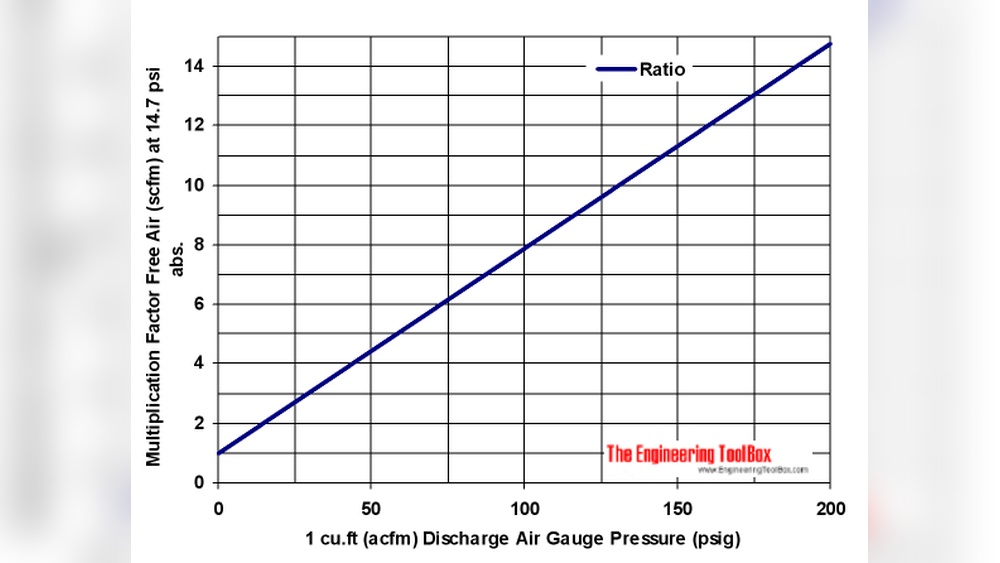
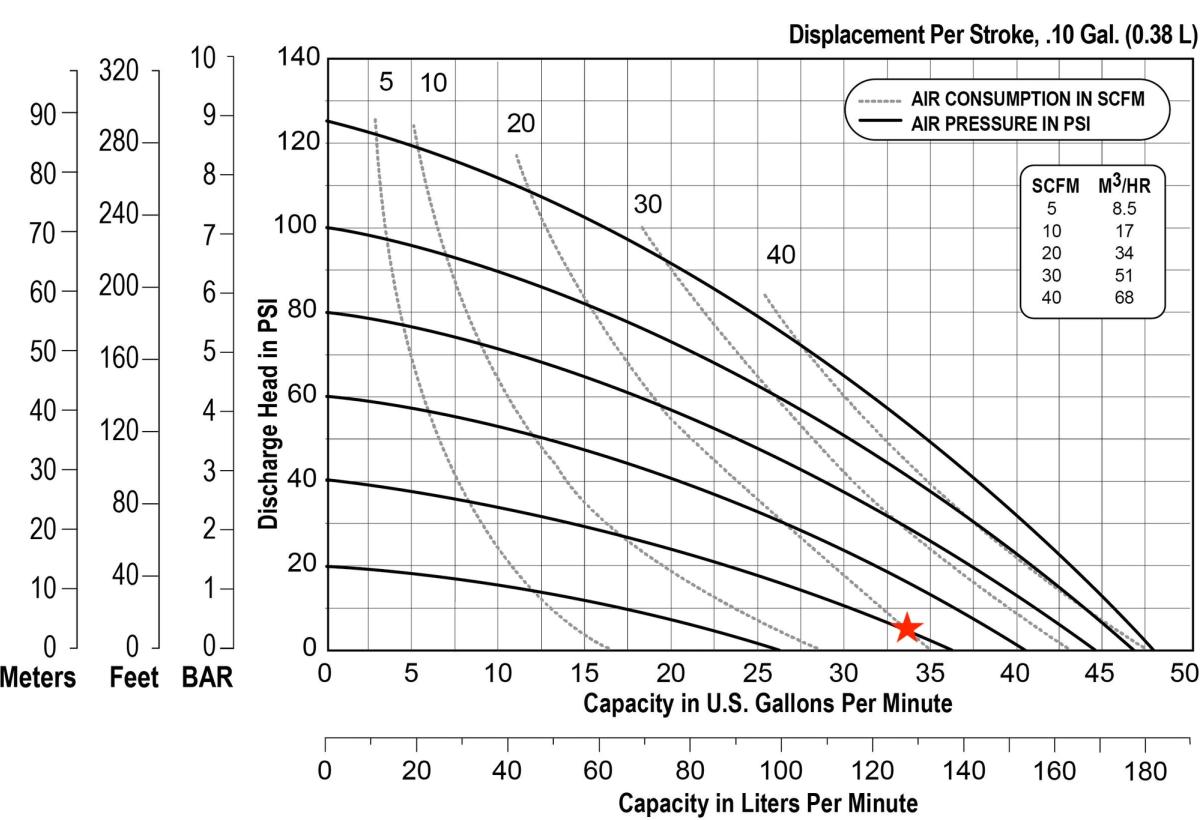
If you increase the PSI, the CFM usually goes down (and vice versa). Compressors cannot deliver the same CFM at all PSI levels.
Real-world Example
Suppose you buy a compressor rated at 5. 0 CFM at 90 PSI. That means it can deliver 5 cubic feet of air per minute, but only at 90 PSI. If you need 120 PSI, the CFM will be lower.
This relationship can be shown with a table:
| Pressure (PSI) | Delivered CFM |
|---|---|
| 40 | 7.2 |
| 90 | 5.0 |
| 120 | 3.8 |
As pressure goes up, delivered air volume (CFM) goes down.
Why Both Cfm And Psi Are Important
Choosing an air compressor is not about picking the highest number. Both ratings must match your needs.
- CFM: Make sure the CFM meets or exceeds the combined air demand of your tools.
- PSI: The compressor must reach at least the PSI required by your most demanding tool.
If your compressor’s ratings are too low:
- Tools run weak or stop
- Compressor runs constantly and may overheat
- Projects take longer or fail
Two Common Mistakes
- Ignoring CFM: Many people buy a compressor with enough PSI but not enough CFM. For example, a nail gun might work, but a paint sprayer will fail.
- Overestimating Needs: Buying a huge compressor “just in case” wastes money and space.
Matching Tools To Compressor Ratings
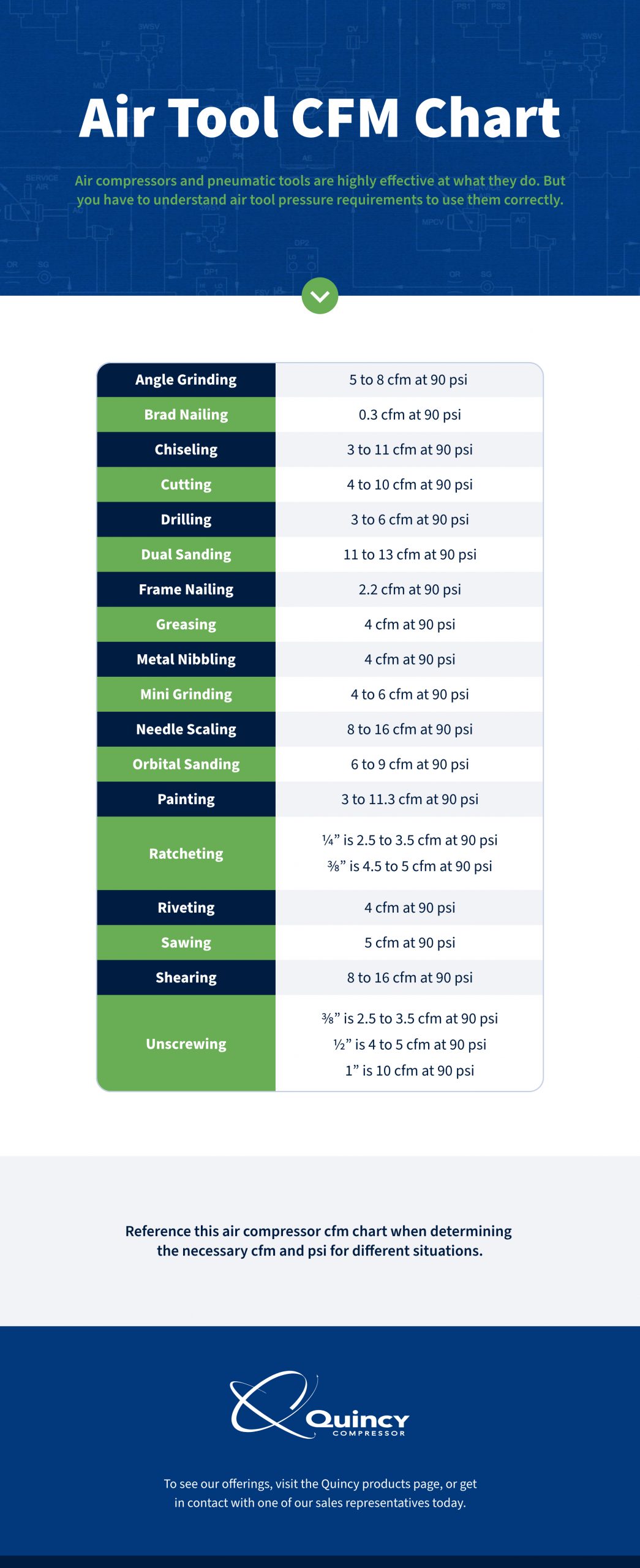
Always check your tool’s CFM and PSI requirements. Tool manuals and labels usually list these numbers. Add up the CFM of all tools you may use at the same time.
Here’s a simple guideline:
| Tool | Typical CFM | Typical PSI |
|---|---|---|
| Nail Gun | 2.0 | 70–90 |
| Impact Wrench | 4.0–5.0 | 90–100 |
| Paint Sprayer | 6.0–7.0 | 40–60 |
| Angle Grinder | 5.0–8.0 | 90–100 |
If you want to run a paint sprayer and an impact wrench at the same time, you’ll need a compressor that can deliver at least 12 CFM at the required PSI.
Understanding Compressor Specs
Compressor labels can be confusing. Here’s what you need to know:
- CFM @ PSI: Always look for the CFM at the PSI you need. “8 CFM @ 40 PSI” is not the same as “8 CFM @ 90 PSI”.
- Tank Size: A bigger tank doesn’t mean more CFM or PSI, but it lets you use air for longer before the compressor turns on again.
- Duty Cycle: This is how long the compressor can run in an hour (e.g., 50% duty cycle = 30 minutes per hour).
Some manufacturers list “peak” values, which are higher than what you get during normal use. Always check the “delivered” or “running” values.
Calculating Your Compressor Needs
It’s easy to get lost in numbers. Here’s a step-by-step method:
- List your tools and their CFM and PSI needs.
- Add the CFM for all tools you may use at the same time.
- Add a safety margin (about 25%) to your total CFM.
- Choose a compressor that delivers at least that CFM at the required PSI.
Example:
You want to run a paint sprayer (6 CFM @ 40 PSI) and a nail gun (2 CFM @ 70 PSI) together.
- Total CFM = 6 + 2 = 8
- Add 25% safety: 8 x 1.25 = 10 CFM
- Choose a compressor that delivers 10 CFM at 70 PSI.
Cfm Vs Psi: Which Is More Important?
It depends on your tools and projects.
- For most tools, CFM is the limiting factor. If you run out of CFM, tools lose power or stop.
- For inflating tires or running short bursts of air, PSI is more critical.
But for continuous-use tools (like grinders, paint sprayers), always prioritize CFM.
Real-world Scenarios
Small Diy Garage
You use a brad nailer and occasionally inflate tires. Most small compressors (2-3 CFM @ 90 PSI) will be enough. You don’t need high CFM or PSI.
Auto Shop
You run impact wrenches, grinders, and sprayers—sometimes at the same time. You’ll need at least 10–15 CFM at 90 PSI or higher. A smaller compressor will struggle and slow you down.
Construction Site
You use multiple nailers and sanders all day. A large compressor with a big tank and 15+ CFM at 100 PSI is best. Look for a high duty cycle so it can run for long periods.
Non-obvious Insights Most Beginners Miss
- Tank size doesn’t increase CFM or PSI: It only stores air. A small compressor with a big tank still delivers the same power but for a slightly longer time before refilling.
- CFM ratings drop at higher PSI: Always check the CFM at the PSI you need. Don’t trust “maximum” numbers.
- Multiple tools require more than just adding CFM: If tools cycle on and off, you can sometimes get by with less CFM, but if used together, always add up their CFM needs.
Credit: www.quincycompressor.com
How To Improve Compressor Performance
If your compressor is not enough for your needs, try these tips:
- Use air tools one at a time: Don’t overload the system.
- Reduce hose length and leaks: Shorter hoses and tight fittings mean less pressure loss.
- Regular maintenance: Clean filters and check for leaks to keep performance high.
- Upgrade tools: Some newer tools are more air-efficient.
Comparing Different Compressors
Here’s a quick look at three common types:
| Compressor Type | Typical CFM | Typical PSI | Best For |
|---|---|---|---|
| Pancake | 2–4 | 90–120 | Home/DIY |
| Portable Twin-Stack | 4–6 | 100–135 | Small jobs, light tools |
| Stationary 60-Gallon | 10–15 | 120–175 | Shops, multiple tools |
When To Upgrade Your Compressor
If you notice these signs, it’s time to upgrade:
- Compressor runs non-stop and overheats
- Tools lose power quickly
- You have to wait for the tank to refill often
- You want to add more tools or bigger projects
Investing in the right compressor saves time, money, and frustration.
Where To Learn More
For detailed explanations, see this Wikipedia article on air compressors.
Credit: www.milessupply.com
Frequently Asked Questions
What Does Cfm Mean On An Air Compressor?
CFM means “cubic feet per minute.” It tells you how much air the compressor can supply every minute. Higher CFM means you can run more tools or bigger tools.
What Is More Important, Cfm Or Psi?
Both are important, but for most tools, CFM is the key factor. If your compressor can’t supply enough CFM at the required PSI, your tools won’t work well.
Can I Use A Compressor With Lower Cfm Than My Tool Needs?
You can, but the tool will not work properly. It may run slowly, lose power, or stop. Always use a compressor with at least the required CFM for your tool.
Does Tank Size Affect Cfm Or Psi?
No. Tank size only affects how long you can use tools before the compressor turns on again. It does not increase CFM or PSI.
How Do I Know The Right Cfm And Psi For My Needs?
Check your air tools’ manuals or labels. Add up the CFM of all tools you want to use together and match the highest PSI required. Add a safety margin to your CFM needs.
Choosing the right air compressor is about matching CFM and PSI to your tools and tasks. Understanding both will help you avoid frustration and get the best results from your investment.