
Many people who own or work near air compressors ask the same question: why are air compressors so loud? If you have ever stood close to one while it’s running, you know the noise can be uncomfortable or even painful. This loudness isn’t just a minor annoyance—it can affect work quality, increase stress, and even damage hearing if you are exposed for a long time. But what makes air compressors noisier than many other machines in a workshop or garage? Understanding the reasons can help you make better choices and find ways to manage or reduce the noise.
This article explores the main factors behind air compressor noise. You’ll learn about the technology inside, how different types compare, and why some compressors are louder than others. We’ll also cover practical solutions, what to look for when buying a quieter model, and answer common questions about this topic.
How Air Compressors Work
To understand why air compressors are loud, you first need to know how they operate. Air compressors use an electric motor or gasoline engine to draw in air, then compress it into a small space, increasing its pressure. This high-pressure air is stored in a tank and later used to power tools or inflate tires.
The main parts that create noise are:
- Motor or engine: Provides power to the compressor.
- Compressor pump: Draws in and compresses the air.
- Valves and pistons: Move rapidly and create mechanical noise.
- Cooling fans: Prevent overheating but add extra sound.
Most of the noise comes from the mechanical action and the movement of air. When metal parts bang together or air rushes through narrow openings, vibrations and sound waves are released. The whole process involves high speeds and pressure changes, which naturally create a lot of noise.
Main Sources Of Noise In Air Compressors
There isn’t just one reason why air compressors are loud. Several sources add up to the total sound level.
1. Mechanical Vibration And Impact
As the motor and pump run, they create vibration through the compressor’s frame. When metal parts such as pistons and crankshafts move quickly and hit other parts, they make sharp, repeating noises. These impacts can be heard as a knocking or rattling sound, especially in older or poorly maintained machines.
2. Air Intake And Exhaust
The compressor draws in air quickly through an intake valve. This rapid movement causes a rushing or hissing sound. When the compressed air is released, either to fill the tank or to power a tool, the fast-moving air escaping makes a loud, high-pitched noise. Some compressors use mufflers or filters, but these can only reduce, not eliminate, the sound.
3. Motor Or Engine Noise
Most electric motors are quieter than gasoline engines, but both produce sound. Motors hum or whine, while engines have exhaust noises similar to small vehicles. The louder the power source, the louder the compressor usually is.
4. Cooling System
All compressors generate heat. Cooling fans spin rapidly to prevent overheating, and the airflow adds another layer of noise. In larger units, the fans themselves can be as loud as the compressor.
5. Air Leaks And Pressure Relief
Tiny leaks around fittings or the pressure relief valve can produce a constant, annoying hiss. Over time, worn-out seals and connections get noisier.
Credit: compressors.cp.com
Types Of Air Compressors And Their Noise Levels
Not all air compressors are equally loud. The internal design matters a lot.
| Compressor Type | Typical Noise Level (dB) | Common Use |
|---|---|---|
| Piston (Reciprocating) | 80–100 | Workshops, garages |
| Rotary Screw | 60–75 | Factories, large businesses |
| Scroll | 55–65 | Medical, labs |
| Oil-Free Portable | 85–100 | Home, DIY |
- Piston compressors (reciprocating type) are usually the loudest. They have many moving parts and metal-on-metal contact.
- Rotary screw compressors use two helical screws. They move smoothly, creating less vibration and noise.
- Scroll compressors have fewer moving parts and are very quiet but are not common for heavy-duty work.
- Oil-free compressors are lighter and cheaper but tend to make more noise because there’s less lubrication.
Why Are Some Air Compressors Louder Than Others?
Several factors explain why two compressors of similar size can have very different noise levels.
Motor Power And Speed
Compressors with larger motors, especially those running at high RPM, produce more noise. Fast-moving parts hit harder, and vibrations increase. If a compressor is designed to fill the tank quickly, it often runs louder.
Build Quality And Materials
Heavy-duty compressors with thick metal cases can dampen sound better than cheaper models with thin covers. Plastic housings often vibrate more and amplify the noise. Cheaper compressors may lack sound insulation or quality bearings, making them noisier over time.
Oil-lubricated Vs. Oil-free
Oil-lubricated compressors are generally quieter because oil reduces friction between moving parts. Oil-free compressors, which use special coatings instead, tend to get louder as these coatings wear out.
Compressor Size And Design
A small compressor with a tiny tank must run more often to keep up, leading to more frequent noise. Larger compressors can store more air, allowing the motor to rest. The shape of the compressor, how the motor is mounted, and where the intake is placed also change the sound.
Measuring Compressor Noise: Decibels Explained
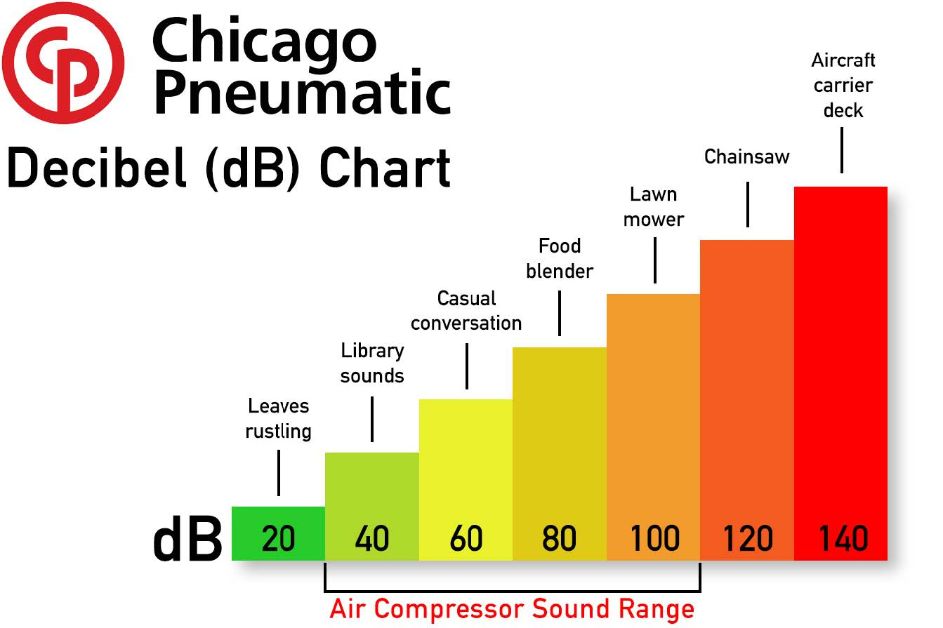
Noise is measured in decibels (dB). This scale is logarithmic, meaning each increase of 10 dB is perceived as about twice as loud.
- Normal conversation: 60 dB
- Busy street: 70 dB
- Loud air compressor: 90–100 dB
Hearing damage can occur with long exposure to levels above 85 dB. This means standing next to a loud compressor daily can risk your hearing over time.
Why Are Air Compressors Noisier Than Other Machines?
You might notice that air compressors are often louder than tools like drills, saws, or even some generators. This is because:
- Continuous operation: Some compressors run for long periods without stopping, keeping the noise going.
- Multiple noise sources: They combine motor, mechanical, air movement, and cooling noise at once.
- High pressure and speed: Compressing air quickly requires a lot of force and fast-moving parts.
- Minimal sound insulation: Unlike home appliances, most compressors aren’t built with thick soundproofing.
Credit: www.ashair.co.nz
Practical Ways To Reduce Air Compressor Noise
If you already own a loud air compressor, you don’t have to live with the noise. Here are proven ways to make them quieter:
- Move the compressor: Place it as far from people as possible or outside the main workspace. Even a few meters can make a big difference.
- Add rubber pads or anti-vibration mounts: These absorb some of the shaking, reducing noise that travels through the floor or walls.
- Install intake silencers or mufflers: These special filters can cut down the air intake sound.
- Build a soundproof box or enclosure: Use thick plywood and foam to surround the compressor, but leave space for airflow.
- Maintain regularly: Oil moving parts, replace worn seals, and check for leaks. Well-maintained compressors run more smoothly and quietly.
- Use extension hoses: This lets you keep the compressor farther away while still using your tools.
- Upgrade to a quieter model: If your current unit is old or oil-free, consider investing in a newer, quieter compressor.
What To Look For In A Quiet Air Compressor
If you want to buy a new air compressor that won’t make you reach for earplugs, keep these features in mind:
| Feature | Why It Matters |
|---|---|
| Low dB rating (below 70) | Safer for ears, more comfortable to use |
| Oil-lubricated pump | Quieter operation, longer life |
| Thick metal housing | Dampens vibration and noise |
| Rubber feet or mounts | Reduces vibration transfer |
| Separate intake muffler | Cuts down intake sound |
Check the decibel rating before buying. Some brands focus on low-noise technology and advertise compressors as “ultra-quiet” or “silent,” but always read real user reviews to confirm the claims.
Credit: gas4air.co.uk
Two Insights Many Beginners Miss
- Room acoustics matter: Even a moderately loud compressor can sound much worse in a small, echo-prone room with hard walls. Adding sound-absorbing panels or using the compressor in a larger, open space can help a lot.
- Noise increases over time: As compressors age, seals and bearings wear out, making them louder. Regular maintenance isn’t just for performance—it also keeps noise under control.
Real-world Examples And Data
- A 60-gallon piston compressor in a small workshop can reach 95 dB. Moving it outside or behind a wall can reduce perceived noise to 70 dB in the workspace.
- Some new “ultra-quiet” compressors, like those used in dental offices, operate at 60 dB or less, about as loud as normal conversation.
- According to the Occupational Safety and Health Administration (OSHA), workers should not be exposed to more than 90 dB of noise for 8 hours a day (OSHA).
Frequently Asked Questions
Why Do Oil-free Compressors Tend To Be Louder?
Oil-free compressors lack the lubrication that reduces friction between moving parts. This means metal parts rub directly, creating more vibration and sharper noise. The special coatings used instead of oil wear down over time, making these compressors even noisier as they age.
Can Using A Longer Air Hose Help Reduce Noise Exposure?
Yes, using a longer air hose lets you place the compressor farther away from your workspace. The noise level drops quickly with distance. For example, every extra meter can reduce the sound by 6 dB, which is a big difference to your ears.
Is It Safe To Run A Loud Air Compressor Without Ear Protection?
No. Prolonged exposure to noise over 85 dB can cause hearing damage. If you must be near a loud compressor, always use earplugs or earmuffs. Also, limit the time you spend close to the running compressor.
Are There Regulations About Air Compressor Noise In Workplaces?
Yes. Many countries have workplace safety rules about acceptable noise levels. In the U.S., OSHA limits exposure to 90 dB over an 8-hour shift. Employers are required to provide hearing protection or reduce noise if these limits are reached.
Why Are Some “quiet” Compressors Still Not Silent?
Even the best “quiet” compressors produce some sound. Air still moves quickly, and motors still vibrate. “Silent” means much quieter than old models, but there will always be some noise when compressing air.
Air compressors are loud because compressing air quickly requires powerful, fast-moving parts. Mechanical impacts, air flow, and cooling all add to the noise. The good news is that technology is making compressors quieter, and there are practical steps you can take to protect your ears and make your workspace more pleasant.
By understanding the reasons behind the noise, you can make smarter choices—whether you want to buy a quieter model or reduce the sound of your current compressor.