
Can an Air Compressor Explode? Understanding the Risks, Causes, and Prevention
Air compressors are everywhere—in garages, workshops, factories, and even at home. They power tools, inflate tires, and make many jobs easier. But if you have ever wondered, “Can an air compressor explode? ” you are not alone. This is a real concern for many users, especially those new to using compressed air equipment.
In most cases, air compressors are very safe. Modern machines are built with multiple safety features and are tested for reliability. However, under certain conditions, an air compressor can explode. These explosions are rare, but they can cause serious injury, damage property, and even be fatal.
This article explains how air compressors work, why explosions can happen, the warning signs, and—most importantly—how to keep yourself safe. Whether you are a beginner or a longtime user, you will find practical tips and real-world examples to help you understand the risks and avoid common mistakes.
How Does An Air Compressor Work?
To understand explosion risks, you first need to know the basics of how an air compressor operates. An air compressor pulls in air from the environment and stores it in a tank under high pressure. This compressed air is then used to power tools or inflate objects.
There are two main parts:
- The compressor pump: This is the machine that squeezes air into the tank.
- The storage tank: This is where the pressurized air is kept until you use it.
Most compressors have built-in safety devices:
- Pressure relief valves (release air if the pressure is too high)
- Pressure gauges (show how much air is in the tank)
- Automatic shutoff switches (turn off the pump at a set pressure level)
These parts work together to keep pressure at a safe level. If any of these features fail—or if the tank is damaged—an explosion can happen.
Can An Air Compressor Actually Explode?
The short answer is yes, an air compressor can explode. But it is extremely rare if you use and maintain the machine correctly. Explosions usually happen when something goes very wrong, such as a massive overpressure or a tank failure.
Here are the main reasons explosions can occur:
- Overpressure: If the pressure inside the tank goes far above its safe limit, the tank can burst.
- Corrosion: Rust inside the tank weakens the metal. Over time, the tank might not be able to hold normal pressure and could rupture.
- Mechanical Failure: Faulty parts—like a broken pressure relief valve—can allow pressure to build up too high.
- Improper Modifications: Some people try to alter or “upgrade” their compressor. If done incorrectly, this can disable safety systems.
- Heat or Fire: Storing or operating a compressor near open flames or high heat can weaken the tank and trigger an explosion.
- Physical Damage: Dropping or hitting the tank can cause cracks that later lead to a rupture under pressure.
Most explosions are caused by a combination of these factors, not just one.
Real-world Examples And Data
Explosions from air compressors are not common, but they do happen. In the United States, the Consumer Product Safety Commission (CPSC) reports several incidents each year involving air compressor explosions. Most injuries are from flying metal pieces or burns.
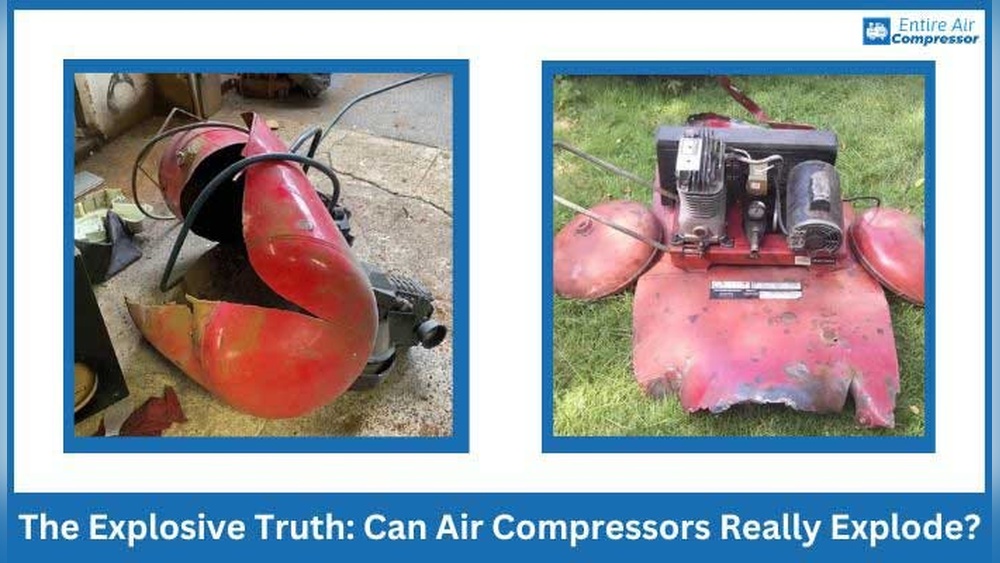
A famous case happened in 2018 in Texas: A mechanic was using a 20-year-old compressor with heavy internal rust. The tank suddenly split open, sending metal fragments through the workshop. Luckily, no one was killed, but two workers were injured.
Some key statistics:
- Corrosion is the leading cause of tank failures in air compressors.
- The average air compressor tank is rated for 120–175 PSI (pounds per square inch).
- Most explosions happen in tanks older than 10 years that have not been properly drained or inspected.
Warning Signs Your Air Compressor May Be Dangerous
Many accidents can be avoided if you know what to look for. Here are some warning signs your air compressor might be at risk of explosion:
- Rust or pitting on the outside or inside of the tank
- Air leaks you can hear or feel around the tank
- Unusual noises (popping, banging) during operation
- Faulty gauges that do not show pressure correctly
- Stuck or missing pressure relief valve
- Tank never seems to fill or takes much longer than usual
- Visible dents or cracks on the tank body
If you notice any of these signs, stop using the compressor and have it checked by a professional. Do not try to repair a damaged tank yourself.
What Happens During An Air Compressor Explosion?
When an air compressor tank explodes, it does not usually burst into flames. Instead, the tank splits open violently, releasing all the compressed air in a fraction of a second. This massive rush of air can send pieces of metal flying at high speed.
The effects can include:
- Severe injury from shrapnel
- Hearing damage from the sudden noise
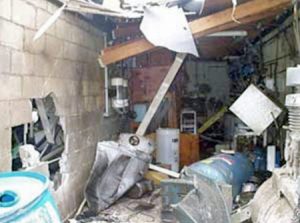
- Property damage (walls, windows, nearby equipment)
- Potential fire risk if the explosion happens near flammable materials
In rare cases, if there is oil or fuel nearby, a secondary fire or explosion could occur.
Common Causes Of Air Compressor Explosions
Let’s look at the main causes in more detail:
1. Overpressure
If the compressor’s safety systems fail and the pressure goes beyond the tank’s rating, the weakest part of the tank can rupture. This is why pressure relief valves and shutoff switches are so important.
2. Corrosion
Moisture collects inside the tank each time you use the compressor. Over time, this causes rust. Rust eats away at the metal, making it thinner and weaker. Eventually, even normal pressure can cause the tank to split.
3. Poor Maintenance
Neglecting basic maintenance—like draining water from the tank—makes corrosion more likely. Ignoring small leaks or broken gauges can hide bigger problems.
4. Cheap Or Faulty Equipment
Low-quality compressors may not have proper safety systems or might be made from weaker materials. Always buy from trusted brands and check for safety certifications.
5. Incorrect Modifications
Altering the compressor’s pressure settings, removing safety valves, or using homemade tanks can all lead to disaster.
6. Extreme Temperatures
Storing the compressor in very hot or cold areas can weaken the tank. Heat especially can reduce the metal’s strength over time.
7. Physical Damage
Dropping the tank or hitting it with heavy objects can create small cracks. These cracks grow every time the tank is pressurized and can eventually cause failure.
How To Prevent Air Compressor Explosions
Proper use and regular maintenance are your best defenses. Here’s what you should always do:
- Drain the Tank Regularly: After each use, open the drain valve to remove water from the tank. This prevents rust.
- Inspect the Tank: Look for signs of rust, pitting, or dents. If you see any, stop using the compressor until it is checked.
- Test the Pressure Relief Valve: Pull the ring on the safety valve occasionally to make sure it works. Replace it if it does not release air easily.
- Check Gauges and Switches: Make sure the pressure gauge is accurate and the automatic shutoff works.
- Use Only Manufacturer Parts: Never replace safety parts with non-standard or homemade solutions.
- Avoid Modifying the Compressor: Do not change pressure settings or remove safety features.
- Store in a Dry, Cool Place: Avoid areas with high humidity or extreme heat.
- Do Not Overwork the Compressor: Let it rest if it gets too hot, and do not exceed the maximum pressure rating.
- Replace Old Compressors: Tanks older than 10–15 years, especially if not maintained, should be retired.
- Follow the Manual: Always read and follow the manufacturer’s instructions for your specific model.
Here is a quick comparison of safe vs. risky compressor behaviors:
| Safe Practice | Risky Behavior |
|---|---|
| Drain tank after each use | Never drain tank |
| Test safety valve monthly | Ignore faulty safety valve |
| Inspect for rust/damage | Operate with visible rust |
| Use proper parts | Install homemade parts |
Key Differences: Home Vs. Industrial Air Compressors
Not all air compressors are the same. There are big differences between the small units used at home and the huge machines in factories.
| Feature | Home Compressors | Industrial Compressors |
|---|---|---|
| Tank Size | 1–20 gallons | 30–500+ gallons |
| Pressure Rating | 100–150 PSI | 150–200+ PSI |
| Usage | Occasional | Continuous/Heavy-duty |
| Maintenance | User responsibility | Professional maintenance |
| Explosion Risk | Usually due to neglect | Due to high pressure or industrial faults |
Larger compressors can do more damage if they fail, but they are usually maintained by professionals. Home units can be just as dangerous if neglected.

Credit: www.youtube.com
Two Non-obvious Insights Beginners Often Miss
- Internal Rust Is Invisible: Many users think that if the outside of the tank looks good, it is safe. In reality, the worst rust often forms inside the tank where you cannot see it. That’s why draining is so important—even if the tank looks perfect outside.
- Safety Valves Can Get Stuck: Some people never test the pressure relief valve. Over time, dirt or corrosion can cause it to stick shut. If this happens, the compressor may over-pressurize without any warning. Pull the valve ring occasionally (with the compressor off) to check it releases air.
What To Do If You Suspect A Problem
If you believe your compressor may be unsafe:
- Stop using it immediately.
- Unplug it and release all air pressure.
- Contact a professional or the manufacturer for inspection.
- Never try to weld or patch a damaged tank—replacement is the only safe option.

Credit: www.youtube.com
Additional Safety Tips
- Use hearing protection when operating large compressors.
- Keep the area around the compressor free of clutter and flammable materials.
- Only use extension cords recommended by the manufacturer (if needed).
- Do not operate in an enclosed space without proper ventilation.
- Teach anyone who uses the compressor about safe operation and warning signs.
Frequently Asked Questions
Can All Types Of Air Compressors Explode?
Any air compressor with a pressurized tank can potentially explode if not used or maintained correctly. Both small and large units are at risk, though the causes and consequences may differ.
How Often Should I Drain My Air Compressor Tank?
It is best to drain the tank after every use. If you use the compressor daily, make this part of your regular routine. Frequent draining prevents moisture buildup and reduces rust.
What Is The Lifespan Of An Air Compressor Tank?
Most tanks last 10 to 15 years if well maintained. If your tank is older, shows signs of rust, or has not been regularly drained, consider replacing it even if it seems to be working fine.
Can I Repair A Rusted Or Damaged Air Compressor Tank?
No, repairing a rusted or damaged tank is extremely dangerous. Welding or patching weakens the metal even more. Always replace the tank with a new, certified one.
Where Can I Find More Safety Information About Air Compressors?
For more detailed safety guidelines, you can visit the OSHA compressed air safety page. OSHA is a trusted source for workplace and equipment safety.
Staying safe with air compressors is simple if you follow the rules: drain, inspect, and never ignore warning signs. With regular care, the risk of explosion is extremely low, and you can use your compressor with confidence for years to come.
Credit: safetymattersweekly.com