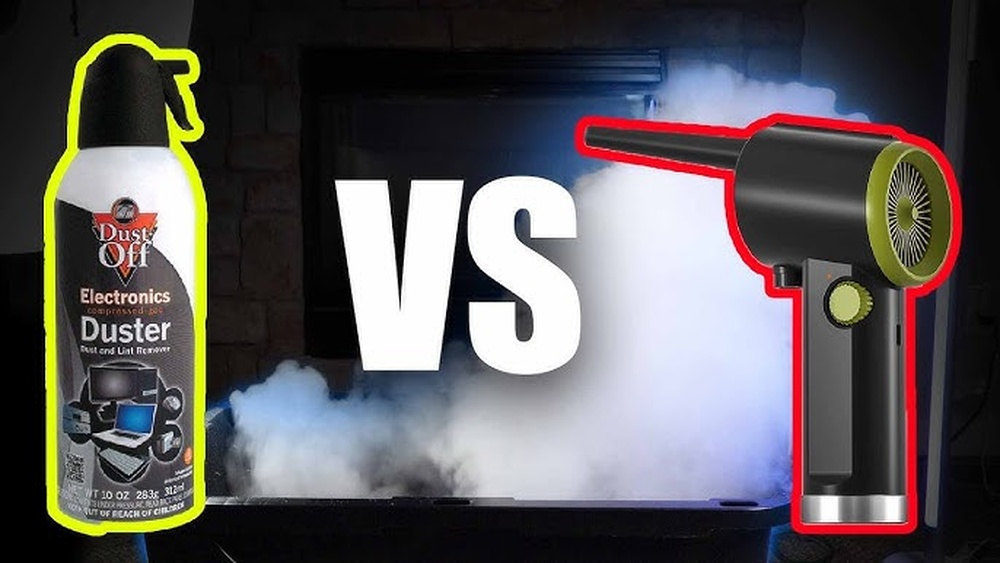
When you need to clean dust from electronics, keyboards, or sensitive equipment, two common tools come to mind: air dusters and air compressors. At first glance, they seem similar. Both shoot air to move dust and debris. However, choosing the right one is not as simple as picking what’s available. Each has clear strengths and important differences. If you want to avoid damaging your equipment or wasting money, it’s important to understand which tool is best for your needs.
This article will take you through a detailed comparison of air dusters vs air compressors. We’ll explore how each works, where they shine, their risks, costs, and what most beginners don’t realize. You’ll also see clear tables and real-world examples to help you make a confident choice—whether you’re cleaning your PC, workshop, or something in between.
What Is An Air Duster?
An air duster is a can or device that releases a burst of compressed gas. Most people know them as “canned air.” You press the trigger, and a focused stream of air blasts dust off keyboards, computer fans, camera lenses, and other delicate parts.
Modern air dusters come in two main types:
- Disposable cans (usually filled with compressed gas like difluoroethane)
- Electric air dusters (rechargeable, with a small motor and fan inside)
Disposable air dusters are cheap and easy to find. Electric models cost more up front but last for years.
Key Features:
- Lightweight and portable
- No setup required—just pick up and spray
- Safe for electronics (if used at the right angle)
- Usually used for quick, small cleaning jobs
What Is An Air Compressor?
An air compressor is a larger device that pulls in air, compresses it, and stores it in a tank. You can attach a hose and nozzle to blow air at high pressure. Air compressors are common in workshops, garages, and factories.
There are many types of air compressors:
- Pancake (small, portable)
- Hot dog (medium, long cylinder)
- Upright/tank (large, stationary)
- Industrial (high capacity, for heavy-duty work)
Key Features:
- Powerful and adjustable airflow
- Runs on electricity or gasoline
- Can power other tools, like nail guns or spray painters
- Suited for big, dirty jobs or continuous use
Air Duster Vs Air Compressor: Core Differences
Let’s look at the main ways air dusters and air compressors differ. This comparison will help you quickly spot which tool fits your situation.
| Feature | Air Duster | Air Compressor |
|---|---|---|
| Air Pressure | Low to medium (10-100 PSI) | Medium to high (30-150+ PSI) |
| Portability | Very portable | Often heavy and bulky |
| Power Source | Manual or battery (electric model) | Electric or gas-powered |
| Refill/Reuse | Disposable or rechargeable | Refillable tank |
| Cost | Low (few dollars per can/electric: $30-80) | Medium to high ($60–$500+) |
| Noise Level | Quiet | Loud (up to 90 dB) |
| Safe for Electronics | Yes (if held upright) | Risk of static and moisture |
Where Air Dusters Work Best
Air dusters are the tool of choice for:
- Cleaning keyboards, laptops, and desktop computers
- Blowing dust from camera lenses or sensors
- Removing debris from printers, routers, and game consoles
- Quick cleaning of car dashboards and vents
They are ideal for small, delicate, or hard-to-reach areas. Because they don’t generate static or moisture (when used correctly), they’re safer for sensitive electronics.
Pro Tip: Always hold a canned air duster upright. Tilting or shaking can release liquid propellant, which can freeze or damage components.
Where Air Compressors Excel
Air compressors are best for:
- Blowing out dust from large PC cases or server racks
- Cleaning power tools, workbenches, or shop floors
- Removing sawdust, metal shavings, or heavy dirt
- Inflating tires, running air-powered tools
They shine when you need high power and long cleaning sessions. If you have a workshop, garage, or industrial setting, an air compressor is more efficient and cost-effective in the long run.
Important: Air compressors can introduce moisture and static electricity, which can harm electronics. You should use a moisture trap and anti-static nozzle if cleaning computers or circuit boards.
Pros And Cons: Air Duster
Every tool has strengths and trade-offs. Let’s break down the main pros and cons of air dusters.
Advantages
- No setup required: Ready to use instantly.
- Lightweight: Easy to handle and carry.
- Safe for electronics: No risk of oil or water contamination (with proper use).
- Precision: Directs air exactly where you need.
- Quiet operation: Won’t disturb others in an office or home.
Disadvantages
- Limited power: Not effective for heavy dirt or large areas.
- Disposable cans run out: Not eco-friendly or cost-effective for frequent use.
- Chemical propellants: Some gases are flammable or toxic if inhaled.
- Short bursts: Cans can get cold and lose pressure quickly.

Credit: www.reddit.com
Pros And Cons: Air Compressor
Now, let’s look at what air compressors bring to the table—and where they fall short.
Advantages
- Strong airflow: Handles stubborn debris and big areas.
- Long-lasting: Runs as long as you need with proper maintenance.
- Multi-purpose: Powers other air tools and inflates tires.
- Refillable: No need to buy new cans; just plug in and go.
Disadvantages
- Bulky and heavy: Hard to move or store in small spaces.
- Loud: Noise can be a problem in homes or offices.
- Maintenance required: Needs regular oiling, filter changes, and checks.
- Not always safe for electronics: Can blow moisture or static onto sensitive parts.
Cost Comparison: Air Duster Vs Air Compressor
Let’s break down the costs so you can see what fits your budget and usage.
| Type | Upfront Cost | Ongoing Cost | Typical Lifetime |
|---|---|---|---|
| Disposable Air Duster | $5–$10 per can | High (repeat purchase) | Single use |
| Electric Air Duster | $30–$80 | Low (recharge electricity) | 2–5 years |
| Small Air Compressor | $60–$120 | Low–Medium (maintenance) | 5–10+ years |
| Large Air Compressor | $150–$500+ | Medium (maintenance, electricity) | 10–20+ years |
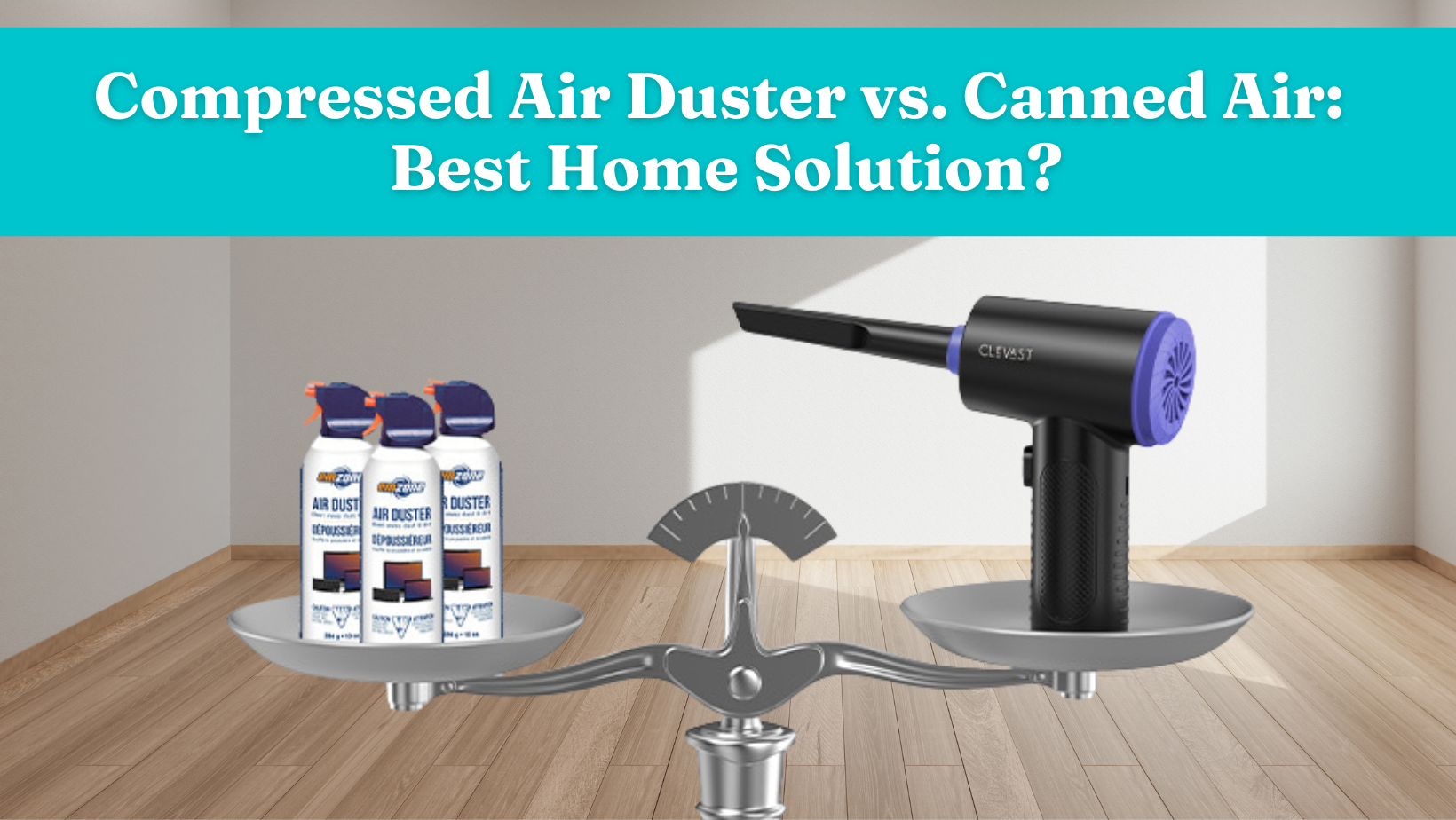
Insight: For occasional cleaning, air dusters are cheap. But if you clean often or need power for other tools, an air compressor will save money over time.
Credit: clevast.com
Safety And Environmental Impact
Many beginners overlook the safety and environmental impact of each tool.
- Air dusters (canned) use chemical propellants. Inhaling these gases can be dangerous. They also contribute to greenhouse gases and create waste from empty cans.
- Electric air dusters are safer and reusable, making them a greener choice.
- Air compressors are safe if you use them correctly. However, they can be dangerous if you use too high pressure on electronics. Compressors also use more electricity, and older models may leak oil or water.
Pro Tip: Never use compressed air from a shop compressor directly on sensitive electronics without a moisture filter and pressure regulator. Doing so can destroy circuit boards.
Non-obvious Insights Beginners Miss
- Moisture risk: Many assume all compressed air is dry. In fact, most air compressors produce moist air, especially in humid climates. This moisture can cause corrosion or short circuits inside electronics. Always use a moisture trap and check the air quality before blowing out sensitive gear.
- Static electricity: High-speed air from a compressor can create static charges, especially in dry weather. This static can instantly fry delicate computer chips or sensors. Canned air and electric air dusters are designed to prevent this, but compressors need anti-static attachments for safety.
- Hidden costs: Many forget to factor in the cost of accessories for air compressors, like hoses, nozzles, moisture filters, and oil. These can add $30–$100+ to the real price.
- False sense of power: Some think more pressure is always better. For cleaning keyboards or motherboards, too much pressure can actually dislodge tiny parts or force dust deeper inside.
Which Should You Choose?
If you need to clean:
- Electronics, keyboards, or cameras: An air duster (especially electric) is safest and easiest.
- Workshops, garages, or vehicles: An air compressor is more powerful and versatile.
- Both types of jobs: Consider owning both. Use the air duster for sensitive gear and the compressor for tough jobs.
For most home users, an electric air duster strikes the best balance between safety, cost, and environmental impact. For professionals or heavy users, an air compressor with the right attachments is a good long-term investment.
Real-world Examples
- PC repair shops use air compressors with moisture traps for deep cleaning of towers and servers, but rely on air dusters for laptops and motherboards.
- Photographers prefer canned or electric air dusters to avoid any risk of oil or moisture on camera sensors.
- DIYers often start with canned air, then switch to an electric air duster or small compressor as their needs grow.

Credit: www.youtube.com
Frequently Asked Questions
What Is The Safest Way To Use An Air Duster On Electronics?
Always hold the can upright to prevent liquid propellant from spraying out. Short, quick bursts are safer than holding the trigger down. Avoid tilting the can, and never shake it while spraying. If using an electric air duster, make sure the device is unplugged before cleaning.
Can I Use An Air Compressor To Clean My Pc?
You can, but only if you use a moisture trap and keep the pressure below 30 PSI. Too much pressure or moisture can damage internal parts or cause static discharge. Never aim the nozzle too close to circuit boards.
Are Electric Air Dusters Better Than Canned Air?
For frequent use, yes. Electric air dusters are reusable, eco-friendly, and don’t contain harmful propellants. They cost more up front but save money over time and are safer for your lungs and the environment.
How Long Does A Can Of Compressed Air Last?
A standard 10 oz can provides about 5–7 minutes of continuous spray. However, using short bursts can stretch this time. Cans lose pressure as they get cold, so they may become less effective during extended use.
What Are Some Top Brands For Air Dusters And Compressors?
Popular air duster brands include Dust-Off and OPOLAR (for electric models). For air compressors, brands like DeWalt, California Air Tools, and Porter-Cable are known for reliability. For more technical details, you can check the Wikipedia Air Compressor page.
Choosing between an air duster and an air compressor isn’t just about price or power. Consider your cleaning needs, safety, and long-term costs. With the right tool, you’ll keep your devices clean and working longer—without risk or regret.