
Many industries rely on compressed air, but not all compressors are built the same. In fields like food processing, medical devices, and electronics, even a tiny amount of oil in the air can cause big problems. That’s where oil free air compressors come in. These machines promise clean, reliable air without the risk of oil contamination, making them essential for sensitive tasks. But how do oil free air compressors work? And what makes them different from oil-lubricated models? If you’ve ever wondered about the mechanics, benefits, and real-world uses of oil free compressors, you’re in the right place. This article will guide you through every detail, from the technology inside to practical tips for getting the most out of these remarkable machines.
What Is An Oil Free Air Compressor?
An oil free air compressor is a device that compresses air without using oil inside the compression chamber. Instead of oil, these compressors use special materials or designs to reduce friction and heat. This means the air they produce is free from oil particles. Oil free compressors are popular in industries where even a tiny drop of oil can damage products or tools.
Unlike traditional compressors that need oil for lubrication, oil free compressors use alternatives such as:
- Self-lubricating materials (like Teflon or ceramics)
- Water or air cooling systems
- Precision engineering to reduce parts that touch
This design reduces the risk of oil contamination, making oil free compressors a smart choice for hospitals, labs, food factories, and more.
How Do Oil Free Air Compressors Work?
The main goal of an oil free compressor is to compress air without letting oil touch the air. Here’s how it happens:
- Air Intake: The compressor pulls in air through a filter. The filter removes dust and particles.
- Compression Without Oil: Instead of oil-lubricated pistons or screws, the compressor uses:
- Coated pistons or rotors (covered in special materials that reduce friction)
- Precision bearings (sealed to keep air and moving parts separate)
- Water or air jackets for cooling (instead of relying on oil for heat removal)
- Cooling: The air gets hot during compression. Oil free compressors use air fans or water to cool the parts and the compressed air.
- Air Delivery: Clean, dry, oil-free air is sent out to your tools or machines.
Example: Oil Free Scroll Compressor
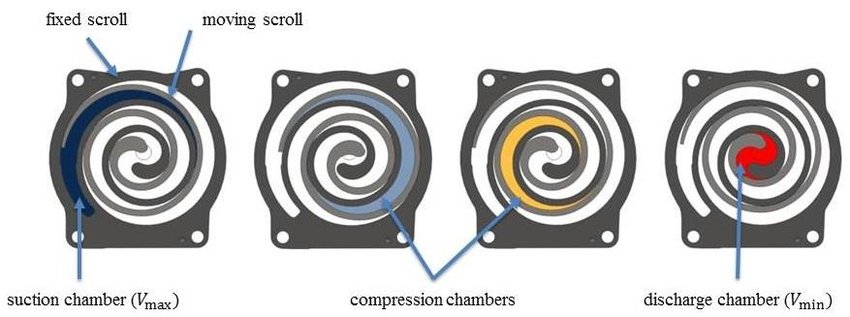
A common type of oil free compressor is the scroll compressor. It has two spiral-shaped pieces (scrolls). One stays still while the other moves in a small circle. As the moving scroll presses against the fixed one, air is trapped and squeezed into a smaller space, increasing its pressure. Since the scrolls are made of self-lubricating material, no oil is needed.
Example: Oil Free Rotary Screw Compressor
Another popular model is the rotary screw compressor. It uses two helical screws that mesh together. As they turn, air is trapped and compressed. In oil free designs, the screws are coated with Teflon or a similar material, so they don’t touch. The design stops oil from ever mixing with the air.

Credit: www.sunrise-metal.com
Types Of Oil Free Air Compressors
Oil free compressors come in different designs, each suited for specific jobs. Here are the main types:
1. Oil Free Piston (reciprocating) Compressors
These use pistons to compress air. Instead of oil, the piston rings are made of self-lubricating materials. They are usually used for small jobs, like dental offices or laboratories.
2. Oil Free Rotary Screw Compressors
These are larger and more powerful. They use two screws to compress air. Their design avoids oil by using coated rotors and special seals. Factories and hospitals often use them.
3. Oil Free Scroll Compressors
These use two spiral scrolls. One moves while the other stays still. This design is very quiet and needs little maintenance. You’ll find them in medical devices and electronics manufacturing.
4. Oil Free Centrifugal Compressors
These use high-speed impellers to spin air outward and compress it. They are used in very large systems, like in power plants or big factories.
5. Water Injected Oil Free Compressors
Instead of oil, these use water to lubricate and cool the compression chamber. The water never mixes with the air, and any water vapor is removed before the air is used.
Key Components In Oil Free Air Compressors
Understanding the main parts helps explain why oil free compressors work the way they do. Here are the most important components:
Compression Chamber
This is where air is squeezed. In oil free models, the chamber is made of or coated with materials like ceramics, Teflon, or carbon that don’t need oil.
Pistons, Rotors, Or Scrolls
These moving parts do the actual compression. The material and shape are carefully chosen to keep friction low without oil.
Bearings
Bearings allow the parts to move smoothly. Oil free compressors use sealed bearings that keep grease inside and dirt out, so no oil is needed.
Cooling System
Because oil isn’t there to absorb heat, oil free compressors use air fans or water jackets to keep everything cool.
Air Filters And Aftercoolers
Filters catch dust before air enters. Aftercoolers cool the air after compression, which also removes moisture.
Seals
Special seals keep the compression area separate from the rest of the machine so oil from the motor can’t leak in.
Oil Free Vs Oil Lubricated Compressors: What’s The Difference?
Let’s compare the two main types of compressors so you can see why oil free models are special.
| Feature | Oil Free Compressor | Oil Lubricated Compressor |
|---|---|---|
| Air Quality | 100% oil-free, no risk of contamination | May contain oil particles |
| Maintenance | Low (no oil changes) | Regular oil checks and changes |
| Lifespan | Shorter (for some types) | Usually longer (oil reduces wear) |
| Noise | Usually quieter | Can be noisier |
| Cost | Higher initial cost | Lower upfront, higher maintenance |
| Use Cases | Food, medical, electronics | General industry, workshops |
Why Use Oil Free Air Compressors?
Some jobs can’t risk even a drop of oil. Here’s why oil free compressors are so important:
1. Pure Air For Sensitive Applications
Industries like pharmaceuticals, food and beverage, and semiconductor manufacturing need air that is 100% clean. Even a tiny bit of oil can ruin products, cause machine failures, or break strict rules.
2. Lower Maintenance
No oil means there’s nothing to change, check, or dispose of. This makes maintenance costs lower and saves time.
3. Environmentally Friendly
Oil free compressors don’t leak oil or produce oily waste. This helps protect the environment and often makes it easier to meet local laws.
4. Safer For Workers
Workers don’t have to handle oil, which can be messy and dangerous. Less oil means a safer, cleaner workplace.
5. Reliable In Wet Or Dusty Environments
Oil attracts dust and dirt. Without oil, the inside of the compressor stays cleaner, even in tough conditions.
Where Are Oil Free Air Compressors Used?
Oil free compressors are common in places where air quality is critical. Here are some real-world examples:
Food And Beverage Industry
Factories that make food or drinks cannot risk oil getting into the product. Oil free compressors power tools for mixing, bottling, and packaging.
Hospitals And Dental Clinics
Doctors use compressed air for breathing machines, dental tools, and surgery. Oil free compressors make sure the air is safe for patients.
Pharmaceuticals
Medicine is made in very clean rooms. Oil free air is used to mix, transport, and package drugs with zero contamination risk.
Electronics Manufacturing
Making computer chips and circuit boards needs perfectly clean air. Even a drop of oil can ruin a batch.
Painting And Coating
Spray painting with oil-contaminated air causes defects, bubbles, and poor finishes. Oil free air ensures a perfect result.
Laboratories
Scientific labs use compressed air for experiments and sensitive instruments. Oil free compressors keep data and samples clean.
Automotive Industry
Some assembly lines use oil free air for paint booths, robots, and sensitive sensors.
The Science Behind Oil Free Compression
Oil free compressors rely on advanced materials and precise engineering.
Advanced Coatings
Parts that move, like pistons or screws, are coated with materials such as:
- Teflon (PTFE)
- Ceramics
- Graphite composites
These coatings reduce friction and wear. They can handle the heat and pressure without breaking down.
Sealed Bearings
Bearings are filled with grease and sealed tight. This lets parts move smoothly, but keeps oil or grease out of the air path.
Heat Management
Because oil is not there to absorb heat, oil free compressors use:
- Larger surface areas for cooling
- Extra fans or water jackets
- Multiple compression stages (so each stage works less hard)
Multi-stage Compression
Some oil free compressors use two or more stages. Air is compressed a bit in each stage, cooled, then compressed again. This reduces heat and stress on the machine.
Key Advantages Of Oil Free Air Compressors
Oil free compressors offer several unique benefits:
- Zero oil contamination: Perfect for strict industries.
- Lower risk of product recalls: No oil means fewer problems.
- Easier to meet industry standards: Many rules require oil free air.
- Quick start-up: No need to warm up oil.
- Lightweight and portable models available: Some are easy to move.
- Lower energy use for small models: No oil pump means less power used.
- Better for the environment: No oily waste or spills.
Disadvantages And Limitations
While oil free compressors have many advantages, they are not perfect for every job.
- Shorter lifespan for some models: Without oil, some parts wear out faster, especially in small, cheap models.
- Higher initial cost: The materials and design make them more expensive at first.
- Lower pressure capacity (in some designs): Some oil free types can’t reach the highest pressures.
- Less suited for heavy-duty, constant use: For 24/7 factory work, oil-lubricated models might last longer.
Credit: www.industrialair.co.nz
How To Choose The Right Oil Free Air Compressor
Buying the right compressor takes more than just picking the cheapest model. Here’s how to make a smart choice:
1. Understand Your Air Quality Needs
If you need Class 0 air purity (the highest standard), choose certified oil free compressors. This is a must for food, medical, or electronics work.
2. Size And Pressure
Check how much air (measured in CFM – cubic feet per minute) and pressure (PSI) you need. More tools or bigger machines need more air.
3. Duty Cycle
How long will the compressor run? Some oil free models are great for short jobs but not for all-day use.
4. Noise Level
Some oil free compressors are much quieter. This is useful for hospitals, labs, or offices.
5. Maintenance And Warranty
Look for models with long warranties, easy-to-change filters, and service support.
6. Cost Over Time
Add up the purchase price, maintenance, and energy use over a few years. Sometimes, a more expensive model is cheaper in the long run.
7. Brand Reputation
Choose a brand known for quality and service. Read reviews and ask other users.
Common Buyer Mistakes
- Choosing a model that is too small for the job
- Ignoring noise or energy use
- Forgetting about after-sales service
- Not checking air purity certifications
Real-world Performance: Case Study
A large hospital in Germany switched from oil-lubricated compressors to oil free rotary screw models for their medical air supply. They saw:
- Zero incidents of oil contamination in breathing air
- 30% lower maintenance costs (no oil changes or disposal)
- Quieter operation, which helped patients rest
This example shows how oil free compressors can solve real problems, not just technical ones.
Maintenance Tips For Oil Free Air Compressors
Even though they are low-maintenance, oil free compressors need some care:
- Change filters regularly: Dust and dirt can damage the machine.
- Keep cooling systems clean: Air fans or water jackets work best when clean.
- Check for leaks: Listen and look for air leaks, which waste energy.
- Follow the service schedule: Read the manual for recommended checks.
- Store in a dry, clean place: Moisture and dirt shorten compressor life.
Energy Efficiency And Oil Free Compressors
Energy use is a major cost for any air compressor. Oil free models can be more efficient, especially for small or light use. Here’s why:
- No oil pump means less wasted power.
- Modern designs use variable speed motors to match airflow to demand.
- Less heat loss due to advanced coatings and better cooling.
But, in very large or 24/7 applications, oil-lubricated compressors can sometimes be more efficient because they handle heat better. It’s important to check the energy ratings for your exact job.
Common Myths About Oil Free Compressors
Let’s clear up some misunderstandings:
- Myth: Oil free compressors need no maintenance.
- Fact: They need less, but you still must check filters and coolers.
- Myth: Oil free means lower air pressure.
- Fact: Many modern oil free models reach 120 PSI or more, enough for most jobs.
- Myth: Oil free compressors are always better.
- Fact: For heavy, 24/7 use, oil-lubricated models might last longer.
Industry Standards And Certifications
Air quality is so important that there are global standards. The most important is ISO 8573-1:2010, which classifies compressed air quality. Class 0 means zero oil is allowed. Many oil free compressors are tested and certified to meet this level.
When shopping, ask for proof of certification. This shows the manufacturer’s claims are true.
Emerging Technologies In Oil Free Compression
The technology behind oil free compressors is still improving. Here are some new trends:
- Nano-coatings: Even smoother and harder surfaces for less friction and longer life.
- Better heat recovery: Capturing waste heat for use elsewhere in the factory.
- Smarter controls: Internet-connected compressors that track performance and warn you before problems start.
- Greener manufacturing: Using more recyclable materials and less energy in production.
When Oil Free Is Not The Best Choice
While oil free compressors are excellent for many jobs, sometimes an oil-lubricated model is better. For example:
- Heavy-duty shops running all day, every day, where oil reduces wear
- Outdoor or construction use where air purity is less critical
- Very high pressure needs (above 200 PSI), where oil-lubricated models may last longer
Always match the tool to the task for best results.
Environmental And Regulatory Considerations
Many countries now have strict rules about oil emissions and waste disposal. Oil free compressors make it easier to meet these laws. They produce less hazardous waste and lower the risk of oil spills. In some cases, using oil free compressors can even help companies win green certifications or government contracts.
According to the European Union’s Eco-Design Directive, companies must reduce energy and resource use. Oil free compressors, especially with energy-saving features, help meet these goals.
How Oil Free Compressors Improve Product Quality
In food, medical, and electronics work, the quality of compressed air directly affects the product. For example:
- In bakeries, oil in air lines can make bread taste strange.
- In pharmaceuticals, oil contamination can make medicines unsafe.
- In semiconductor plants, one drop of oil can ruin a whole batch of chips worth millions.
By using oil free compressors, companies protect their reputation and avoid costly recalls.

Credit: www.youtube.com
Cost Analysis: Oil Free Vs Oil Lubricated
Let’s look at total cost over five years for a medium-sized factory compressor:
| Cost Factor | Oil Free Compressor | Oil Lubricated Compressor |
|---|---|---|
| Purchase price | $12,000 | $8,000 |
| Maintenance (5 years) | $2,000 | $6,000 |
| Energy cost (5 years) | $18,000 | $19,000 |
| Oil disposal | $0 | $1,000 |
| Total cost (5 years) | $32,000 | $34,000 |
As shown, oil free compressors can cost less overall, even if they cost more at first.
Troubleshooting Common Problems
Even the best compressor can have problems. Here’s how to handle the most common ones:
- Low air pressure: Check for leaks in hoses or fittings. Make sure the intake filter is clean.
- Compressor runs hot: Check cooling fans or water jackets. Clean dust from vents.
- Unusual noises: Could mean worn bearings or loose parts. Stop and inspect.
- Water in air lines: Make sure aftercoolers and moisture traps are working.
If you’re unsure, call a qualified technician. Never try to repair high-pressure equipment without training.
Leading Brands And Where To Learn More
Some top brands making oil free compressors include Atlas Copco, Ingersoll Rand, Gardner Denver, and Hitachi. Always buy from a certified dealer. For more in-depth technical details, the Wikipedia page on air compressors is a reliable resource.
Frequently Asked Questions
What Does “oil Free” Really Mean For An Air Compressor?
Oil free means the air being compressed never touches oil during the process. The machine uses special materials and sealed bearings to avoid the need for oil in the compression chamber. The result is pure, oil-free compressed air.
Are Oil Free Compressors More Expensive To Run?
While the purchase price can be higher, oil free compressors often cost less to maintain and run over time. There are no oil changes, oil disposal fees, or oil filter replacements. Energy use is similar or lower for small and medium models.
Can Oil Free Compressors Handle Heavy Use?
Some large oil free compressors are designed for continuous use in factories and hospitals. However, small, inexpensive models may wear out faster if run all day. Always check the manufacturer’s duty cycle rating before buying.
How Long Do Oil Free Air Compressors Last?
A high-quality oil free compressor can last 10 years or more with proper care. Lifespan depends on the model, how often it runs, and how well it’s maintained. Cheaper models may last only a few years if used hard.
Do Oil Free Compressors Need Special Installation?
Most oil free compressors are easy to install, often just needing a power source and a clean, dry space. For large systems, professional installation is wise to ensure proper air quality and reliability.
Oil free air compressors have changed the way industries think about clean, reliable air. Their unique technology, lower maintenance, and environmental benefits make them a smart investment for many jobs. When air purity matters, oil free is the clear choice.